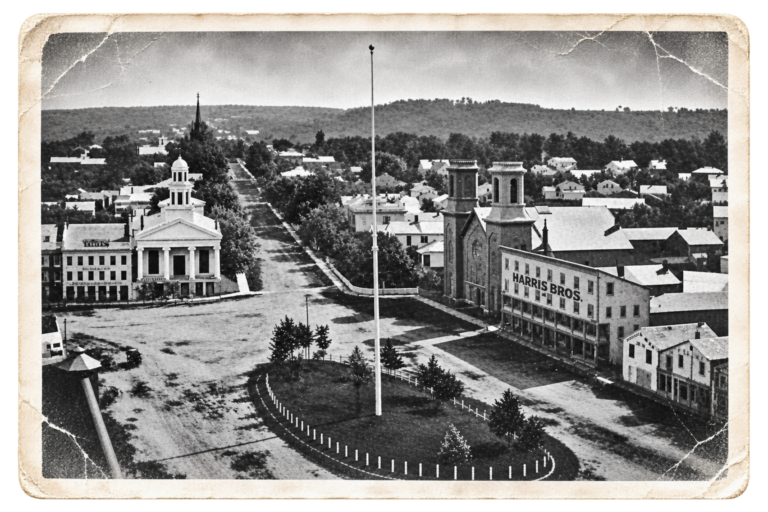

Graduating officers of the 3rd Provisional Training Regiment at Madison Barracks in Sackets Harbor, August 14, 1917. Photograph by White Studio. Library of Congress.
By Watertown Post Staff
In Northern New York, military history is not something that happened somewhere else. It is written into our waterfronts, old barracks, village monuments and family histories. It is also present in the soldiers who live among us, the veterans who returned to build lives here, and the names of those who never came home.
As Veterans Day approaches on November 11, the North Country has nearly two and a half centuries of American service to remember. From the Revolutionary War along Lake Champlain to the modern soldiers of Fort Drum, this region has helped defend the country—and sent its own sons and daughters far beyond its borders.
Veterans Day honors everyone who served, including those still with us. Remembering the dead belongs in that tribute, too: behind every campaign and unit history are people, families and losses that cannot be measured by a timeline.

A northern gateway in the Revolution
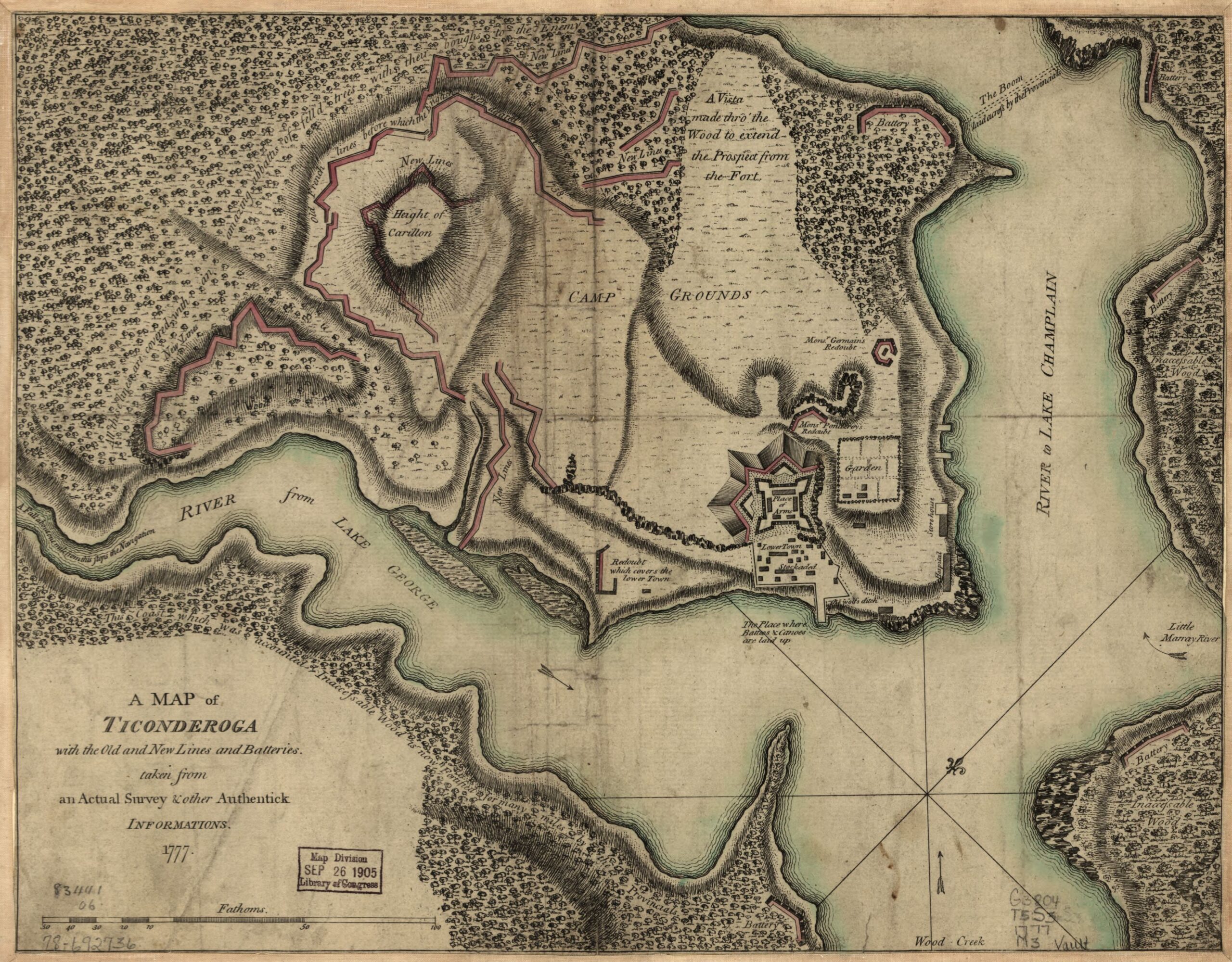
Long before Fort Drum, the waterways of northern New York were strategic corridors. The capture of Fort Ticonderoga in May 1775 placed a key Lake Champlain stronghold in American hands. The struggle for the route between Canada and the Hudson Valley helped shape the Revolution, culminating in the American victory in the Saratoga campaign of 1777.
The wider northern frontier also included the siege of Fort Stanwix and the bloody Battle of Oriskany in August 1777. Oneida warriors supported the American relief force at Oriskany. Remembering that contribution matters: the region’s military story includes Native people, and the Revolution divided Indigenous communities as well as colonial families. National Army Museum; National Park Service: Saratoga campaign; Oriskany history.
When war reached our shores
In the War of 1812, Sackets Harbor became a military and naval center on Lake Ontario. British-Canadian forces attacked on May 29, 1813, seeking supplies and a warship under construction. The battlefield remains a tangible reminder that the North Country was once a front line.
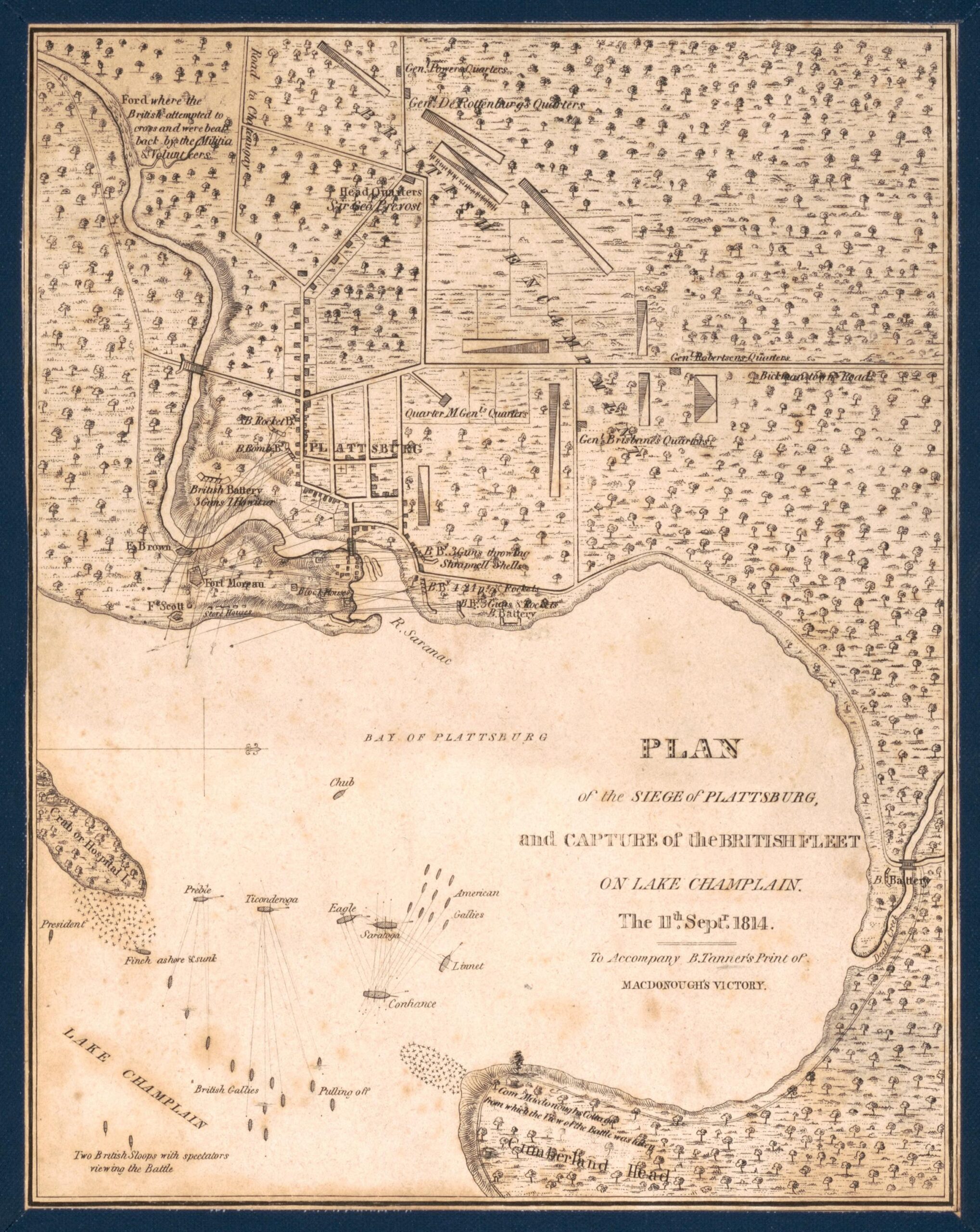
On the eastern side of the region, the American naval victory on Lake Champlain on September 11, 1814, helped stop the British offensive at Plattsburgh. Today’s peaceful border can make that history feel distant. The battlefields remind us how much has changed—and what earlier generations faced. New York State Parks: Sackets Harbor; National Park Service: Lake Champlain.
Service beyond the North Country
The Civil War carried northern New Yorkers into a struggle for the Union and the end of slavery. The 60th New York Infantry, known as the St. Lawrence Regiment, was organized at Ogdensburg. Its history is one example of how local communities became part of national armies, with the consequences felt both on distant battlefields and back home. New York State Military Museum.
By World War I, Madison Barracks was preparing another generation of officers. The photograph accompanying this article records a graduating class there on August 14, 1917—faces from a moment when the United States was mobilizing for war overseas. It is an authentic local record, not a recreation. The Library of Congress identifies the photographer as White Studio and lists no known restrictions on publication. Photograph record.
Those faces invite us to think beyond uniforms. Every departure meant a household waiting for news. The same was true for the northern New Yorkers who later served in Europe and the Pacific during World War II, in Korea, in Vietnam, and in the conflicts that followed.
Pine Camp, a world war and a changing region
The Army’s history of Fort Drum traces training at Pine Plains to the early 1900s. World War II brought a vast expansion of Pine Camp, where armored and infantry formations trained for overseas service. The expansion also displaced 525 local families—another part of the relationship between national defense and the communities surrounding it.
Madison Barracks and Pine Camp connect the region’s older Army presence to the installation known today as Fort Drum. The modern 10th Mountain Division was reactivated there on February 13, 1985. Its arrival helped make military service an everyday part of life across Watertown and nearby communities. Fort Drum installation history.
The names behind the wars
Local remembrance must include those who died overseas, not only the places where troops trained. The National Archives’ Vietnam casualty list records Army Staff Sgt. James Raymond Gentile, with Watertown in Jefferson County as his home of record, and a death date of March 26, 1969.
His is one name among many. A single article cannot reproduce the full roll of sacrifice across Jefferson, Lewis, St. Lawrence, Franklin, Clinton, Essex and Oswego counties. It can insist that those names represent individual lives, not anonymous entries in a national total. National Archives: New York Vietnam casualties.
Our tribute also belongs to the women who served: in military nursing and other wartime assignments, and in the increasingly broad responsibilities of today’s armed forces. Their service belongs in the main story of the North Country, alongside that of the men—not as an afterthought.
A living military community
The 10th Mountain Division’s modern history includes Somalia, Haiti, Bosnia, Afghanistan and Iraq. Those missions carried soldiers associated with Fort Drum across the world. Some returned to the North Country; others left families and comrades to carry their memory. Army museum history.
Northern New York’s service is not exclusively an Army story. Plattsburgh’s 380th wing and the former Plattsburgh Air Force Base were part of the nation’s Cold War military establishment. The base closed in 1995, but its place in regional history remains. So does the service of local Navy, Marine Corps, Air Force, Coast Guard, National Guard and Reserve veterans whose careers took them elsewhere. 380th wing history; Air Force: Plattsburgh legacy.
November 11 belongs to them
Veterans Day grew from Armistice Day, which marked the end of World War I fighting on November 11, 1918. In 1954, the observance was renamed to honor veterans of all wars. Its meaning reaches beyond any one generation or political disagreement. Department of Veterans Affairs.
Here, remembrance can begin close to home: with a conversation with a veteran, a visit to a local memorial, or time spent learning the story behind a name. It includes veterans whose service was in peacetime, families still waiting for answers about the missing, and those living with wounds that are not visible.
From Ticonderoga and Sackets Harbor to Madison Barracks, Plattsburgh and Fort Drum, Northern New York has a long military history. Its most important legacy is human: the men and women who served, those who came home, those who died far away, and the families who have never forgotten.
To the veterans of the North Country: thank you. To those who never returned: you remain part of home.
About the Author