
Away from the images of government officials, military parades and political confrontation, ordinary Iranians continue living, socializing and enjoying everyday life.
Venezuela. Cuba. Canada. The Arctic. Critical minerals. Energy. Iran makes more sense when viewed as part of a much larger American strategy.
By Hans Wilder
The Watertown Post | Opinion & Analysis
One of the biggest mistakes Americans can make when trying to understand what is happening with Iran is looking only at Iran.
Pull the camera back.
Look at Venezuela.
Look at Cuba.
Look north toward Canada, Greenland and the rapidly changing Arctic frontier.
Look at critical minerals, oil, natural gas, shipping lanes, manufacturing capacity and the Strait of Hormuz.
Then ask a different question.
What if Iran isn’t the entire strategy? What if Iran is one piece of it?
I understand why people—including some who previously supported Donald Trump—look at the war with Iran, see Israel standing beside the United States and conclude that America has somehow become an instrument of Israeli policy.
I don’t think the evidence requires that conclusion.
Israel obviously has its interests.
But so does the United States.
And American interests extend far beyond Israel or even the Middle East.
Look at the People of Iran
One reason I find recent street videos from Tehran so fascinating is what they reveal about Iranian society.
You see young people walking around, cafés filled with customers, couples, modern clothing, Western cultural influences and women openly appearing without the head coverings that the Islamic Republic spent decades trying to enforce.
That doesn’t mean Iran has suddenly become a Western democracy.
It hasn’t.
Nor does a collection of street videos prove what all 90 million Iranians believe.
But the images do expose something that Americans should understand:
The Iranian people and the government ruling Iran are not necessarily the same thing.
By June, reporting from Tehran described women openly walking through areas of the capital without hijabs as enforcement of compulsory dress rules appeared to have receded dramatically. This resistance didn’t begin with American military action—it grew for years and accelerated following the 2022 death of Mahsa Amini and the Woman, Life, Freedom movement.
That distinction matters.
The young woman drinking coffee in Tehran isn’t necessarily America’s enemy.
The college student listening to Western music isn’t necessarily America’s enemy.
The Iranian family trying to build a business, buy a home and give their children a better future isn’t necessarily America’s enemy.
The real conflict is with an aging revolutionary and security establishment that controls the weapons, the military apparatus and the foreign policy of the Iranian state.
There is a tremendous difference between defeating a people and eventually seeing those people gain greater control over their own country.
America should want the second outcome.
This Should Not Become Another Nation-Building Exercise
I have no interest in seeing another Iraq.
No twenty-year occupation.
No American bureaucracy deciding which Iranian gets to run the Department of Transportation.
No trillion-dollar nation-building experiment.
We’ve seen that movie.
The sequel doesn’t get better.
If political transformation ultimately occurs inside Iran, it should be the Iranian people who determine what replaces the present system.
America’s objective should be much narrower:
Protect American interests.
Prevent hostile governments from controlling strategic chokepoints.
Protect global commerce.
Reduce American dependence on unstable regions.
And strengthen America’s position enough that no foreign government can hold our economy hostage.
That brings us to energy.
Follow the Energy
The Trump administration isn’t hiding this part of its strategy.
It actually uses the words “American energy dominance.”
In April, the White House explicitly connected American oil and natural-gas production with Washington’s ability to withstand disruptions involving Iran and the Strait of Hormuz. The administration has argued that massive U.S. production and exports give America strategic leverage when Middle Eastern supplies are threatened.
Whether someone likes Trump or despises him is irrelevant to the underlying geopolitical reality:
Energy is power.
Countries that control reliable energy supplies possess leverage.
Countries completely dependent upon somebody else’s energy eventually discover that the supplier has a vote in their foreign policy.
The current Iran conflict has demonstrated that brutally.
As of August 7, global oil markets remain highly sensitive to negotiations over the Strait of Hormuz, with oil prices moving as traders assess whether normal shipping can be restored.
That waterway isn’t simply a Middle Eastern problem.
It affects the price Americans pay at the pump.
It affects transportation.
Agriculture.
Manufacturing.
Inflation.
Everything eventually comes back to energy.
Now Put Venezuela on the Board
Why Venezuela?
Because Venezuela possesses some of the world’s largest petroleum reserves, sitting right here in the Western Hemisphere.
And something significant has already changed.
Venezuelan oil shipments to the United States have climbed sharply in 2026. Reuters reported that U.S.-bound Venezuelan exports reached roughly 786,000 barrels per day in July, their highest level since early 2019.
Plans for broader American investment in Venezuela’s neglected petroleum industry have moved more slowly than the administration initially suggested, but the strategic attraction isn’t difficult to understand.
Why allow enormous energy resources in America’s own hemisphere to remain permanently tied to governments hostile to Washington or dependent upon China and Russia?
Again:
Look at the map.
Then Cuba
In January, Trump signed an executive order establishing the possibility of additional tariffs against countries supplying oil to Cuba.
That isn’t speculation.
It’s written policy.
The order specifically targets countries that directly or indirectly provide petroleum to the Cuban government.
You can debate whether that policy is wise.
But put it beside Venezuela and suddenly another pattern becomes visible.
Washington is increasingly treating energy supply chains themselves as instruments of national power.
Then Look North
Canada belongs in this discussion differently.
Canada is not Iran.
It isn’t Cuba.
It’s our neighbor, ally and one of America’s most important trading partners.
But the United States and Canada are currently engaged in serious negotiations involving tariffs, market access and trade rules, while Canada is simultaneously making enormous investments in Arctic defense.
Why has the Arctic suddenly become such a major subject?
Because the top of the world isn’t empty.
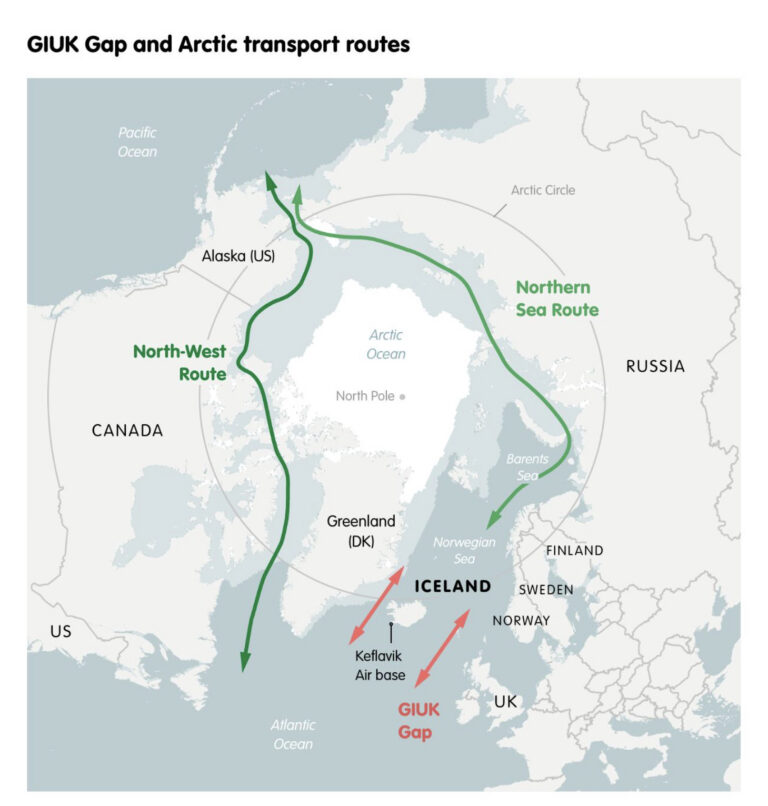
It contains emerging transportation routes, military geography, energy resources and critical minerals—all while Russia and China are attempting to expand their influence.
Greenland sits directly in that strategic environment.
So does Alaska.
So does northern Canada.
This isn’t 1985 anymore.
The Arctic is becoming another geopolitical frontier.
Critical Minerals May Be Just as Important as Oil
Then there are the materials required to actually build the twenty-first century.
Rare earth elements.
Tungsten.
Germanium.
Lithium.
Copper.
Scandium.
Materials required for weapons systems, semiconductors, aircraft, energy infrastructure and advanced manufacturing.
On July 20, the Trump administration issued new measures aimed at securing domestic and allied defense supply chains for critical materials.
And on August 7, Reuters reported that the administration was bringing mining executives together as Washington attempts to reduce American dependence on vulnerable foreign mineral supply chains.
Once again:
Look at the board.
Oil.
Natural gas.
Critical minerals.
Shipping lanes.
Manufacturing.
The Arctic.
The Western Hemisphere.
Iran.
They’re not identical issues.
But they’re connected by one central principle:
A nation that cannot secure the resources necessary to operate its economy cannot remain strategically independent forever.
Is This “3D Chess”?
Maybe.
Maybe not.
I don’t particularly like describing every presidential decision as “3D chess,” because sometimes governments make brilliant strategic moves and sometimes they simply screw things up.
War isn’t a computer simulation.
People die.
Weapons inventories decline.
Markets react.
Enemies adapt.
And Trump’s Iran strategy deserves scrutiny. Reuters reported this week that after months of conflict, Washington still faces difficult choices over Iran and the Strait of Hormuz, while American weapons inventories and high fuel prices have become legitimate concerns.
Those aren’t minor details.
They’re part of the scorecard.
But dismissing everything as “Trump is Israel’s puppet” doesn’t adequately explain what Washington is simultaneously doing in Venezuela, Cuba, critical minerals, domestic energy production and the Arctic.
There is a bigger strategic argument taking place.
The Endgame Has to Be American Prosperity
This brings me back to the argument I made about MAGA evolving into an American Golden Age.
Military action itself is not victory.
Sanctions aren’t victory.
Tariffs aren’t victory.
Owning more weapons than everyone else isn’t victory either.
Those are tools.
The objective should be something much larger:
An America capable of producing its own energy.
An America capable of manufacturing its own essential goods.
An America with secure supplies of critical minerals.
An America whose hemisphere is economically stable.
An America whose allies don’t have to depend upon hostile governments for energy.
An America capable of defending Arctic shipping routes and resources.
And an America that can engage with a future Iran whose government reflects its increasingly modern population rather than remaining trapped indefinitely under a revolutionary political order born almost half a century ago.
That would be strategy.
And that is ultimately how Donald Trump’s decisions should be judged.
Not by whether every bombing campaign can be defended on cable television.
Not by whether Israel benefits.
Not by whether somebody waves a MAGA flag.
Look at the map when this is finished.
If America emerges more energy-independent, more economically secure, stronger in its own hemisphere, less vulnerable to hostile supply chains and positioned to dominate the economic frontiers of the next fifty years, then what looks chaotic today may eventually appear much more connected.
If America instead spends lives, money, weapons and political capital without achieving those things, then the strategy failed.
It’s really that simple.
The endpoint isn’t permanent war.
It isn’t nation building.
And it shouldn’t be regime change merely for the sake of regime change.
The endpoint has to be American security, American independence and American prosperity.
Everything else is just moving pieces around the board.
About the Author