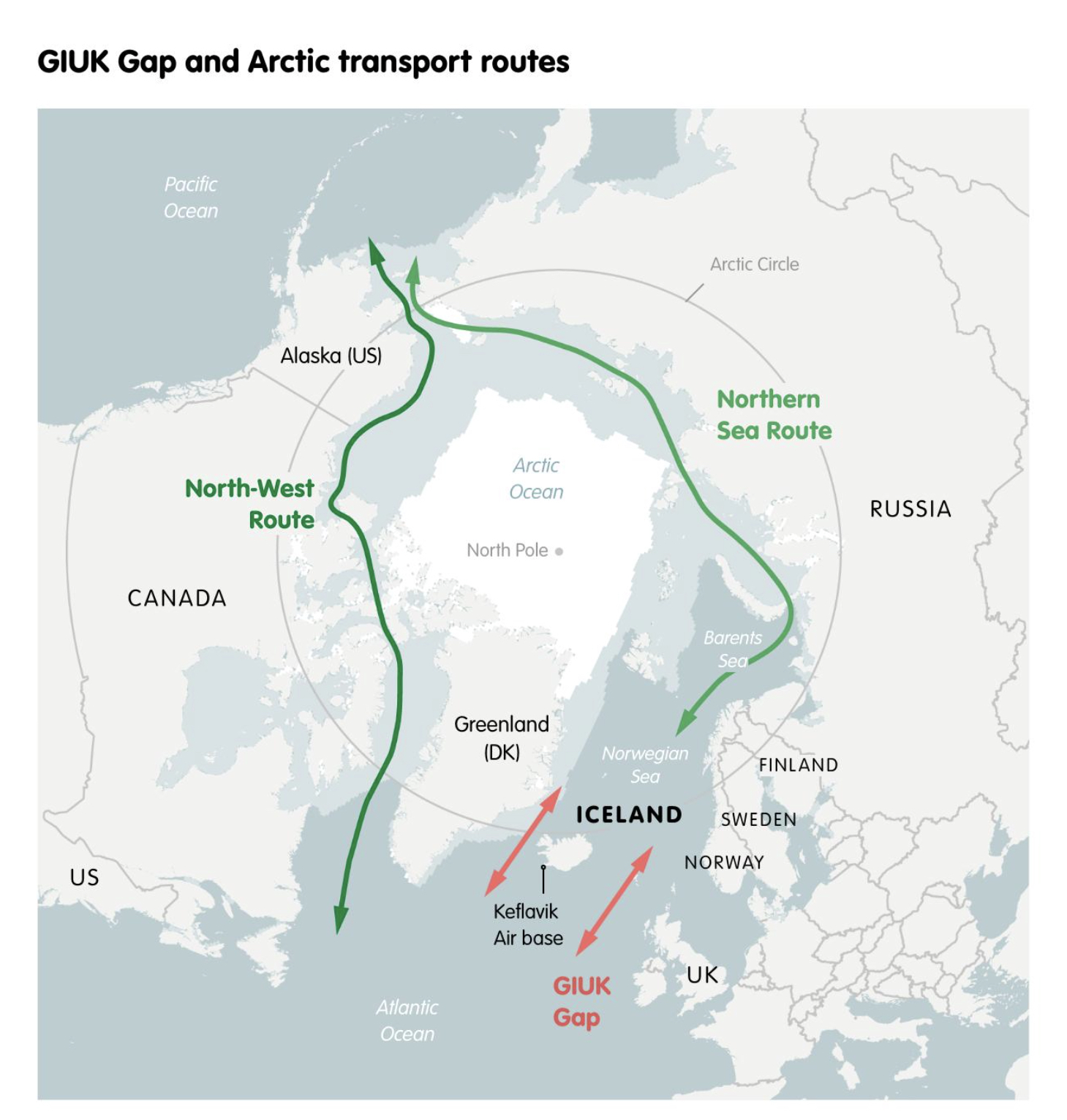
A proposed Arctic trade corridor could move Belarusian potash by rail to northern Russian ports before crossing the North Atlantic through the Greenland-Iceland gateway to the United States.
Watertown Post Think Tank | Strategic Analysis
WATERTOWN, N.Y. — President Donald Trump’s proposed purchase of Belarusian potash may look like another chapter in the growing U.S.-Canada trade dispute. From the perspective of the Watertown Post Think Tank, however, something considerably larger deserves examination: the possibility of a new Arctic commercial corridor connecting the interior of Eurasia directly with the United States.
Trump announced September 21 that the United States is working on what he called a “massive” agreement to purchase potash from Belarus at prices he says would be substantially below those currently paid to Canada. Canada presently supplies roughly 80 percent of U.S. potash imports, making the proposal potentially significant for American agriculture as well as North American trade.
There is an obvious geographical problem. Belarus has no coastline.
For decades, Belarusian potash had access to Baltic export infrastructure through Lithuania. European sanctions have largely closed that route, and Lithuania says its restrictions will remain in place. The Washington Post reports that expanded Belarusian potash shipments to the United States would therefore have to move through Russian ports.
That is where the Arctic becomes interesting.
THE WATERTOWN POST ARCTIC CORRIDOR THEORY
The Watertown Post Think Tank believes one possible logistics chain deserves serious examination:
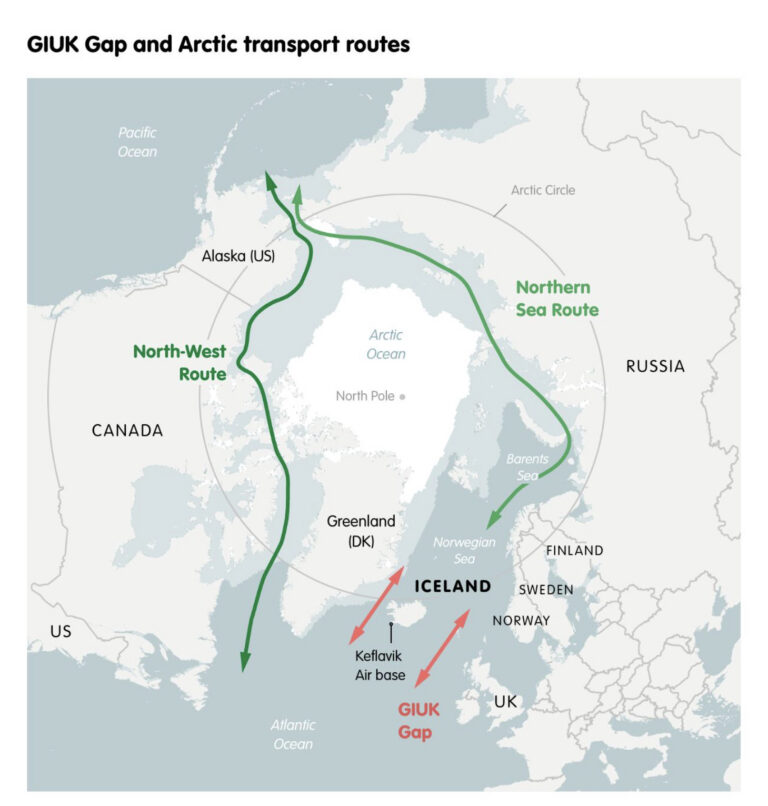
Belarus → Russian rail system → Murmansk → Barents Sea → Norwegian Sea → Greenland-Iceland gateway → North Atlantic → United States
This is our strategic projection, not an announced shipping route. Neither the White House nor Belarus has publicly identified the port, shipping company, American destination or maritime route that would be used under a potash agreement.
But several pieces of the infrastructure are already falling into place.
Murmansk is not merely theoretically capable of handling potash. It is doing it now. On September 8, the Murmansk Bulk Terminal loaded 26,400 tons of potash fertilizer aboard a vessel for shipment to Southeast Asia. That cargo was Russian rather than Belarusian, and the ship traveled east through the Northern Sea Route. Nevertheless, the operation demonstrated that Murmansk can combine Russian rail infrastructure, bulk potash handling and Arctic maritime transportation.
Murmansk’s ambitions are much larger than a single shipment. Port officials said earlier this year that they were targeting approximately 1.6 million tons of potash throughput during 2026. The terminal also handled an emergency 100,000-ton potash contract after another exporter shifted cargo away from Baltic routes.
In other words, the northern infrastructure already exists.
What would change is the direction.
Instead of loading potash at Murmansk and sending it east across Russia’s Northern Sea Route toward Asia, American-bound cargo could head west from the Barents Sea into the Norwegian Sea and then toward the North Atlantic.
That puts Greenland and Iceland directly on the map.
Greenland Is Not Just About Missiles Anymore
For generations, Americans have tended to view Greenland almost exclusively through the lens of military geography. But an increasingly accessible Arctic could make Greenland important for something much broader: trade, shipping, minerals, energy, communications and control of the northern approaches to North America.
The Belarus potash proposal provides an unusually clear example.
A commodity originating deep inside Eastern Europe could travel by rail across Russia, reach an Arctic port and then potentially move through northern waters toward the United States.
That would create an alternative to the traditional Canadian supply chain.
It would also mean that developments involving Greenland, Iceland, Arctic ports and northern shipping lanes should no longer be considered separate stories. They are pieces of the same emerging geographical puzzle.
The Canadian Question
There is another reason this deserves attention in Northern New York.
Canada currently dominates American potash imports. Saskatchewan Premier Scott Moe has already pointed directly at the logistical issue, arguing that Belarusian potash would have to travel through Russia before reaching American buyers.
That criticism raises a legitimate economic question: Can Belarusian potash remain cheaper after rail transportation across Russia and ocean transportation to the United States are included?
We do not yet know.
Trump says the pricing would be substantially lower than Canada’s. Belarusian President Alexander Lukashenko has simultaneously said much of his country’s available production is already committed under existing contracts. Those two facts mean the eventual volume, delivered price and transportation arrangement remain important unknowns.
But strategic infrastructure is not always built around today’s price alone.
If the United States develops reliable access to competing fertilizer suppliers, Canada would no longer possess the same degree of leverage over a commodity essential to American agriculture. Belarus becomes an alternative supplier. Russia becomes a potential transit country. Murmansk becomes a gateway. Greenland and Iceland become increasingly important geography.
That is a very different map of the North Atlantic.
A Corridor Worth Watching
The Watertown Post Think Tank is not reporting that this Arctic route has been selected. We are identifying what we believe is a logical corridor worth watching as negotiations develop.
The important question now is where the first ships actually sail.
If a U.S.-Belarus potash agreement is completed, watch for three things: the Russian port selected for export, the American port receiving the cargo, and whether the transportation agreement establishes a regular northern shipping connection.
If Murmansk appears in that equation, the story becomes much bigger than fertilizer.
It could represent an early commercial piece of a developing Arctic-to-America trade corridor, running from Eurasia through the northern seas and into the North Atlantic.
For Northern New York, sitting at the northeastern gateway of the United States and immediately south of Canada, that emerging geography deserves close attention.
The Arctic is no longer simply the top of the map.
It is increasingly becoming part of the middle of the map.
Watertown Post Think Tank analysis examines emerging economic, geopolitical and infrastructure trends. Projections and scenarios are identified as analysis and should not be interpreted as confirmation of government policy.
About the Author