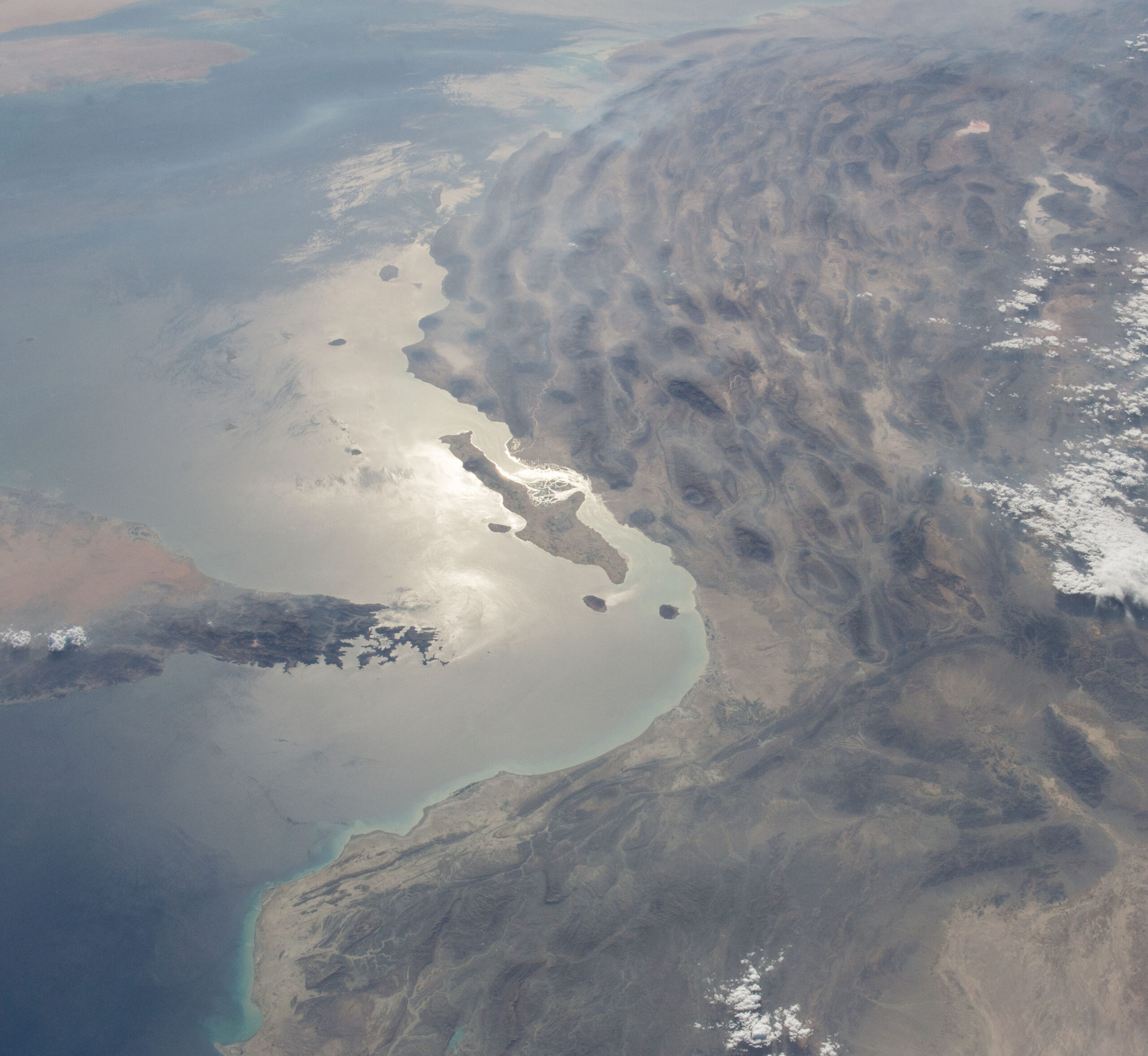
The Strait of Hormuz from the International Space Station. Photo: NASA Johnson Space Center, 2016.
Opinion | By Hans Wilder
Watertown, New York
A fellow looks at a checkerboard and thinks he understands the world because he can tell the black squares from the white ones. I call that single-order thinking. A tanker turns around, and he sees a tanker turning around. He doesn’t see the marine insurer reaching for a fresh rate sheet, the refinery calling another supplier, or the factory manager in Ohio finding out that Tuesday’s shipment has become Friday’s problem. By the time the bill reaches the fellow at the gas pump, he’s forgotten there was ever a tanker.
People laugh when you call this three-dimensional chess. Fair enough. I’ve seen that phrase used to explain away some moves that looked suspiciously like a man knocking over the board. But lay the charts out on the table before you laugh. Put Panama beside Venezuela and the Caribbean. Unfold another chart for the Northwest Passage. Then head east to the Strait of Hormuz and the southern mouth of the Red Sea. What you’re looking at is a set of routes on which the American economy depends, whether anybody in Washington can explain them in less than eleven seconds or not.
The administration’s 2026 defense strategy explicitly puts commercial access from the Arctic to South America on the map. Panama’s canal is still Panama’s canal. What matters to us is that commerce can count on getting through it. The Venezuelan oil agreement is another wager: a more dependable source of crude in our own hemisphere. The Caribbean is the water between those interests, and a calmer Caribbean makes both worth more. Up north, the Northwest Passage is a longer bet. Canada has its own position on those waters, and drawing a line through the ice with a felt-tip pen is not quite the same as running a shipping lane.
Then there’s Iran. In my reading, Iran is the linchpin. Tehran has been a thorn in America’s side for years, and I support confronting it. But let’s be clear about why I think it matters. Hormuz is the outlet from the Persian Gulf. The Houthis in Yemen can threaten a different passage at the southern end of the Red Sea. Washington said its 2025 strikes on the Houthis were meant to restore freedom of navigation. Look at what’s at stake: the U.S. Energy Information Administration estimates that oil and petroleum liquids moving through Hormuz fell from 21.6 million barrels a day in the last quarter of 2025 to 4.9 million in the second quarter of 2026. If the point of applying pressure is to make commerce safer, the score is written in ships getting through and costs going down. A prospectus that lists the bombing but leaves out the bill is missing a page.
As a matter of electoral politics, starting a war with Iran was political malpractice. No pollster worth his invoice tells a president to risk higher gas prices and another Middle Eastern war. But this is the final chapter of the Trump years, and my read is that Trump wants to do what he thinks is right for America and doesn’t give a shit what it does to his polling numbers. That doesn’t make the decision right by itself. It does make for a better question than whether it plays well on television: When the shooting stops, will Americans be better off than they were before it started?
Now follow the invoice. The petrodollar, people. The petrodollar. If major buyers and sellers can routinely settle energy deals outside the dollar, they have an alternative to a system in which Washington has had considerable leverage. Moscow has leaned harder on trade in rubles and yuan with China. You can call that defiance of Washington; I’d call it a concession to Beijing as well. The same move can do both. But India’s BRICS summit briefing described work on settling trade in local currencies, not the bloc adopting the yuan. And the IMF’s second-quarter figures put the dollar at nearly 57 percent of global foreign-exchange reserves and the renminbi at just over 2 percent. I think protecting dollar leverage belongs in the explanation. I don’t think it explains every shot fired, and I wouldn’t mistake a smaller dollar share for a Chinese coronation.
Here’s where I’d bring the whole business back to the North Country. A stronger hand abroad is worth something only if we use it at home. Dependable energy helps a plant plan. Reliable shipping helps it keep the line running. Neither one trains a machinist or opens a factory. That takes years, and a ribbon-cutting doesn’t count for much if we still have to import half the things needed to keep the place open. I want to see American suppliers getting orders and American workers taking home a paycheck for making something. That’s the Golden Age I’m interested in. The rest is a very expensive game of checkers.
About the Author