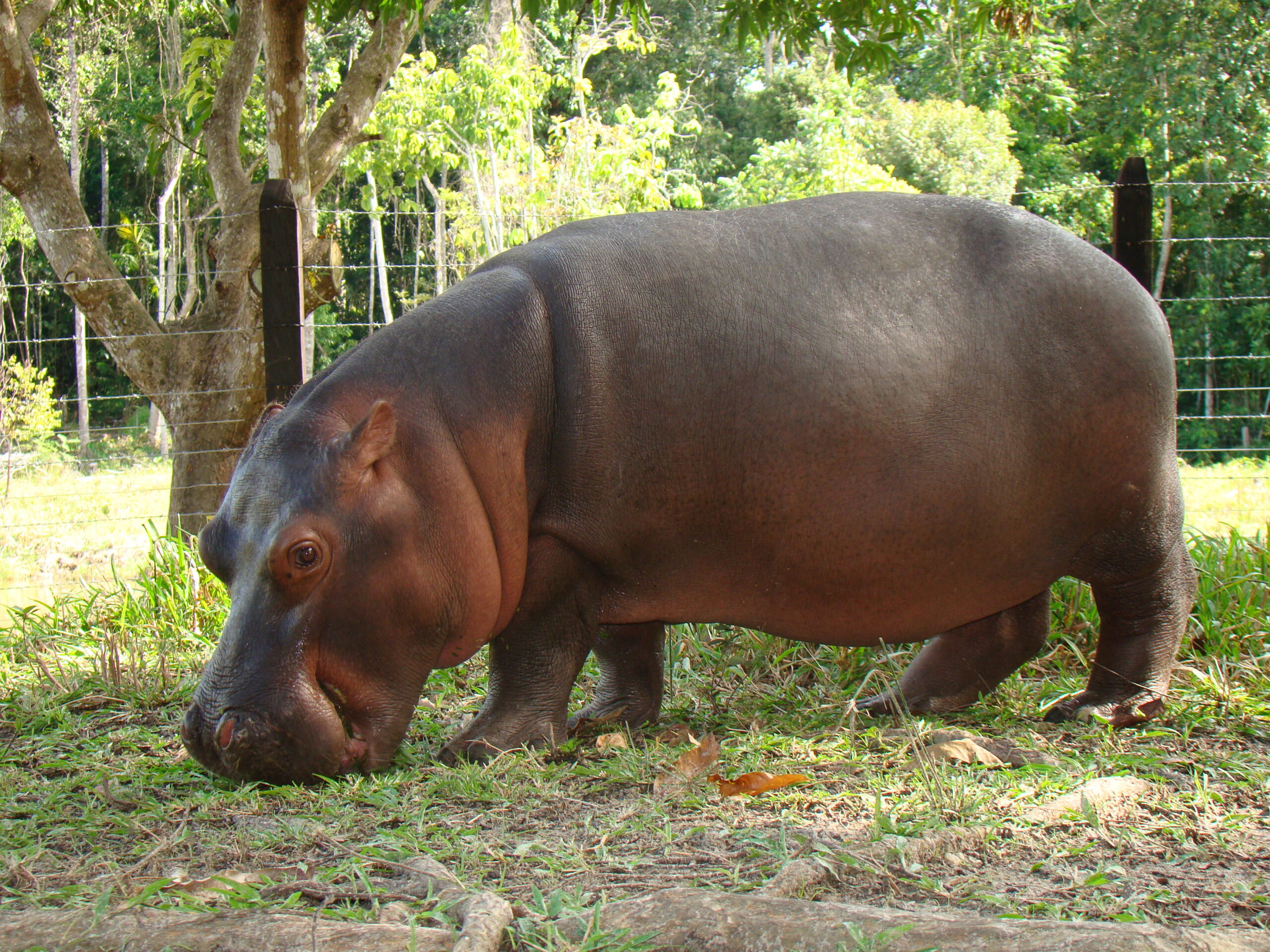
Vanessa at Hacienda Nápoles theme park, Colombia, in 2008. Photo: <a href="https://commons.wikimedia.org/wiki/File:Hipop%C3%B3tamo_Vanessa_PTHN.jpg">Alvaro Morales Ríos / Wikimedia Commons</a>, <a href="https://creativecommons.org/licenses/by-sa/4.0/">CC BY-SA 4.0</a>.
The Wilder Treatment | Opinion by Hans Wilder | Watertown, New York
Pablo Escobar is dead. His hippos have not received the memo.
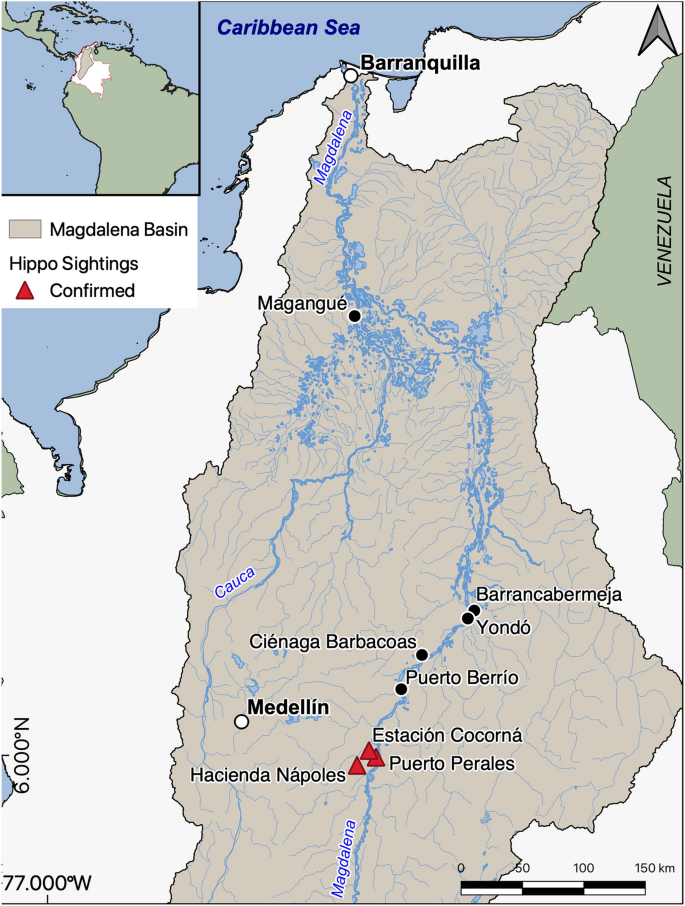
In the early 1980s, the Colombian cocaine kingpin brought four African hippos to his private zoo at Hacienda Nápoles. A scientific reconstruction puts it at one male and three females. After Escobar died in 1993, the hippos stayed behind. Their descendants spread into the middle Magdalena River basin. Drug empires may come and go, but apparently the inheritance tax on a hippopotamus is payable in more hippopotamuses.
“Cocaine hippos” describes who paid for the zoo, not what the tenants were taking. And yes, these are the world’s largest invasive land animals. If you’re wondering how Colombia could lose track of something the size of a Buick, picture a Buick that spends most of the day underwater and takes the back roads at night.
Four founders, a very narrow family tree
That little herd came with a genetic problem. When an entire population starts with four animals, there’s not much variety to begin with, and mating among relatives can make matters worse. Researchers warn that inbreeding could reduce the animals’ ability to thrive. Reuters has reported genetic defects, but I found no published tally of how common they are across the herd. What’s clear is that inbreeding hasn’t stopped the population from spreading. The family tree may be a fence post, but there’s no shortage of branches on the river.
As for that count of roughly 175, it’s closer to an older figure than to today’s best public estimate. Colombian researchers reported about 169 in 2022. On Nov. 24, Colombia’s environment ministry put the population at around 260, based on scientific projections, not a fresh head count. So the word I’d heard that the herd was already well past 200 is in line with the ministry’s estimate.
The river gets the bill
Hippos graze on land at night and spend much of the day in water. They carry nutrients from the grass into ponds and waterways by a delivery method I would not recommend putting in a tourism brochure. Researchers comparing Colombian lakes found changes in how the water processes nutrients and which organisms flourish. On shore, repeated traffic can compact soil, change vegetation and wear paths that can connect waterways and wetlands. That’s a lot of earthmoving for an animal that never applied for a permit.
The ministry flags the West Indian manatee, neotropical river otter, lesser capybara and Magdalena River turtle, along with native fish, as being at risk. The turtle already depends on vulnerable places such as sandy riverbanks to nest. That doesn’t mean scientists have counted turtle nests destroyed by hippos or pinned a population decline on them. There are more direct reports on land: Colombian research institutes cite attacks on cattle and horses, along with dangerous encounters for people and disruptions to fishing. The hippo got the nickname. Everyone else got the consequences.
Now try finding a home for a hippo
Colombia declared the common hippo invasive in 2022. Its plan includes sterilization, confinement, relocation and, as a last resort, euthanasia. Regional authorities announced plans this month to euthanize ten priority animals. That’s a plan, not ten confirmed deaths. On Nov. 24 the ministry also said it had invited 13 Colombian zoos and wildlife parks to a Nov. 27 meeting about taking some animals. An invitation is not a reservation. Nobody has found 260 vacancies with a pond out back.
The animals didn’t choose to be there. Neither did a fisherman choose to meet one in the dark. That’s why I don’t buy either easy answer: that killing hippos settles the whole affair, or that leaving them alone is somehow the merciful choice for everything else in the river.
Up here, we got a smaller version of the lesson. Zebra mussels came from Eurasia, most likely in ships’ ballast water. They’ve lost ground across much of the Great Lakes, but they haven’t been eliminated. In many waters, another invader, the quagga mussel, outcompeted them. The management victory, in other words, was mostly a change of management.
What comes around goes around. Sometimes it comes back in a ballast tank. Sometimes it weighs three tons and has the run of the river.
Photo gallery
Vanessa at Hacienda Nápoles theme park, Colombia, in 2008. Photo: Alvaro Morales Ríos / Wikimedia Commons, CC BY-SA 4.0. The wildlife images are species references.
From Colombia
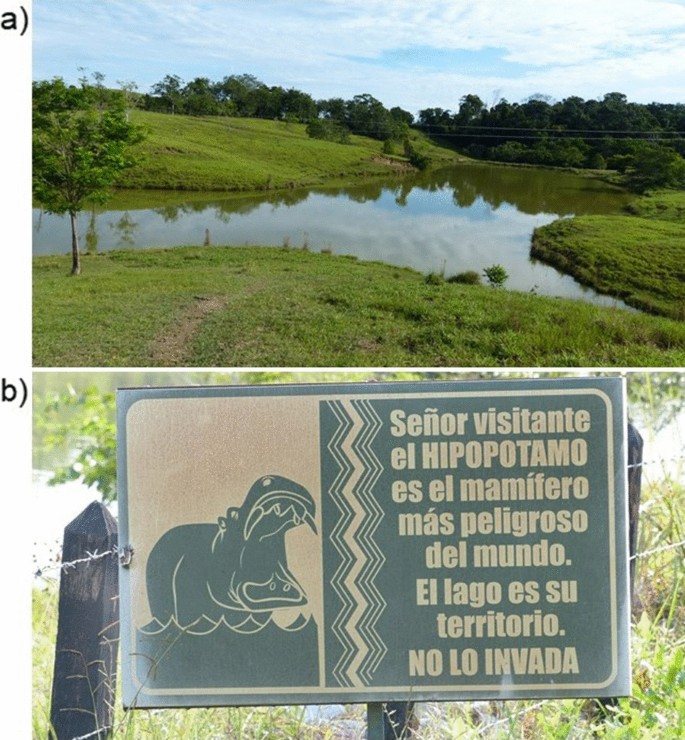


Species and comparison images


About the Author