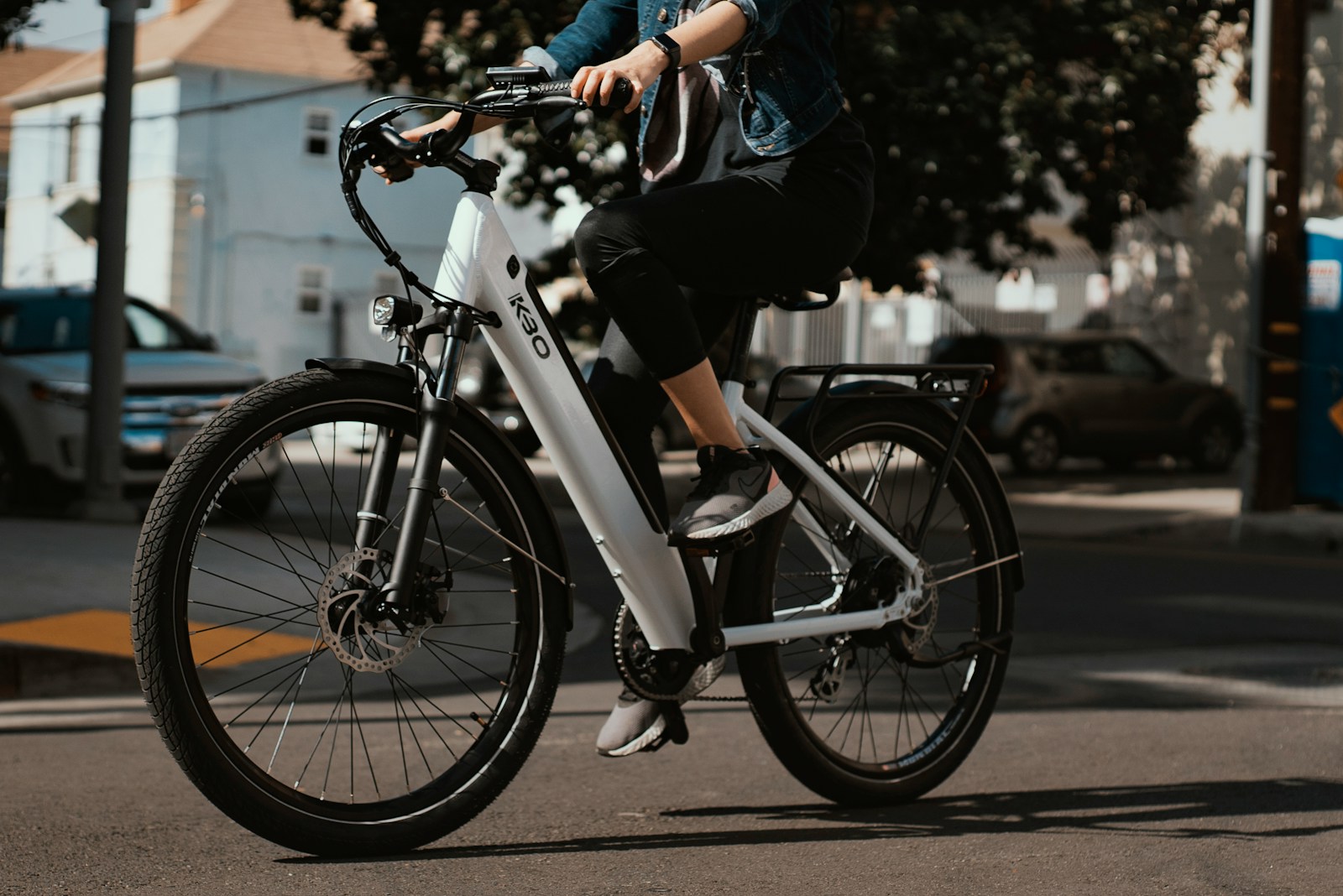
Illustrative stock photograph by KBO Bike / Unsplash. Not photographed in Northern New York. License and credit link below the article.
Opinion
An electric bicycle can be a practical way to get to work, cross town or run an errand without starting a car. But practical transportation still comes with responsibilities. In Watertown, Plattsburgh, Potsdam, Canton, Massena and Ogdensburg, the people using busy streets and sidewalks deserve to know what is allowed, what is prohibited and what happens when someone puts others in danger. Local officials should make those answers easy to find and apply them consistently.
Plattsburgh offers a timely reason to have that conversation across the North Country. The city is developing a proposal that could allow police to impound electric bikes that are not legal for road use. According to an October 12 report by WCAX, the measure was still being drafted, and Mayor Wendell Hughes had not announced when it would reach the Common Council. It deserves careful public discussion, including a clear explanation of which vehicles would qualify and how owners could challenge a seizure.
New York already has a framework. The state Department of Motor Vehicles says qualifying e-bikes may operate on roads with posted limits of 30 mph or less, subject to additional local restrictions. Sidewalk riding is prohibited unless a local law permits it. Class 1 and Class 2 bikes stop providing motor assistance at 20 mph. New York’s Class 3 category is restricted to New York City. Those distinctions should appear in plain English wherever a community explains its rules.
The word “e-bike” on an advertisement does not settle what a vehicle legally is. The state attorney general’s July safety notice warned that vehicles exceeding e-bike limits may instead fall into categories with registration, licensing and insurance requirements. It also reminded families that riders must be at least 16 to operate an e-bike in New York. Parents and buyers should check the vehicle’s actual specifications and legal classification before handing over money or keys.
What should our communities do with that information? Start by putting the state rules and any local additions on one readable page. Identify where riding is permitted, explain sidewalk restrictions, spell out equipment and age requirements, and give people a contact for questions. Bike shops, schools, colleges, libraries and municipal offices could help distribute it. A resident should not have to interpret a sales pitch or search through meeting minutes to understand how to ride legally.
Then make enforcement predictable. Blowing through a red light, riding against traffic or passing pedestrians dangerously should bring a response based on the conduct and the law. A warning may make sense for a minor first violation. Serious or repeated dangerous behavior calls for stronger consequences. Any impoundment policy should have clearly defined grounds, written procedures and a fair way to contest a mistake. An officer’s decision should rest on evidence, not a guess about how fast a bicycle looks.
Watertown and Plattsburgh should review the connections between their downtown streets, residential neighborhoods and shopping areas. Potsdam and Canton should include their colleges in planning routes between campuses, housing and downtown businesses. Massena and Ogdensburg should examine whether people can travel between neighborhoods, employment and everyday services on connected, lawful routes. These are proposals for local review, not a claim that every community faces the same conditions or has the same ordinances.
That review needs to include the pavement itself. A painted bicycle symbol cannot repair a broken shoulder, improve a blind intersection or connect a route that ends at a faster road. Municipalities should identify gaps, seek input from riders and pedestrians, and make practical improvements as streets are maintained. Safe crossings, visible markings and clear signs can help people make better decisions. Moving a rider out of one conflict without providing a lawful route simply leaves the next problem unresolved.
Drivers have responsibilities in this discussion, too. A person using a lawful e-bike is somebody’s neighbor, employee or family member. Impatience behind the wheel does not justify crowding a rider or treating that person as an obstacle to be bullied aside. Riders, in turn, should wear helmets, make themselves visible and approach crowded areas with the caution the conditions demand. Courtesy helps, but it works best alongside rules people understand.
Watertown, Plattsburgh, Potsdam, Canton, Massena and Ogdensburg should compare their approaches before confusion becomes even harder to untangle. Local conditions will differ, but the basic message can be consistent: buy a lawful vehicle, use a lawful route, respect pedestrians and obey traffic rules. Northern New York can welcome useful transportation while demanding responsible behavior. That is a reasonable standard for everyone sharing the road.
Cover photo: KBO Bike / Unsplash, used under the Unsplash License. Illustrative stock photograph; not photographed in Northern New York and not evidence of a traffic violation.
About the Author