By Hans Wilder | Watertown Post
October 7, 2026
WATERTOWN, N.Y. Americans have spent the better part of a century watching movies about the future. Talking computers, intelligent machines, robots, advanced automation and technology capable of solving problems faster than human beings. We all knew some version of this future was coming, and plenty of us were actually disappointed that it was taking so long to get here. Well, the future finally showed up, and now a surprising number of Americans seem terrified of it.
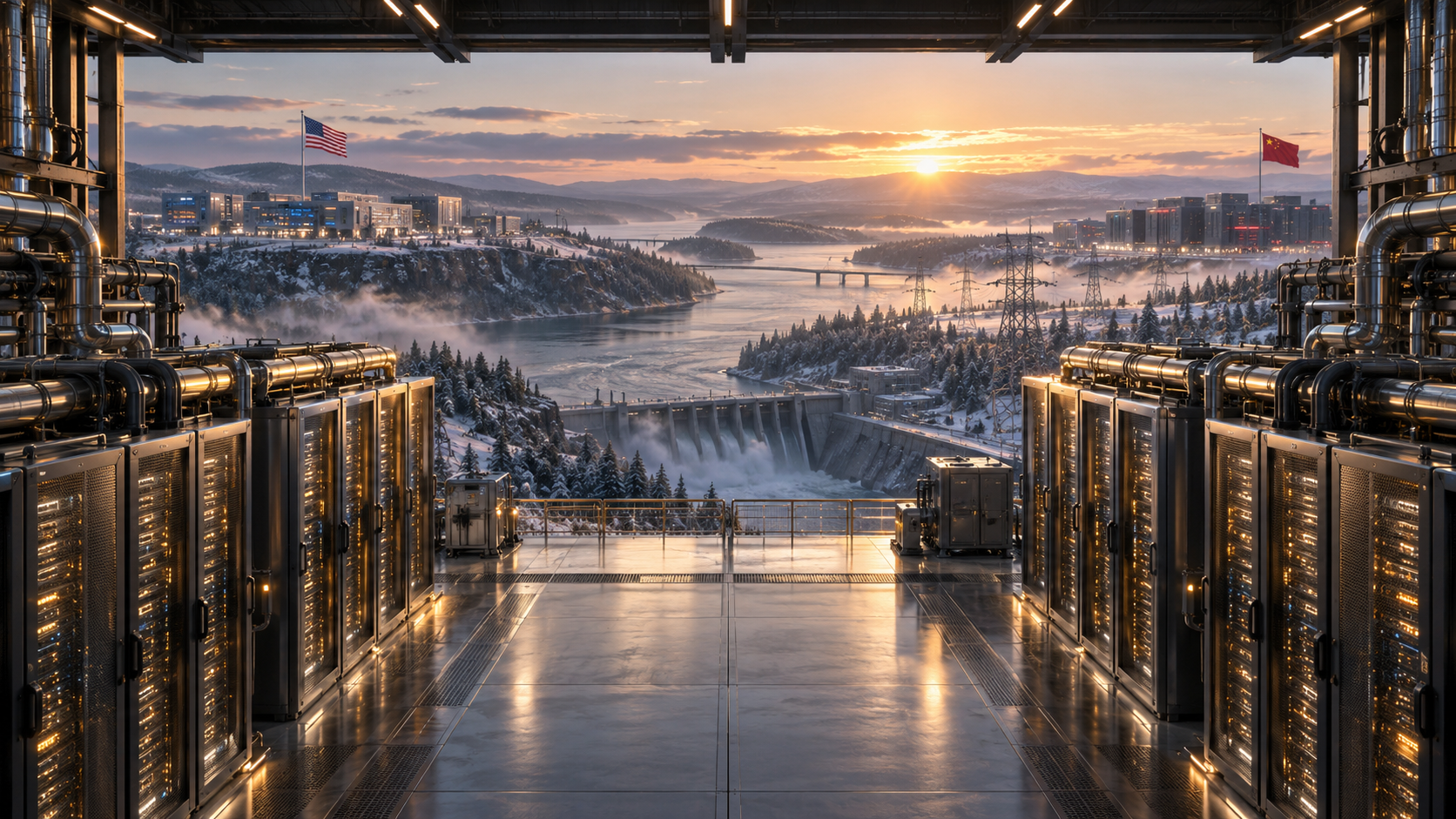
That fear could become one of the greatest strategic mistakes this country makes. America is now in a global super intelligence arms race, and China is not sitting around waiting for us to become comfortable with the technology. China is investing heavily in advanced computing, robotics, automation, military systems and the infrastructure required to support them. If America spends the next decade arguing over whether computers are scary while China builds the next generation of technology, we already know how that story ends.
Northern New York should be looking at this moment as an opportunity. We have land, water, a naturally cool climate, major electrical infrastructure, access to hydropower, proximity to Fort Drum and communities that have spent decades looking for the next major economic engine. The St. Lawrence River has powered industry in this region for generations, and Northern New York remains one of the few places in the Northeast where large-scale energy-intensive development actually makes sense.
Yet every time somebody mentions a data center, people react as though a spaceship has landed in the hayfield. Yes, data centers require land. Yes, they use significant electricity. Yes, communities should make sure they are properly planned, taxed and connected to local infrastructure. But none of that changes the basic reality that super intelligence requires enormous computing capacity, and enormous computing capacity requires physical places filled with processors, servers, cooling systems and power infrastructure.
There is no magical cloud floating above us. The cloud is somebody else's building.
That is where Northern New York comes into the discussion. If we are going to devote portions of our landscape to energy infrastructure and industrial development, then we should at least be asking what America receives in return. The Watertown Post has never been enthusiastic about covering vast stretches of rural land with solar panels or filling the horizon with wind turbines. Windmills kill birds, alter landscapes and eventually leave behind enormous composite blades that are difficult and expensive to recycle or dispose of. Somebody eventually has to take responsibility for all of that.
If the choice is between filling rural land with industrial-scale wind and solar projects or using carefully selected sites for data centers that strengthen American technological independence, create taxable investment and support the country's ability to compete with China, that should at least be a serious conversation.
A modern data center is not simply a warehouse filled with blinking lights. Computing infrastructure is quickly becoming part of the backbone of medicine, military defense, manufacturing, logistics, science, finance, transportation, education and robotics. The nation that controls the strongest super intelligence infrastructure will have an extraordinary advantage across virtually every major industry of the future.
This is bigger than chatbots. It is bigger than people making funny pictures on their phones. Super intelligence will help design aircraft, discover medicines, operate factories, analyze battlefields, manage electrical grids, build robots and accelerate scientific research. We are talking about a technological transformation comparable to electrification, the computer revolution and the Space Race rolled together.
Americans therefore need to decide whether they want to participate in the future or simply complain about it while somebody else builds it. There is a strange contradiction occurring across the country. People demand faster phones, better medical technology, smarter vehicles, automated services, instant information and increasingly powerful digital tools, but then oppose the infrastructure required to make those things possible.
Unless somebody is genuinely prepared to live like the Amish, they are already participating in this technological system every single day. Your bank depends on massive computing infrastructure. Your hospital does. Your phone does. Your television does. Your car increasingly does. Your navigation system, security cameras, online shopping, military defenses and businesses all rely on data processing somewhere.
You cannot demand the digital future while opposing the buildings that make the digital future work.
There should certainly be rules. Communities should protect their water supplies, negotiate proper tax agreements, require infrastructure improvements and make sure developers do not simply arrive, consume enormous amounts of electricity and leave taxpayers holding the bag. Nobody is suggesting that Northern New York should hand over every farm field to a technology company without asking questions.
But simply saying no to data centers because super intelligence sounds frightening is not a strategy. It is surrender.
China understands that computing power is national power. America needs to understand it too. The winner of this competition will not simply have the smartest computer program. It will control the infrastructure that drives advanced manufacturing, robotics, military technology, medicine and scientific discovery.
Northern New York spent generations watching industries disappear and young people leave because the economic opportunities moved somewhere else. Now one of the largest technological expansions in human history is beginning, and this region happens to possess many of the things that industry needs most.
Power. Water. Land. Cold weather. Strategic location. Existing infrastructure.
Those are advantages.
Instead of treating every proposed data center as an invasion, Northern New York should be asking how we attract the right projects, negotiate strong agreements and become part of America's super intelligence infrastructure.
There is no going backward from this technological revolution. The only real question is who builds it.
America or China.
The Golden Age will not arrive because somebody promised it in a speech. It will arrive because Americans build the factories, power plants, data centers, laboratories, processors and infrastructure necessary to create it.
Northern New York has the resources.
Now we need the ambition.
About the Author