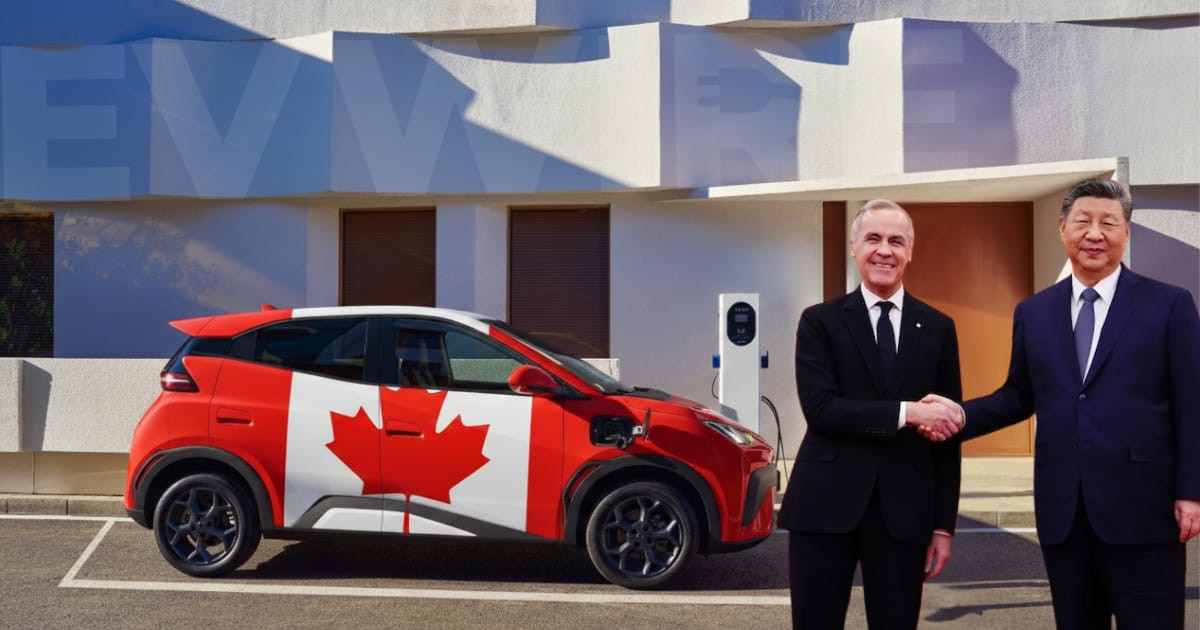
Editorial illustration: EVwire.
Opinion by Hans Wilder | Watertown, New York
Featured image: EVwire editorial illustration.
After dark at the Thousand Islands Bridge, the St. Lawrence disappears beneath you. What remains is a strip of pavement, a booth full of light and a man asking where you’re going. He can look at your passport, read your plates and shine a flashlight into the back seat. What the flashlight won’t tell him is where the car sends its data or who can reach into its software from the other side of the world. That’s the passenger I’m worried about.
Canada opened its market to as many as 49,000 China-made vehicles in the first year of its quota. Ottawa is free to strike that bargain. What interests me is the fine print Ottawa is now considering for itself: Canada’s transport minister says his government will review whether Chinese-made EVs should be kept away from military and government facilities. No ban has been announced, and no one has shown that these particular cars were caught spying. But if Ottawa thinks the risk warrants a second look at the gates of its own installations, why would we give these vehicles the benefit of the doubt at ours?
A car can have excellent brakes and abominable judgment about whom it tells where you’ve been. The first is a question for a mechanic. The second is a question for the United States government. Cameras, location records and remote software updates aren’t exotic contraptions from a spy picture anymore. They’re features in the sales brochure. The question is who can see what the car sees, who can change what it does, and what happens if a foreign government asks for the keys. A Canadian plate answers none of that.
In Washington, the St. Lawrence is a thin blue stroke on a map. In Northern New York, it’s our front yard. Across the river is the Toronto–Montreal corridor, one of the most heavily populated stretches of Canada. On this side are Fort Drum, the Seaway and a network of bridges, power facilities and freight routes that keep the North Country running. I want the family from Kingston to come down for lunch, buy something downtown and come back next Saturday. I have no quarrel with the people in the car. I have a quarrel with Washington asking us to trust a machine before it can tell us who has access to it.
Ambassador Pete Hoekstra says Chinese cars would be turned back. Customs has described a general rule allowing eligible visitors to bring foreign-registered cars in temporarily. The bill that would address these vehicles on day trips is still a bill. In the meantime, we have the makings of a fine Washington farce: everyone gets to sound decisive, and the poor soul in the inspection booth gets to explain what it all means.
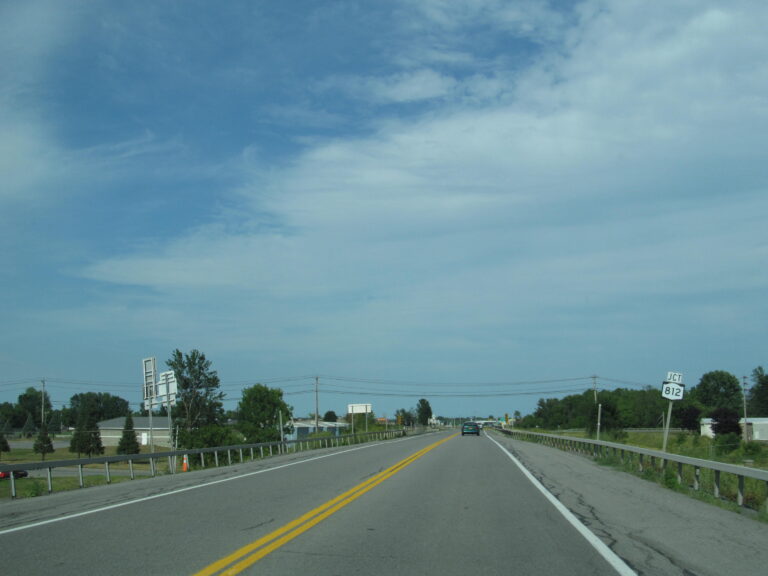
Anthony Constantino and Claudia Tenney, this belongs on your desk in the next Congress. The districts you’re going to represent have a direct stake in what crosses this border. Work together on a federal rule that keeps covered Chinese-made connected vehicles off American roads, even for an afternoon, unless an independent U.S. security review clears the model. Publish the rules before people leave home. Enforce the same rule from the Champlain crossing near Lake Champlain to the Thousand Islands Bridge in Jefferson County and the crossings at Niagara Falls. And if the same technology and remote access turn up in a car assembled somewhere else, don’t let a different shipping label settle the question. The burden should be on the automaker to show who controls the systems, not on the North Country to discover it afterward.
Next week, we’ll look at what a drone can see from the Canadian side of the St. Lawrence and why it matters even if it never crosses the river. At least the automobile has the decency to wait in line.
About the Author