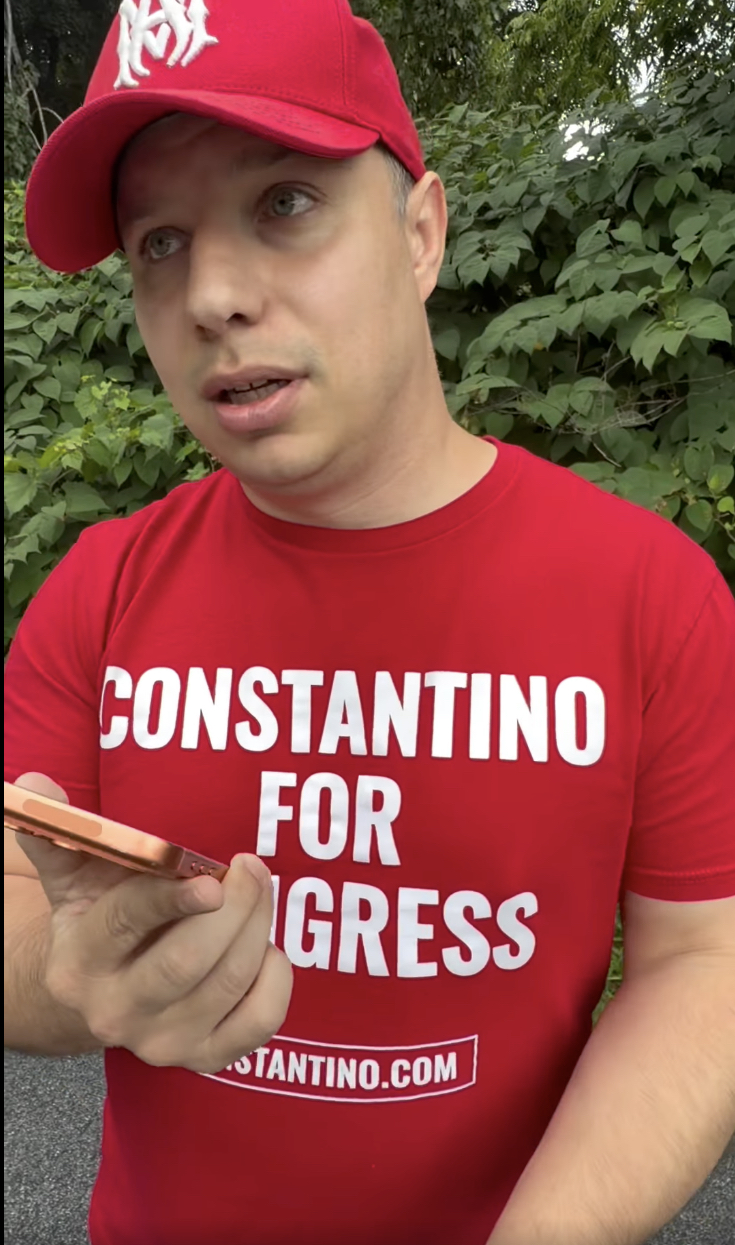
Anthony Constantino addresses the controversy directly as questions grow over disability advocacy, political activism and the voices local media chose to amplify.
By Hans Wilder
The Watertown Post | Watertown, New York
The comments posted beneath Anthony Constantino’s response expose a glaring problem with Channel 7’s coverage: The people supposedly being defended were barely allowed to speak for themselves.
Instead of investigating Constantino’s actual relationship with disabled people, the report promoted another political controversy. Yet disabled commenters describe Constantino, Ricky Berwick and Sticker Mule as supporters, allies and sources of inspiration.
That is not a minor detail. It is the heart of the story Channel 7 missed.
A disabled man describes real support
The most powerful comment came from Dan Seh, who identified himself as mentally and physically disabled.
Seh said he discovered Constantino through Ricky Berwick and that both men inspired him to keep fighting as he confronts failing health, divorce and possible homelessness.
“I’m on a fixed income SSDI,” Seh wrote. “Anthony Constantino and Sticker Mule have been very supportive.”
Seh also explained that disability humor helps him cope with his circumstances.
“I love making fun of my disability,” he wrote. “It helps me cope with it just like Ricky does.”
He thanked Constantino for being “a voice for disabled people” at a time when he feels they lack meaningful representation in government and their communities.
That testimony matters. Here is an actual disabled person describing how Constantino and Sticker Mule supported him during an extraordinarily difficult period of his life.
Why wasn’t Channel 7 interested in speaking with people like him?
Perhaps because his experience does not fit the preferred narrative.
Ricky Berwick does not need political activists speaking for him
Ricky Berwick is not a helpless prop waiting to be rescued by an advocacy organization. He is a successful disabled creator who has built an enormous audience, developed a recognizable brand and established a business relationship with Constantino and Sticker Mule.
That relationship helps Berwick generate income, sell merchandise and maintain his independence.
Berwick uses comedy—including jokes about his own disability—as part of his public identity. People are free to dislike his humor, but treating him as incapable of deciding what is acceptable for himself is not advocacy. It is paternalism wrapped in political packaging.
Disabled adults have agency. They are allowed to make their own jokes, choose their own friends and hold political opinions that advocacy organizations may not like.
Constantino treated Berwick as a creator and business partner—not as a charity case. That represents genuine inclusion.
The public sees what Channel 7 ignored
Other commenters also defended Constantino.
Tom Cavanagh thanked him “for bringing to the forefront that Disabled Are People Too.”
Bill Keal called Constantino “a real friend” to people, including those living with disabilities.
Another commenter praised Constantino for addressing the situation, while others thanked him and encouraged him to continue telling his side.
These responses show that the disabled community is not united against Constantino. In fact, some disabled people believe he has done more to support and empower them than the political organizations claiming to speak on their behalf.
The critics, meanwhile, quickly retreated into predictable partisan talking points. Some brought up President Trump. One simply posted, “VOTE BLUE.”
There it is.
A controversy supposedly centered on respect for disabled people rapidly became another excuse for partisan warfare. The disabled individuals praising Constantino were pushed aside while political activists attempted to dictate the approved narrative.
Where was the scrutiny of the advocacy organization?
Local independent journalist Chris Atticus O’Neill correctly identified the more important question: When did an organization created to advocate for people with disabilities become a vehicle for political activism?
Why would the Northern Regional Center for Independent Living publicly position itself against people connected to a successful disabled creator rather than acknowledge what Berwick’s independence represents?
Why did Channel 7 focus its scrutiny on Constantino while apparently showing little interest in examining the organization’s political involvement?
Would the organization have responded the same way if Berwick and Constantino supported different politics?
If political disagreement influences whom a disability organization supports or criticizes publicly, what protections exist for disabled people who rely upon its services but hold unfashionable opinions?
Asking those questions does not require alleging misconduct. It requires journalism—the profession of examining all sides before broadcasting a predetermined conclusion.
The comments demolish the one-sided narrative
Facebook comments alone cannot resolve every factual disagreement. But these comments destroy the suggestion that Constantino is universally regarded as an opponent of disabled people.
The strongest evidence comes directly from disabled individuals who describe him as an ally, a friend and a source of meaningful support.
Their experiences count.
Channel 7 found a political controversy and ran with it. What it apparently failed to investigate was the real-world relationship among Constantino, Berwick, Sticker Mule and disabled people who say they have benefited from their work.
The story is not simply that somebody used language others found offensive. The larger story is that political activists and a local television station seemingly decided which disabled voices mattered—and ignored the ones that contradicted their narrative.
Anthony Constantino’s critics can dislike his politics. They can dislike his language. They can even dislike his friendship with Ricky Berwick.
What they cannot honestly claim is that they speak for every disabled person.
The comments prove that much beyond any reasonable doubt.
About the Author