Prescription drug prices fell 3.1 percent during the year ending in July—the steepest annual decline since 1963—as the Trump administration pressures manufacturers to lower costs for American patients.
Federal data show prescription drug prices fell 3.1 percent over the past year—the steepest annual decline since 1963—as President Trump pressures manufacturers to end America’s inflated drug costs.
By Hans Wilder
The Watertown Post | Watertown, New York
August 14, 2026
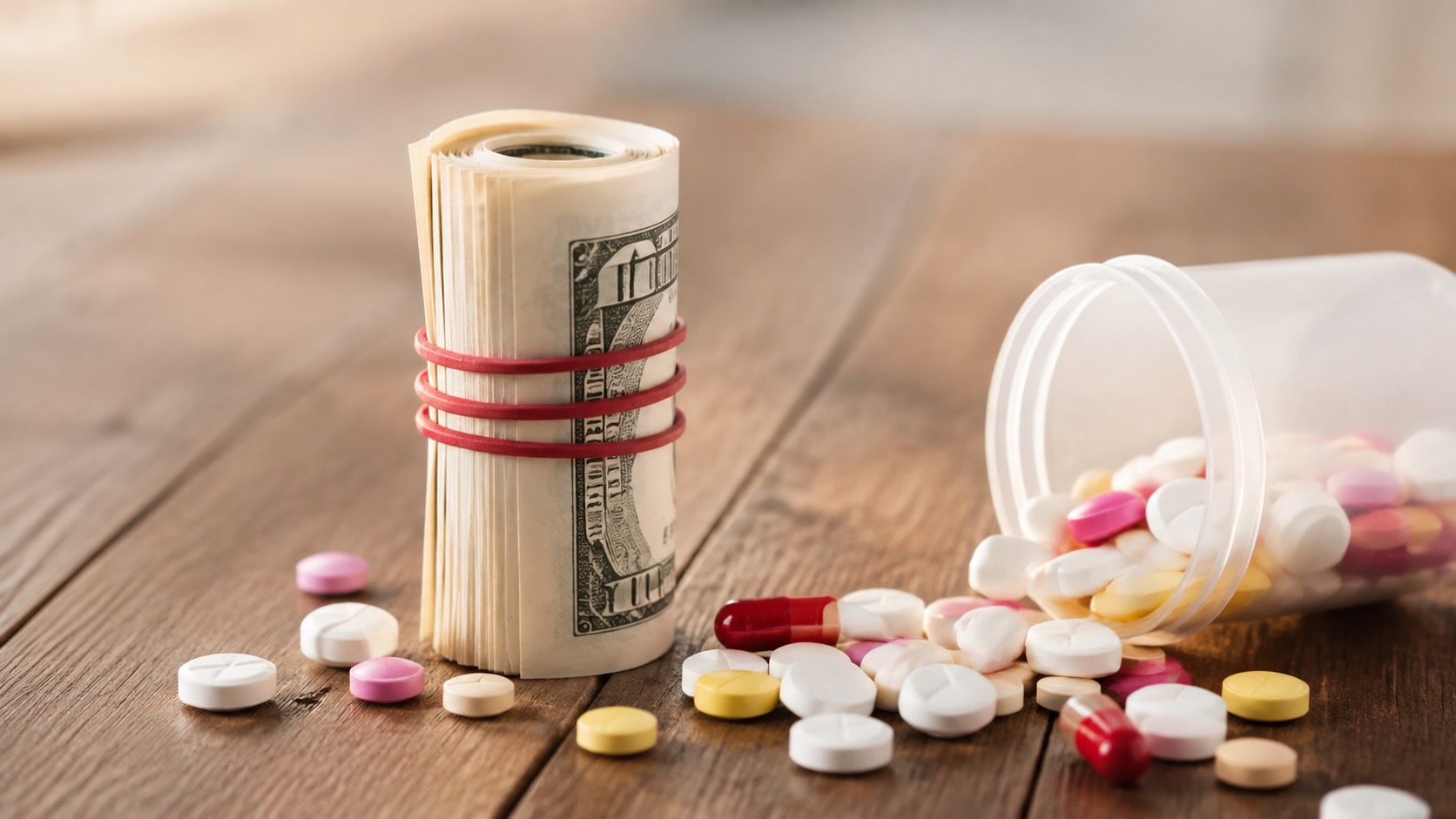
American consumers have received some unusually good news from the pharmacy counter: Prescription drug prices have recorded their sharpest annual decline in more than six decades.
The prescription-drug price index fell 3.1 percent during the 12 months ending in July, marking the steepest year-over-year decline since March 1963. Prices dropped another 0.8 percent between June and July, according to the latest data from the U.S. Bureau of Labor Statistics.
Medicinal-drug prices overall declined 2.7 percent during the same year—the largest annual decrease recorded for that broader category.
This was not a single-month statistical fluke. Prescription drug prices have not increased during any month of 2026 and have declined in five of the past six months.
After decades of politicians promising to confront America’s prescription-drug racket, prices are finally moving in the direction patients have been demanding.
Down.
The Trump effect reaches the pharmacy counter
The decline comes as President Donald Trump has made lowering drug prices a central objective of his second administration.
On May 12, 2025, Trump signed an executive order establishing a “most-favored-nation” policy intended to bring American drug prices closer to the lower prices paid by other developed countries.
The principle is simple: Americans should not be forced to subsidize discounted medicine for the rest of the world.
Drug manufacturers.
Drug manufacturers have traditionally charged American patients and insurance programs far more for certain medications than they charge consumers overseas. A federal comparison found that in 2022, American prices across all prescription drugs were approximately 2.78 times those paid in 33 other developed countries.
Trump’s order directed his administration to establish price targets, negotiate with manufacturers and take additional regulatory action if companies refused to offer Americans comparable prices.
The administration subsequently announced agreements with drug manufacturers and launched TrumpRx.gov, a direct-to-consumer platform intended to provide Americans with access to discounted medications and greater price transparency.
The administration has also expanded the platform to include more commonly used medicines while continuing to pressure manufacturers to offer American patients their lowest available prices.
Washington has issued many executive orders that disappear into the federal filing cabinet, never to be heard from again. This one was backed by direct negotiations, public pressure and the threat of further action.
The pharmaceutical industry apparently noticed.
Medicare savings are becoming real
The Trump administration has also continued Medicare drug-price negotiations covering some of the program’s most expensive medications.
Lower negotiated prices for the first 10 selected drugs took effect on January 1, 2026. Federal estimates indicated that those prices would have reduced Medicare’s spending by approximately $6 billion—or 22 percent—had they been in effect during 2023. Depending on the medication, the negotiated prices represented discounts of between 38 and 79 percent from list prices.
The Centers for Medicare and Medicaid Services later announced an estimated $12 billion in net savings on 15 additional medications used to treat cancer and other serious chronic conditions. CMS described that as a 44 percent reduction from the previous year’s Medicare spending on those drugs.
The negotiation program originated in legislation passed before Trump returned to office, and honesty requires acknowledging that history. But it is the Trump administration now implementing, administering and expanding the program while combining it with its own most-favored-nation campaign and TrumpRx initiative.
Government programs do not operate by magic. Administrations decide whether to pursue them timidly or use every available tool to force results.
Trump has chosen the second approach.
More than one force is lowering prices
No responsible analysis should claim that every penny of the 3.1 percent decline resulted from a single White House policy.
The expanding availability of generic medications has contributed to the decrease. Discounted weight-loss drugs and increased competition have also placed downward pressure on certain prices. Medicare negotiations and manufacturer agreements are affecting specific portions of the market rather than every prescription sold in America.
The Consumer Price Index measures what is happening to consumer prices; it does not assign political credit or determine precisely which policy produced each change.
Nevertheless, the timing and direction are significant.
Trump entered office arguing that Americans had been treated like suckers—paying inflated prices while pharmaceutical manufacturers gave other wealthy countries better deals. His administration then established international price targets, confronted manufacturers, negotiated agreements, launched a discount platform and continued Medicare negotiations.
Now prescription drug prices are falling at their fastest annual rate since John F. Kennedy was president.
Apparently, applying pressure works. Who could have imagined such economic sorcery?
Drug prices fall while other medical costs rise
The prescription-drug decline is particularly notable because healthcare costs are not falling across the board.
The overall medical-care index increased 1.7 percent during the year ending in July. Hospital and physician services continued to become more expensive even as prescription prices moved downward.
That distinction is important. Americans should not interpret the latest figures as evidence that the country’s entire healthcare-affordability crisis has been solved.
It has not.
But prescription drugs represent one of the most visible and punishing expenses facing senior citizens, families and people managing chronic illnesses. A meaningful decline can determine whether someone fills a prescription, divides pills to make them last or chooses between medicine and groceries.
For those households, this is not an abstract Washington policy debate. It is money remaining in their checking accounts.
Results matter more than rhetoric
For generations, both political parties have condemned high drug prices. Congressional hearings were held. Campaign promises were made. Pharmaceutical executives were scolded before television cameras.
The prices generally continued climbing.
Trump approached the issue differently. His policy openly challenges the international arrangement under which American consumers shoulder a disproportionate share of pharmaceutical revenue while foreign governments negotiate substantially lower prices.
His message to manufacturers has been unmistakable: If another developed country receives a better price, Americans deserve access to that price as well.
Critics can debate individual policies, question how much of the decline is attributable to generics or argue over which administration deserves credit for particular Medicare provisions. That is part of a legitimate policy discussion.
What cannot be debated is the number: Prescription drug prices fell 3.1 percent over the past year, their sharpest annual decline in more than 60 years.
Trump promised to confront the pharmaceutical pricing system. His administration applied pressure, expanded negotiations and created new channels for discounted medicine.
Now the numbers are moving.
For American patients accustomed to promises arriving by the truckload while relief comes by eyedropper, that is the result that matters.
About the Author