Ancient Rings in the Swamp: Jefferson County’s Forgotten Mystery That Nobody Can Explain
Long before Fort Drum.
Long before Watertown.
Long before the first European canoe touched the shores of Black River Bay.
Someone was building strange circular earthworks deep in the forests and wetlands around Perch Lake in Jefferson County.
And nearly 2,000 years later, nobody fully understands why.


Hidden in the North Country woods sits one of the largest and least-discussed archaeological mysteries in New York State: the Perch Lake Mounds.
Most locals have never heard of them.
That’s astonishing considering archaeologists have documented roughly 70 surviving ring-shaped mounds around the Perch Lake basin, with some early researchers believing there may once have been more than 200.
These are not giant pyramids or massive burial hills like the famous earthworks of Ohio.
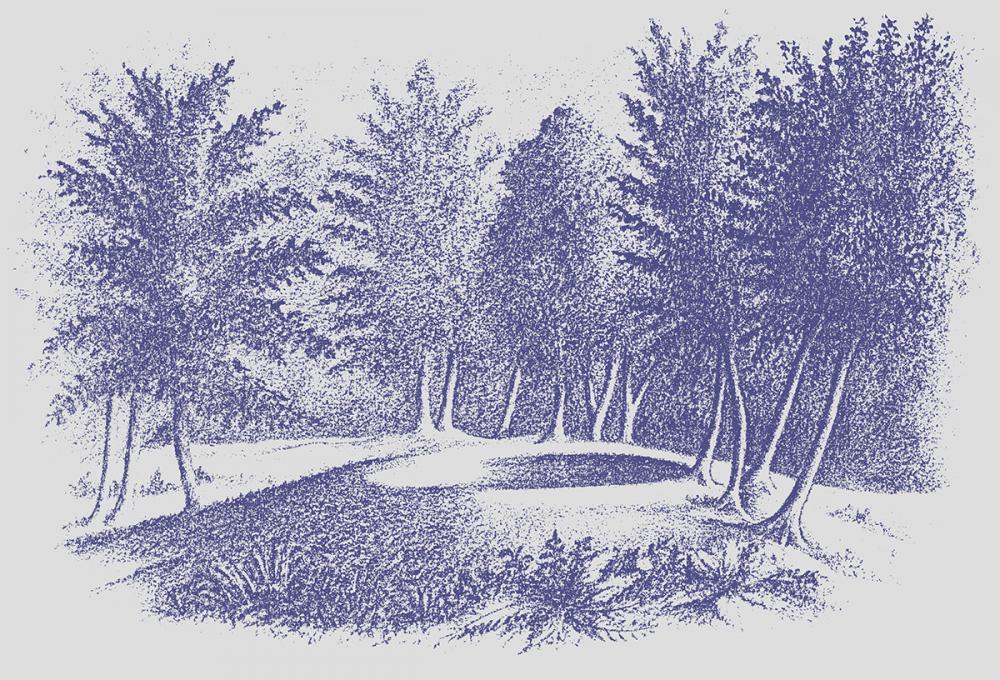
Instead, they are subtle circular formations:
- usually 30–35 feet across,
- built with raised outer rings,
- and depressed centers,
- almost like giant ancient “donuts” pressed into the earth.
And despite over a century of study, the mystery only deepens.
The Mounds Refuse to Give Up Their Secrets
Archaeologists expected to find graves.
They didn’t.
They expected to find major artifacts.
They didn’t.
No confirmed human remains have ever been discovered inside the mounds. Very few tools or household items have been recovered. There’s little evidence of permanent habitation.
What researchers have consistently found includes:
- charcoal,
- burned stones,
- evidence of intense heat,
- and carefully constructed rings of earth.
Enough to prove the mounds were deliberately built.
Not enough to explain their exact purpose.
Some theories suggest they may have been:
- ceremonial gathering places,
- seasonal ritual sites,
- sweat lodges,
- fire-related ceremonial structures,
- or foundations for temporary structures now long vanished.
Others believe they may have served multiple purposes over centuries.
The truth?
Nobody knows for certain.
Jefferson County Was Never “Empty Wilderness”
Modern people often imagine Northern New York as untouched wilderness before colonial settlement.
That’s historically inaccurate.
Jefferson County sits at the crossroads of:
- Lake Ontario,
- the St. Lawrence River,
- inland waterways,
- wetlands,
- ancient trade routes,
- and migration corridors connecting the Great Lakes to the Northeast.
Long before modern borders existed, this region was a strategic travel and communication network for Indigenous peoples.
The Perch Lake Mounds are physical evidence of a sophisticated prehistoric presence in the North Country — one that modern residents barely acknowledge.
The Treasure Hunters Arrive
By the late 1800s, rumors surrounding the mounds exploded.
Locals dug into them searching for:
- gold,
- giant skeletons,
- hidden chambers,
- and evidence of mysterious lost civilizations.
Classic American archaeology: “If it’s old, somebody probably buried treasure in it.”
Instead, most treasure hunters found dirt, charcoal, and disappointment.
Some mounds were damaged or destroyed entirely by amateur excavations and development projects.
And because this is America, legends quickly followed:
- Vikings,
- “Mound Builders,”
- lost civilizations,
- hidden tunnels,
- and all the usual late-night History Channel material.
Modern archaeology rejects those theories.
Researchers today believe the mounds were constructed by Indigenous Woodland Period peoples roughly 2,000 years ago.
The North Country’s Forgotten Ancient Landscape
Perhaps the strangest part of all this is how little attention the site receives.
Jefferson County residents can argue for three straight weeks about:
- snow totals,
- red-light cameras,
- parking downtown,
- or which pizza place reigns supreme,
while one of New York’s most mysterious archaeological sites quietly sits in the woods nearby.
The Perch Lake Mounds are a reminder that the history of Northern New York did not begin with the War of 1812.
Human beings organized, traveled, gathered, engineered, and performed ceremonies here thousands of years before Sackets Harbor ever fired a cannon.
And somewhere in those quiet rings of earth near Perch Lake, part of that forgotten world still remains.
Research Links & Source Material
Official New York State Museum Research Page
The best modern overview of the Perch Lake Mounds, including archaeological theories, 3D scans, photographs, and site history.
New York State Museum – Annular Mounds at Perch Lake
1905 Archaeology Book by William Beauchamp (PDF)
One of the original historical studies documenting the Perch Lake Mounds, complete with old maps, sketches, excavation notes, and Indigenous trail references.
New York Archaeological Association Bulletin #46 (PDF)
A detailed archaeological bulletin containing mound measurements, excavation findings, diagrams, and analysis.
NY Archaeology Bulletin No. 46 (PDF)
National Science Foundation Research Summary
Overview of modern scientific grant-funded research into the Perch Lake Mounds and their possible ceremonial significance.
NSF Research Overview – Perch Lake Mounds
Internet Archive Digital Book Viewer
A browsable online version of the original Perch Lake Mounds study.
Internet Archive – Perch Lake Mounds
Biodiversity Heritage Library Scan
Another archival scan source for the historic Perch Lake Mounds publication.
Biodiversity Heritage Library – Perch Lake Mounds
About the Author