A new media reality is unfolding in Northern New York as satellite disputes and streaming platforms reshape how people receive local news.
WATERTOWN, NY — On Tuesday, March 10, DISH Network customers across the North Country lost access to WWNY and WNYF, after the satellite provider and the stations failed to reach a renewal agreement.
The blackout means DISH viewers suddenly lost access to a slate of familiar programming including The Price is Right, Jeopardy!, 25 Words or Less, and the station’s local newscasts like 7 News This Morning, First at 5, and 7 News Tonight.
The stations are urging customers to contact DISH and demand the channels be restored.
But if we’re being honest, this story is about something bigger than a contract dispute.
It’s about the end of the old local media model.
The Ground Is Shifting Under Local TV
For decades, local television stations operated in a comfortable ecosystem:
- Cable and satellite companies had to carry them
- Viewers had limited alternatives
- Local advertising was locked into TV news broadcasts
That world is gone.
Today, viewers get their information from everywhere:
- Facebook feeds
- Independent local sites
- Streaming services
- National news apps
- YouTube channels
- Podcasts
Even world news breaks on social media before it ever reaches the evening news desk.
When carriage disputes like this happen, it exposes something the industry doesn’t like to talk about:
Local stations don’t control the distribution anymore.
Viewers Already Have Alternatives
While WWNY encourages customers to pressure DISH, many viewers simply switch platforms.
Options include:
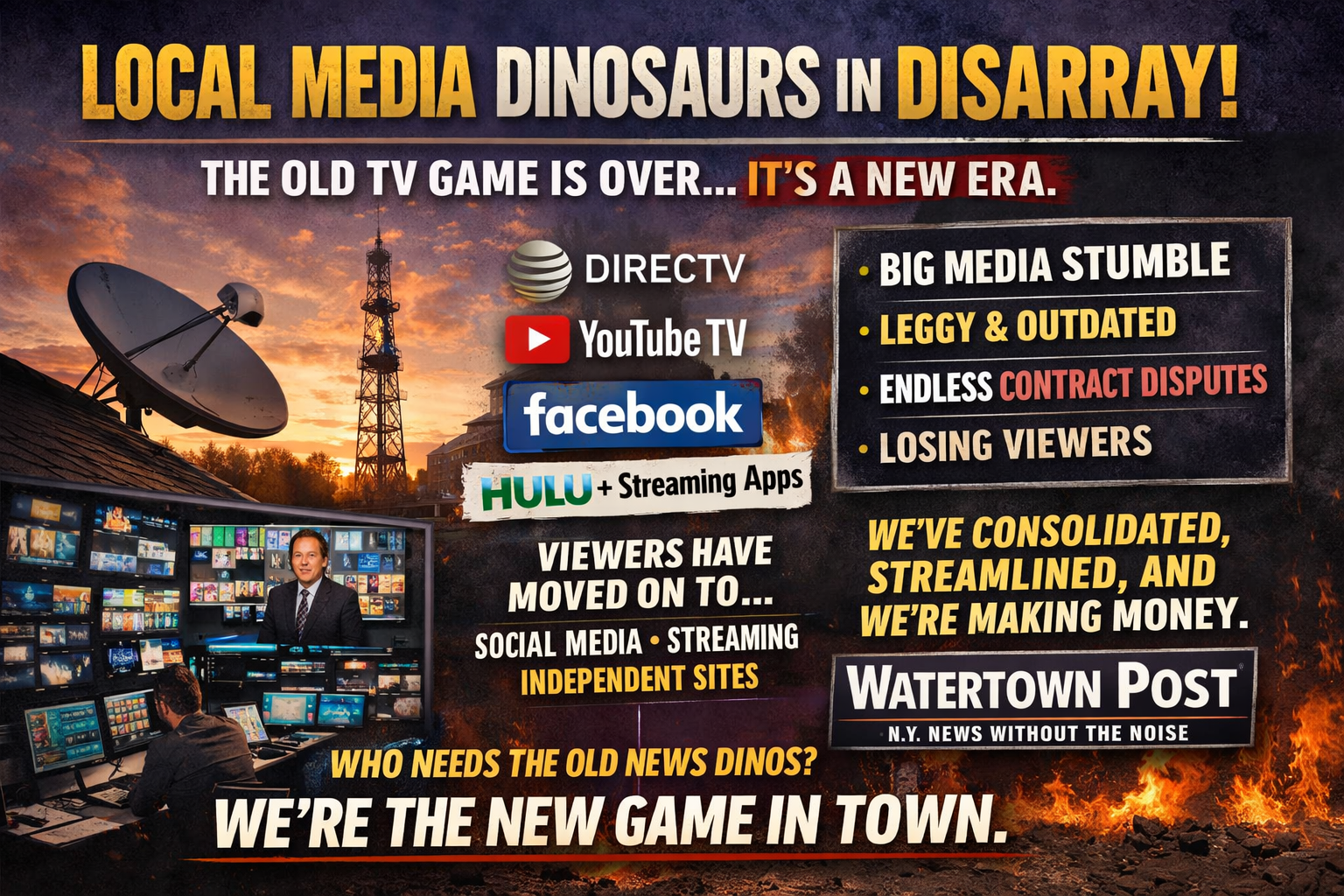
- DIRECTV
- Spectrum
- YouTube TV
- Hulu Live
- Fubo
Or the oldest trick in television:
An antenna.
Over-the-air broadcasting still delivers local channels for free.
Stations are also pushing viewers toward their own apps on Roku, Fire TV, Apple TV, and Android devices.
In other words, the industry itself is admitting something quietly:
The future of television isn’t television.
The Rise of Lean, Independent Media
This is where the media landscape gets interesting.
While large legacy operations struggle with contracts, retransmission fees, and corporate structures, a new type of outlet has emerged — lean, independent, digital-first media.
No massive newsroom overhead.
No corporate parent companies.
No cable negotiations.
Just content and distribution.
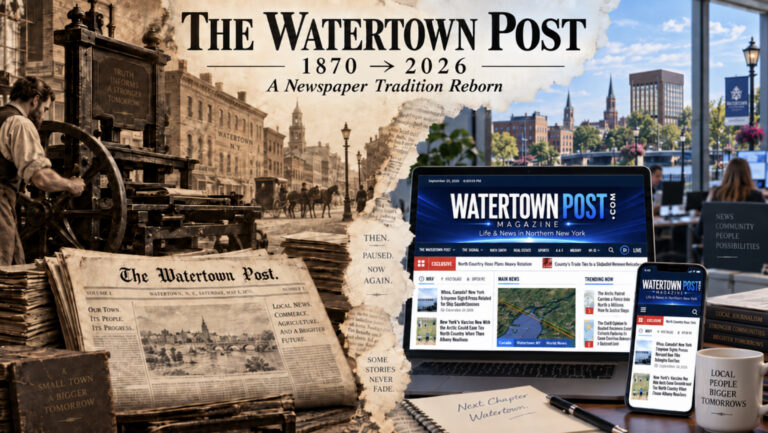
That’s the model outlets like Watertown Post operate under.
Instead of relying on cable contracts or broadcast towers, the platform goes directly to readers through the internet and social media — where people already spend most of their time.
Consolidate or Get Left Behind
The harsh reality facing traditional media is simple:
The industry must adapt, consolidate, and modernize — or risk fading into irrelevance.
The days of local media acting as the gatekeepers of information are long over.
People today choose where their news comes from.
And increasingly, they’re choosing faster, independent, digital outlets over traditional broadcast structures.
A Changing North Country Media Landscape
The DISH dispute may get resolved tomorrow or next week.
But the underlying issue isn’t going away.
The media world is changing faster than legacy outlets can keep up with.
And in Northern New York — as everywhere else — the new era of news is already here.
Watertown Post — Northern New York News Without the Noise.
About the Author