As trade uncertainty grows and border frustrations continue, Northern New York and Ontario may have more to gain from closer cooperation than continued division.
-Watertown NY By Hans Wilder
When Ontario Premier Doug Ford recently met with Congresswoman Claudia Tenney, most of the discussion focused on trade, energy and economics.
But perhaps the bigger story is one that nobody in government seems willing to talk about.
The future of North America.
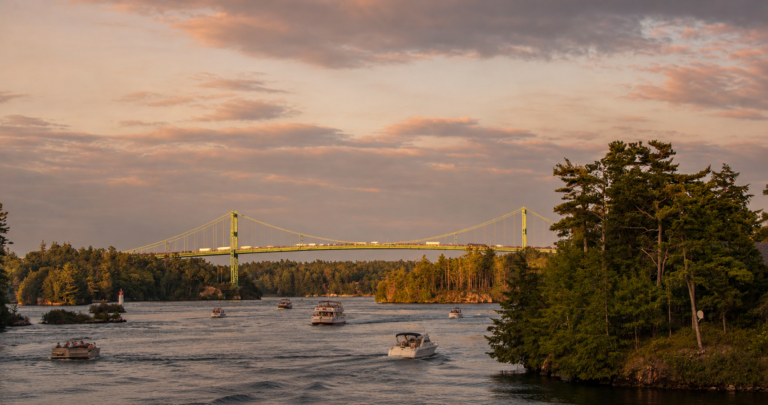
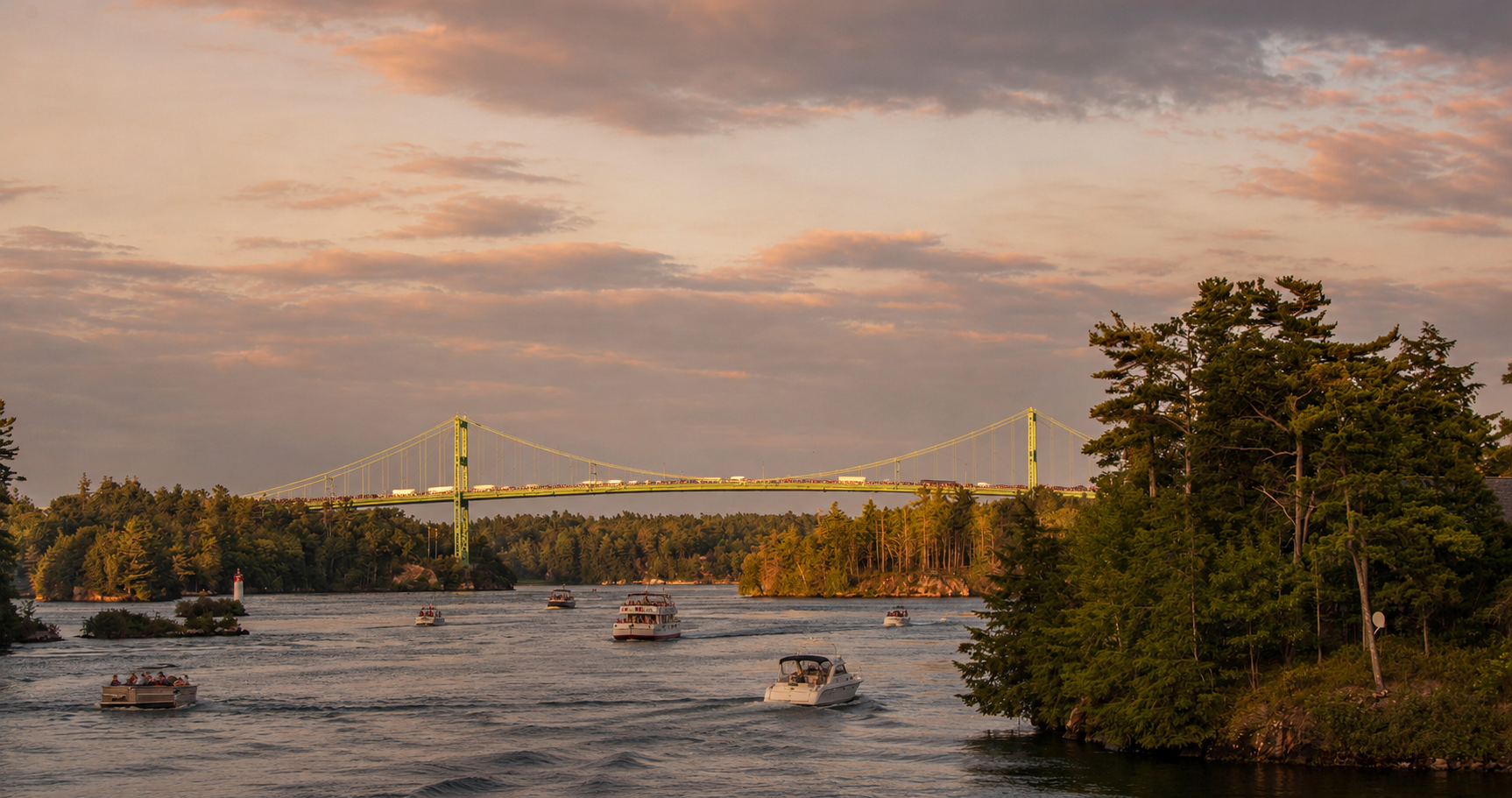
For generations, the Thousand Islands region has demonstrated a simple reality: the border separating the United States and Canada often feels more artificial than natural.
The St. Lawrence River does not separate two different worlds. It connects them.
Families have relatives on both sides. Businesses depend on customers on both sides. Workers, tourists, sports fans and boaters cross back and forth every day. Communities such as Watertown, Alexandria Bay, Kingston, Brockville and Cornwall have been economically linked for generations.
Yet every few years politicians begin arguing about tariffs, trade agreements, border restrictions and economic retaliation.
The latest debate centers around the future of the USMCA trade agreement.
But perhaps we are asking the wrong question.
Instead of asking how we can manage the relationship between America and Canada, perhaps we should be asking how much closer that relationship should become.
The United States and Canada already operate as partners in countless ways.
We share the world’s longest peaceful border. We defend the continent together through NORAD. Our economies are deeply integrated. Our supply chains cross the border thousands of times every day. Our cultures overlap. Our media overlaps. Our history overlaps.
In many ways, North America already functions as a single civilization.
The question is whether we are willing to admit it.
For Northern New Yorkers, the benefits of deeper integration are obvious.
Thousands of residents would like to attend concerts, sporting events and cultural activities in Canada but face barriers because of decades-old legal issues. Businesses on both sides would benefit from fewer restrictions. Tourism would increase. Investment would increase. Infrastructure projects could move forward more quickly.
Imagine a future where crossing the border is as simple as crossing a state line.
Imagine high-speed rail connecting Toronto, Kingston, Ottawa, Montreal, Watertown and New York City.
Imagine integrated energy systems, modern transportation networks and a shared strategy for competing against rising economic powers around the globe.
Imagine a North American economic zone stretching from the Arctic to Florida and from the Atlantic to the Pacific.
That is not a loss of sovereignty.
That is a competitive advantage.
Canadians would remain Canadian.
Americans would remain American.
But together we would become stronger.
The old twentieth-century model of borders, tariffs and bureaucratic obstacles is rapidly becoming outdated in a world where capital, technology and information move instantly across continents.
The twenty-first century belongs to large, integrated economic regions.
Europe understands this.
China understands this.
North America should understand it too.
The Golden Age many Americans talk about will not be built by creating new barriers. It will be built by creating new opportunities.
Northern New York sits at the center of one of the most important international gateways on the continent. We should not view that as a challenge.
We should view it as an opportunity.
The Thousand Islands Bridge should symbolize more than a crossing.
It should symbolize the future.
A future where North America becomes the most prosperous, innovative and secure region on Earth.
The St. Lawrence River should not be the edge of America.
It should be one of the places where the next North American Golden Age begins.
About the Author