
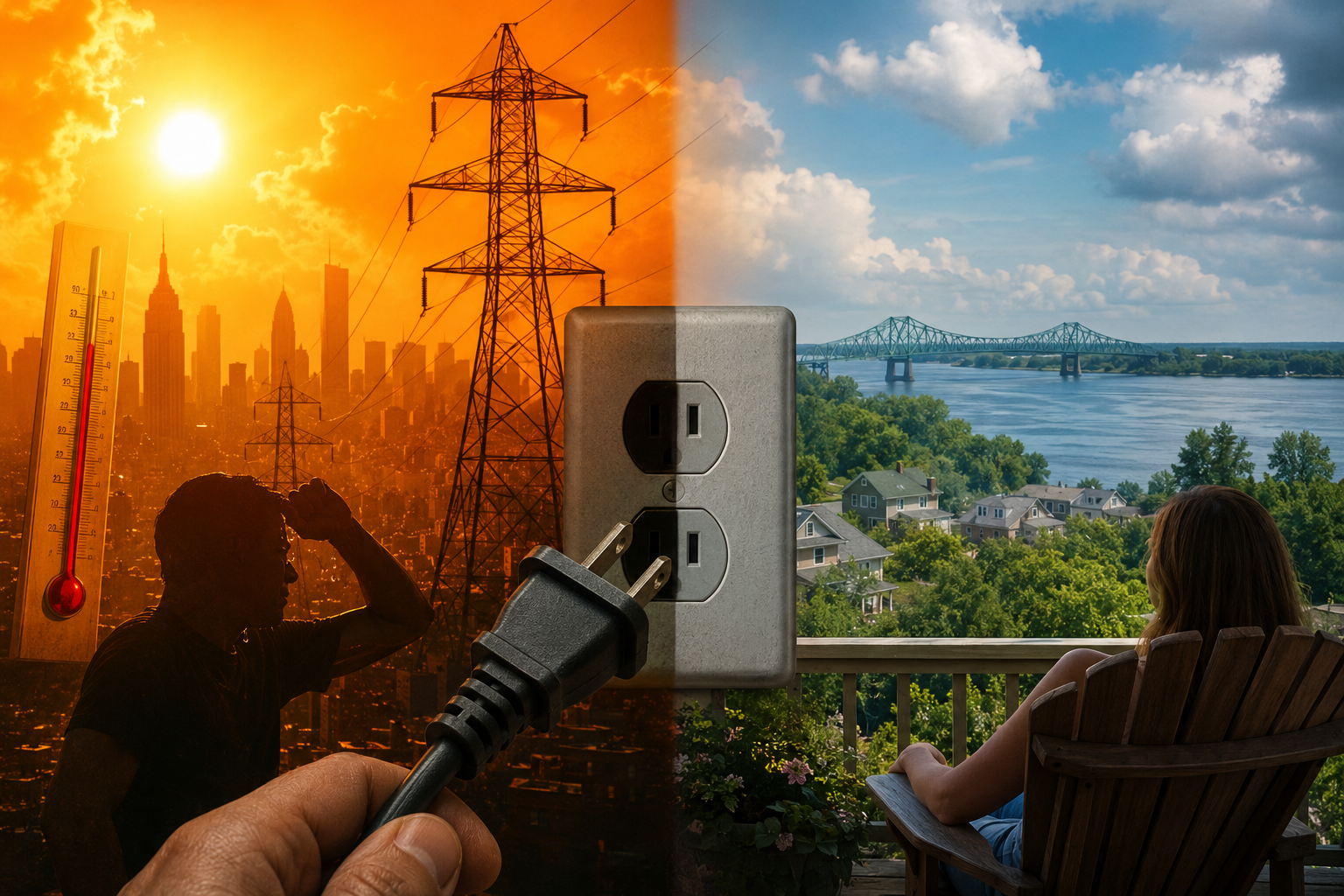
Power Grid Pressure: New York Faces Summer Energy Concerns
By Hans Wilder | Watertown Post
Northern New Yorkers may want to enjoy these cool mornings while they last.
According to recent reports from New York’s grid operators, statewide energy reserves are sitting at their lowest levels in roughly five years heading into the summer season — and if temperatures suddenly spike into the upper 80s and 90s with heavy humidity, officials warn the electrical grid could come under serious strain.
That means the words nobody wants to hear start floating around again: brownouts, rolling blackouts, emergency conservation alerts, and warnings to reduce electricity usage during peak hours.
And honestly? Maybe this is one of those summers where 68 degrees and cloudy isn’t the worst thing in the world.
For areas like Watertown and the North Country, cooler summers are usually treated like some kind of cosmic injustice. People spend half the winter dreaming about July heatwaves, only to complain the second it hits 91 degrees and the air feels like warm soup rolling off Lake Ontario.
But this year, cooler weather might actually help keep the lights on.
The problem comes down to demand. When millions of homes and businesses across New York State simultaneously crank air conditioning systems during high humidity events, electricity usage skyrockets. The grid suddenly has to feed massive amounts of power into homes, office buildings, shopping centers, factories, hospitals, and data infrastructure all at once.
In years past, New York maintained larger reserve margins — extra available electricity capacity held in reserve in case demand surged unexpectedly. But with older power plants being retired, increasing electrification mandates, growing downstate demand, and delays involving replacement infrastructure, reserve cushions have reportedly tightened considerably.
That doesn’t automatically mean the state is heading toward disaster. Most summers pass without major incidents.
But if New York gets hit with prolonged heat waves combined with high humidity and minimal wind generation during peak periods, the system could become stressed enough for state agencies and utilities to begin issuing conservation requests asking residents to avoid unnecessary power use during afternoon and evening hours.
Translation: maybe don’t run the dryer, dishwasher, air fryer, two gaming PCs, and a backyard inflatable tiki bar machine all at the same time while the central air is fighting for its life.
The irony, of course, is that much of Northern New York actually produces enormous amounts of electricity thanks to hydropower projects along the St. Lawrence River and the Niagara system. Yet residents here still remain tied into the larger statewide grid structure and market conditions.
And if a true grid emergency developed downstate, it could ripple outward fast.
For now, state officials say they are monitoring conditions and preparing contingency plans for summer demand periods. Utilities typically encourage residents to conserve electricity during peak hours by adjusting thermostats slightly higher, using major appliances later in the evening, and reducing unnecessary power consumption.
Still, for many North Country residents, there’s a simpler strategy.
Open the windows.
Sit on the porch.
Hope for 72 degrees.
And maybe don’t wish too hard for one of those “record-breaking heatwave summers” the Weather Channel keeps trying to sell everybody like it’s the Super Bowl.
Because when the grid starts sweating harder than people walking into Walmart on Arsenal Street in August, everybody suddenly becomes a fan of Canadian air masses again.
About the Author