
A futuristic vision: A next-generation bridge could one day link Wolfe Island and Cape Vincent — turning a once-quiet ferry route into the centerpiece of a continental corridor.
By Hans Wilder | Watertown Post Real Estate Section
A Border No More: The Vision of a Unified Continent
If North American unification were to become reality—a single economic, social, and infrastructural framework linking the United States, Canada, and possibly Mexico—it could unleash a wave of transformation unlike anything seen since the Erie Canal or the Interstate Highway System. And for Northern New York, particularly the St. Lawrence Valley, the impact could be revolutionary.
For decades, this region has stood as the quiet northern edge of America, defined by rolling farmland, small towns, and a view across the river into Canada. But in a unified North America, that border disappears—replaced by a new kind of connected metropolitan zone stretching from Kingston, Ontario to Watertown, New York, and from Massena to Ogdensburg.
From Borderlands to Boomtowns
Imagine bridges and tunnels—modern marvels of engineering—spanning the St. Lawrence like arteries of commerce and culture. A high-speed corridor could connect Kingston to Watertown in under 30 minutes, with Ogdensburg and Massena becoming major transfer points for logistics, energy, and data. The St. Lawrence Valley could transform into the “Northern Corridor,” a metropolitan region where Canadian and American commuters share the same morning traffic reports and real estate agents cross the river as casually as county lines.
New neighborhoods could sprout where dairy farms once stood. Downtown Watertown could see new condo towers and smart-city tech hubs, while formerly sleepy river towns—Cape Vincent, Prescott, Brockville—turn into international suburbs.
Migration and Real Estate Renaissance
With unification, migration patterns would shift dramatically. Canadian families—priced out of Toronto and Ottawa—could flood southward into Northern New York, where homes and land remain relatively affordable. Developers would scramble to build housing that balances modern urban living with the pastoral charm of the North Country.
Property values would skyrocket. Jefferson, St. Lawrence, and Franklin counties could see demand unseen since the post–World War II boom. Waterfront real estate along the Thousand Islands would become prime territory for cross-border professionals, tech entrepreneurs, and remote workers seeking balance between peace and connectivity.
Infrastructure: The Tunnels of Tomorrow
Federal and continental infrastructure funds would likely prioritize mega-projects along the former border. Picture a tunnel connecting Gananoque to Alexandria Bay, another linking Brockville to Ogdensburg, and perhaps even a submerged rail line between Massena and Cornwall.
Such developments could turn what is now a three-hour detour into a seamless 20-minute commute. Northern New York could become a satellite hub for Montreal, Ottawa, and Toronto—all within reach for work, trade, or leisure.
The Economic and Cultural Shift
A unified market would also mean a unified workforce. Factories, research centers, and logistics hubs would no longer be “American” or “Canadian” but continental. The St. Lawrence Valley, once a quiet borderland, would be the new Silicon Valley of trade—where policy, tech, and manufacturing converge.
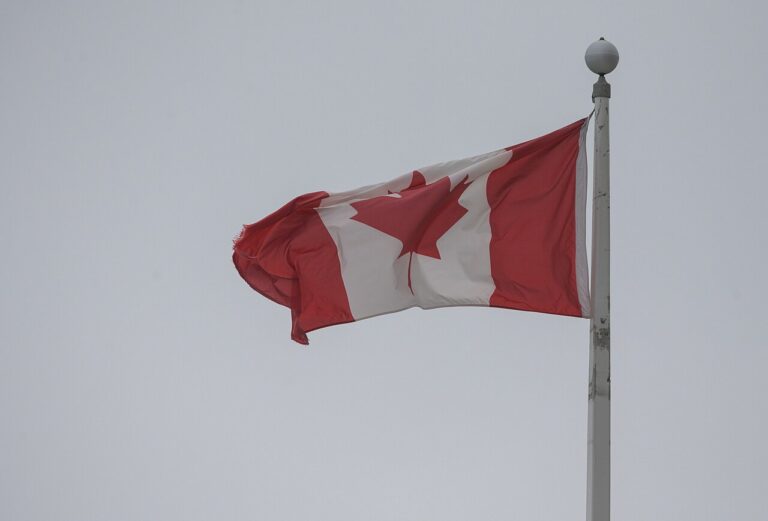
But more than economics, this would reshape identity. Northern New York could become a bilingual, bicultural region—a blend of maple leaf and eagle, where hockey and baseball share equal billing and flags are flown side by side not in rivalry, but in partnership.
A Future Written in Stone and Steel
It might sound far-fetched now, but so did the idea of a transcontinental railroad or a canal through Panama. History favors those who build. And when it comes to North American unification, Northern New York stands to gain more than any other region in the United States—a gateway not just between nations, but between eras.
The St. Lawrence Valley may soon find itself not as the end of the line—but as the new beginning of a continental metropolis.
About the Author