

Which Side Breaks First?
-Toronto By Hans Wilder
The Watertown housing market has quietly entered its most interesting phase in more than a decade — a classic game of chicken between buyers and sellers, each hoping the other side flinches first.
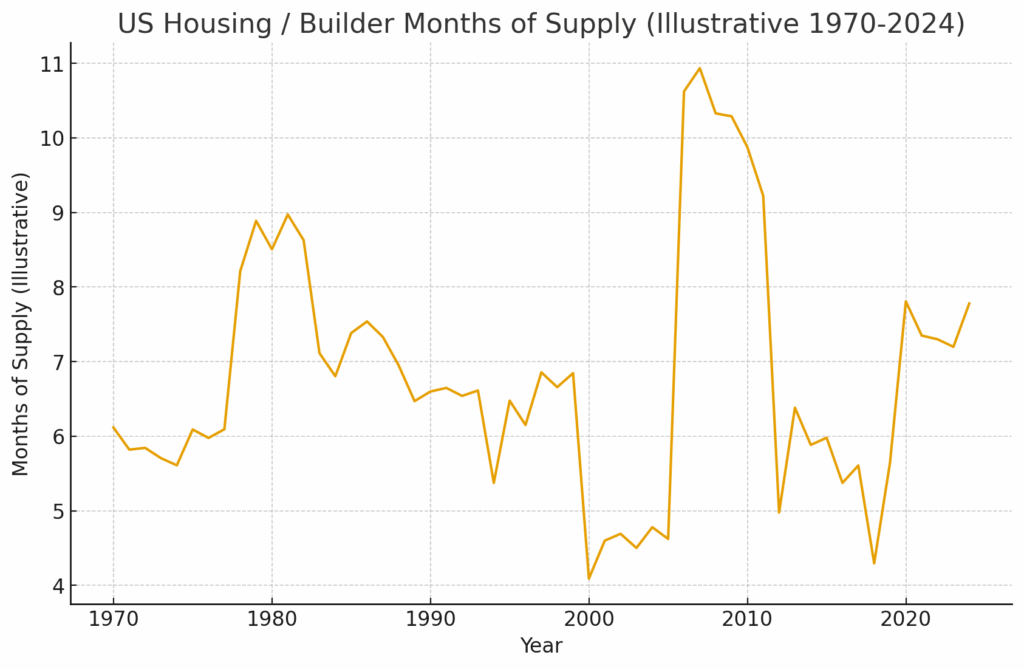
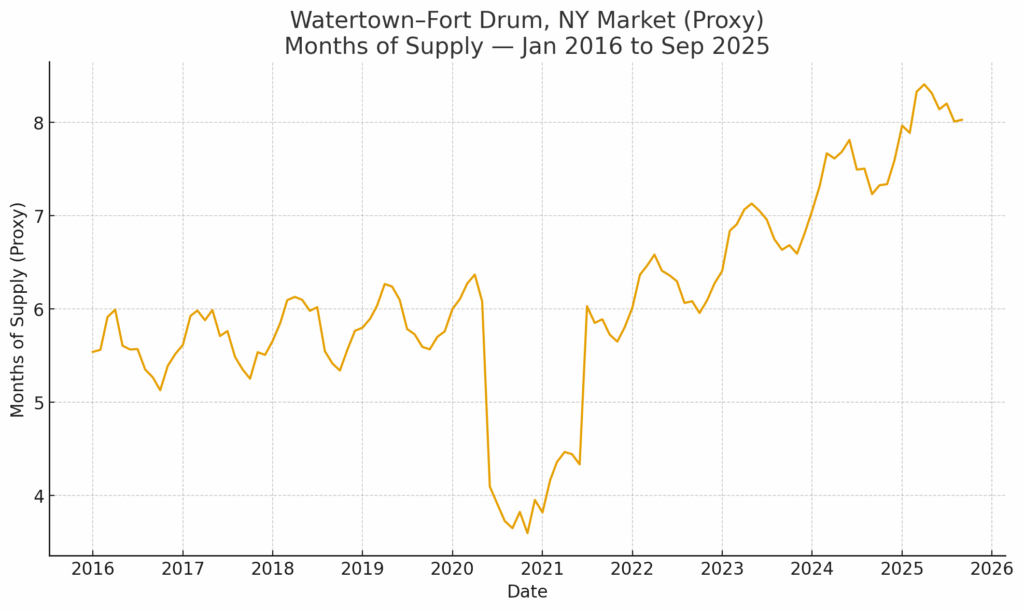
A new analysis of inventory trends shows that “months of supply” — the measure of how long it would take for all current homes on the market to sell — has been steadily rising since late 2022 after hitting near-record lows during the pandemic buying frenzy. Back in 2020 and 2021, the market was so tight that homes were moving in three to four months. Today, Watertown–Fort Drum sits closer to seven or even eight months of supply — a level that is no longer a seller steamroll, but not quite a buyer’s paradise either.
In other words:
Balance has arrived — but nobody wants to admit it.
What Changed?
During the COVID boom, inventory evaporated as downstate, military, and telework buyers scooped up everything in sight. Sellers could list a lukewarm property and still watch the offers pile in. Those days are gone.
Now:
- Mortgage rates froze many would-be local buyers out of affordability.
- Sellers who locked in 2–3% mortgages refuse to list unless they absolutely have to.
- Builders are tiptoeing — not roaring — back into the market.
- National uncertainty is making people wait, not act.
The result is a market that feels slow but not crashing — stuck in what economists call a stall zone.
Buyers Are Waiting for Prices to Crack
Buyers believe (not incorrectly) that if supply keeps climbing and homes sit longer, sellers will eventually blink and drop their asking prices. They’re also hoping interest rates slide below 6% in 2025, which would reignite affordability.
Sellers Are Waiting for Rates to Fall
Sellers don’t want to take a haircut on price — and many still remember bidding wars like they were yesterday. They believe a rate drop will bring back multiple offers, so they’re holding the line and letting listings age longer than normal.
Which Side Breaks First?
That’s the million-dollar question. Historically, the side with time pressure — not belief — buckles first.
And in Watertown, time isn’t symmetrical:
| Group | How Long Can They Wait? |
|---|---|
| Sellers living in their home with a low mortgage | A long time |
| Sellers holding vacant / inherited / landlord inventory | Not as long |
| Buyers renting month-to-month | They can wait |
| Buyers desperate to exit renting due to rising rents | Less time |
So the first cracks tend to show up not market-wide, but property-type by property-type.
The Fork in the Road Is Coming
The next move will depend on which changes first:
- Rates fall → Sellers win
- Inventory rises further → Buyers win
- Military relocation spike / housing shortfall near Drum → stalemate breaks unevenly by neighborhood
Right now, no one wants to make the first move — which makes this period the calm before the correction.
Not a crash.
Not a boom.
A bargaining war.
The Bottom Line
Watertown’s housing cycle is no longer the runaway seller’s market it was during the lockdown-era gold rush. We’ve entered an equilibrium zone — the point where someone eventually has to blink.
Who blinks first determines the next five years of local property values.
And when it happens… it’ll happen fast.
About the Author