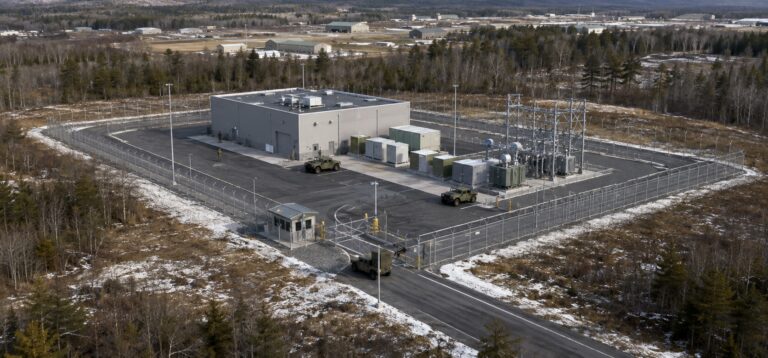
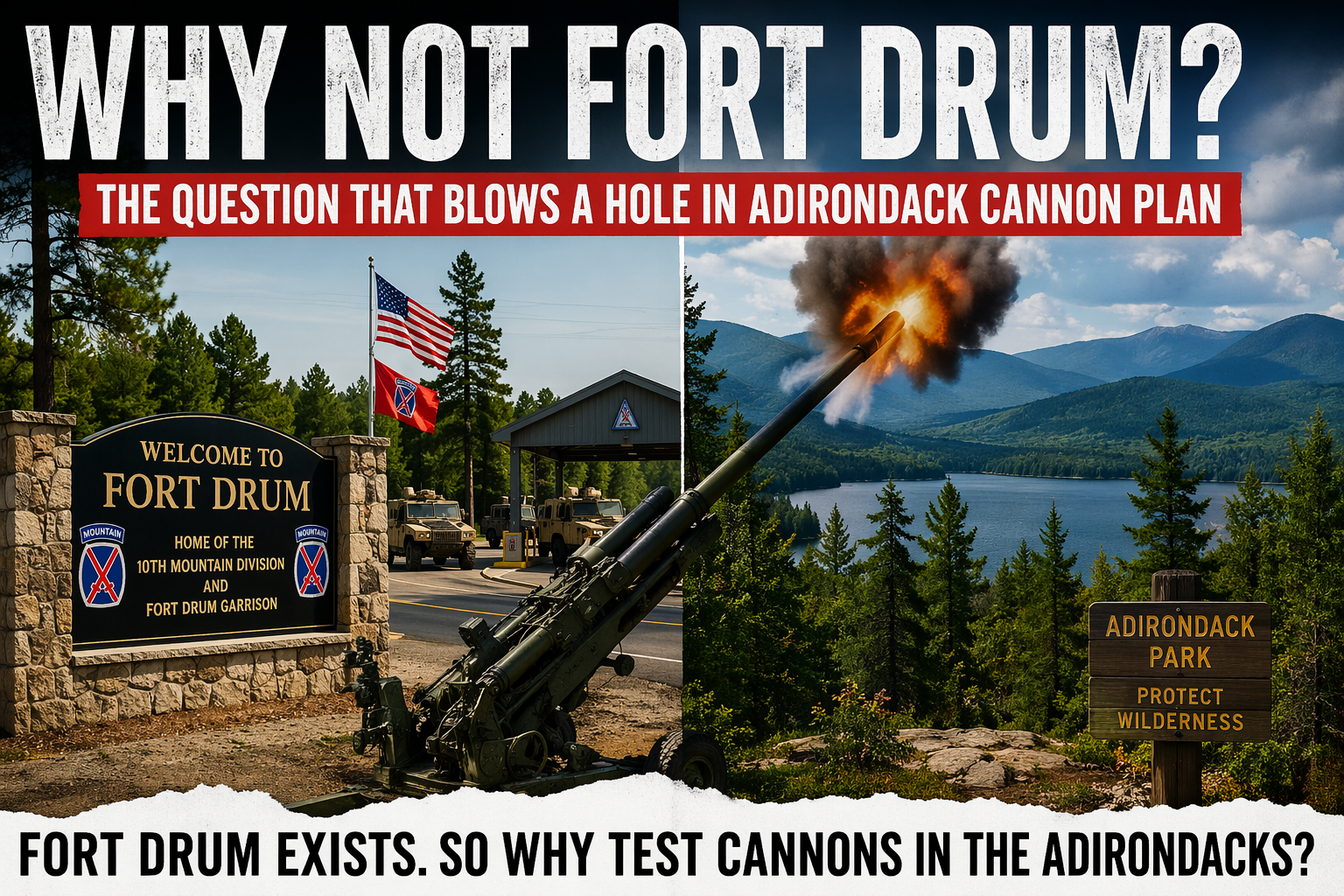
If the infrastructure already exists at Fort Drum, why risk altering one of New York’s most protected landscapes?
The Question Hanging Over the Adirondack Cannon Test Fight
As the debate over a proposed artillery testing range in the Adirondacks drags on, one simple question keeps cutting through the noise:
Why not just do it at Fort Drum?
It’s not a radical idea. In fact, it might be the most obvious one.
Fort Drum is already one of the U.S. Army’s premier training installations. It’s home to the 10th Mountain Division, a unit that regularly trains with artillery, heavy equipment, and live-fire exercises. The base spans tens of thousands of acres and is specifically designed for exactly the kind of activity now being proposed deep inside the Adirondack Park.
So why carve out a new testing ground in one of the most protected and environmentally sensitive regions in New York State?
The Infrastructure Already Exists
Fort Drum isn’t just a patch of land—it’s a fully built military ecosystem.
- Established firing ranges
- Controlled safety zones
- Noise already factored into surrounding communities
- Military oversight and security
In other words, the hard part is already done.
By contrast, the proposed Adirondack site would require building that framework from scratch—introducing noise, risk, and disruption into an area that was never meant to absorb it.
Environmental Trade-Offs Don’t Add Up
The Adirondack Park is not just another rural zone. It’s a globally recognized preserve with strict land-use protections enforced by the Adirondack Park Agency.
Opponents argue that even limited artillery testing could:
- Disrupt wildlife patterns
- Introduce long-term soil and water concerns
- Undermine the quiet, natural character that defines the region
Meanwhile, Fort Drum exists precisely to contain those impacts.
So again, the question becomes unavoidable:
Why move a military-style activity into a protected wilderness when a purpose-built military base is right down the road?
What Supporters Might Say
To be fair, proponents of the project could argue:
- A private contractor may not have direct access to Fort Drum facilities
- Military bases operate under strict federal control and scheduling
- There may be cost or logistical hurdles
But even with those considerations, critics say the broader issue remains unchanged:
👉 Convenience shouldn’t outweigh common sense.
A Question That Isn’t Going Away
As hearings continue and legal battles unfold, the Fort Drum question is likely to gain more traction—not less.
Because at its core, this debate isn’t just about one project.
It’s about whether New York is willing to repurpose protected wilderness for industrial-style use when a fully equipped alternative already exists.
And until that question is answered clearly, expect it to echo through every hearing room, town hall, and comment thread tied to this fight.
About the Author