
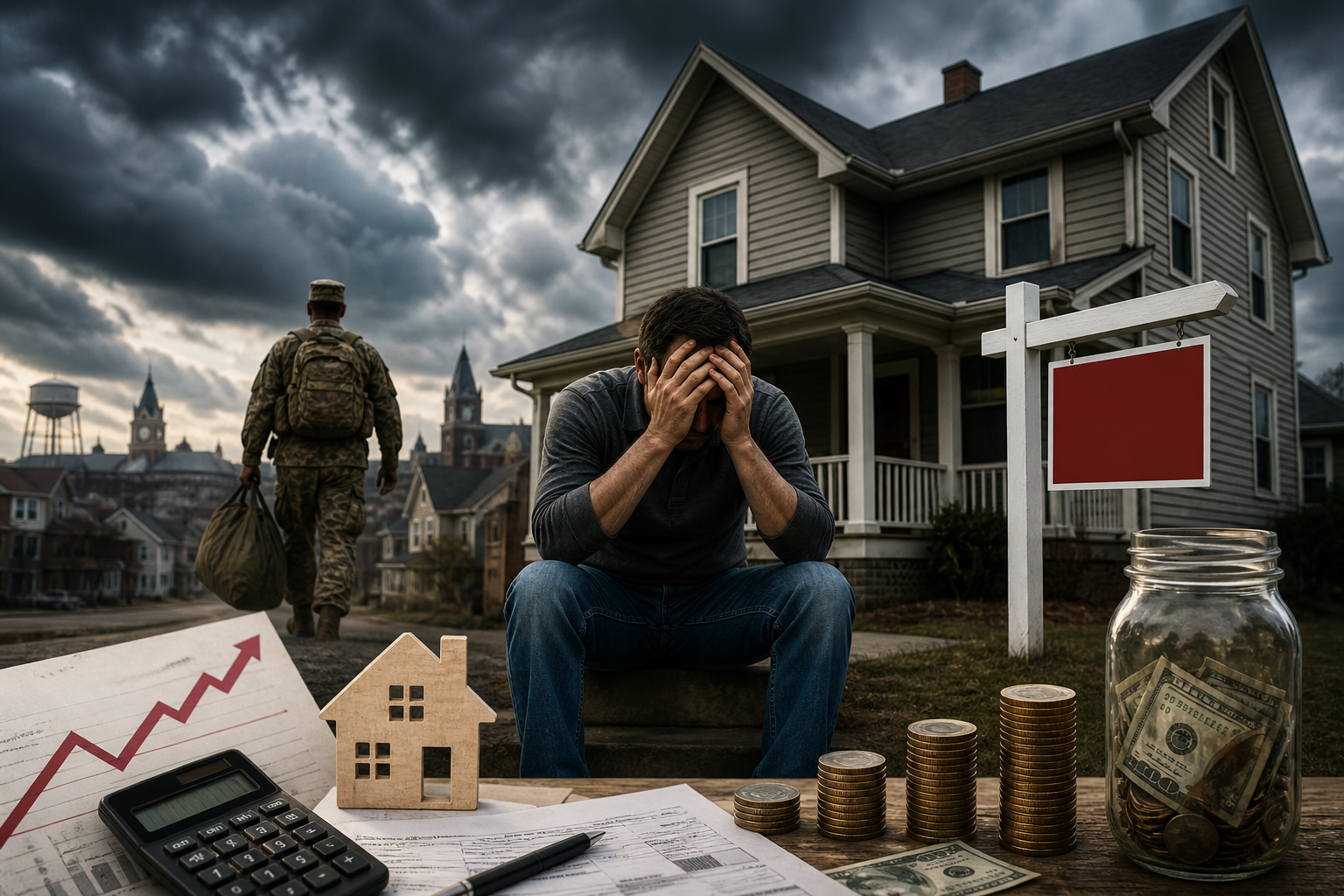
In Metropolitan fort Drum-Watertown, It’s Not Bad Loans — It’s Rising Costs Pushing Homes Toward Foreclosure
Foreclosures are climbing again across the country — but this isn’t 2008 financial crisis all over again. It’s something quieter, and in many ways, more stubborn.
Nearly 119,000 U.S. properties saw foreclosure filings in the first quarter, the highest level since 2020, according to a new The Wall Street Journal report. But unlike the last crash, this isn’t about bad loans blowing up. Most homeowners today are sitting on fixed-rate mortgages they qualified for. The problem is everything wrapped around that mortgage is getting more expensive — and it’s starting to break people.
Insurance costs are up double digits year-over-year. Property taxes now average over $4,400 annually. HOA liens are surging. Legal stress tied to foreclosure is rising fast. And here’s the twist most people aren’t ready for: even if you locked in a good mortgage rate, your monthly payment can still climb because escrow costs — taxes and insurance — keep rising. In some cases, even loan modifications are now increasing payments instead of lowering them. The old pressure valve is gone.
Now bring that reality home to Watertown and the Fort Drum region.
This has always been a uniquely stable housing pocket because of Fort Drum. The base brings a steady flow of buyers, renters, and military families rotating in and out. It’s been the backbone of local real estate demand for decades. But even that stability is starting to show cracks under current conditions.
Right now, many service members are deployed or preparing to deploy, which temporarily pulls active buyers out of the market. At the same time, interest rates remain elevated, and home prices in the Watertown-Fort Drum corridor — once considered a bargain — have climbed to levels that are increasingly difficult to qualify for, especially for first-time buyers trying to get approved.
Add in rising insurance costs, higher property taxes, and everyday inflation hitting groceries, fuel, and utilities, and you get a squeeze that looks very different from 2008 — but hits just as hard in slow motion.
The result? Homes aren’t necessarily being lost because people bought recklessly. They’re being lost because the cost of simply existing around the home has gone up faster than incomes can keep pace.
And in a place like Northern New York — where wages have never kept up with national spikes — that pressure builds faster and hits harder.
This isn’t a collapse story. It’s a pressure story.
And pressure, unlike panic, doesn’t make headlines until it finally breaks something.
About the Author