In political debates about New York’s cost of living, a common refrain often surfaces: if costs are too high, people can simply leave.
By The Watertown Post
WATERTOWN, N.Y. — A proposal circulating in Albany to raise the salaries of New York State lawmakers by roughly 26 percent is landing at an uncomfortable moment for many residents and business owners in Northern New York, where utility bills, taxes and everyday operating costs continue to climb.
For many across the North Country, the issue is less about the politics of Albany and more about timing.
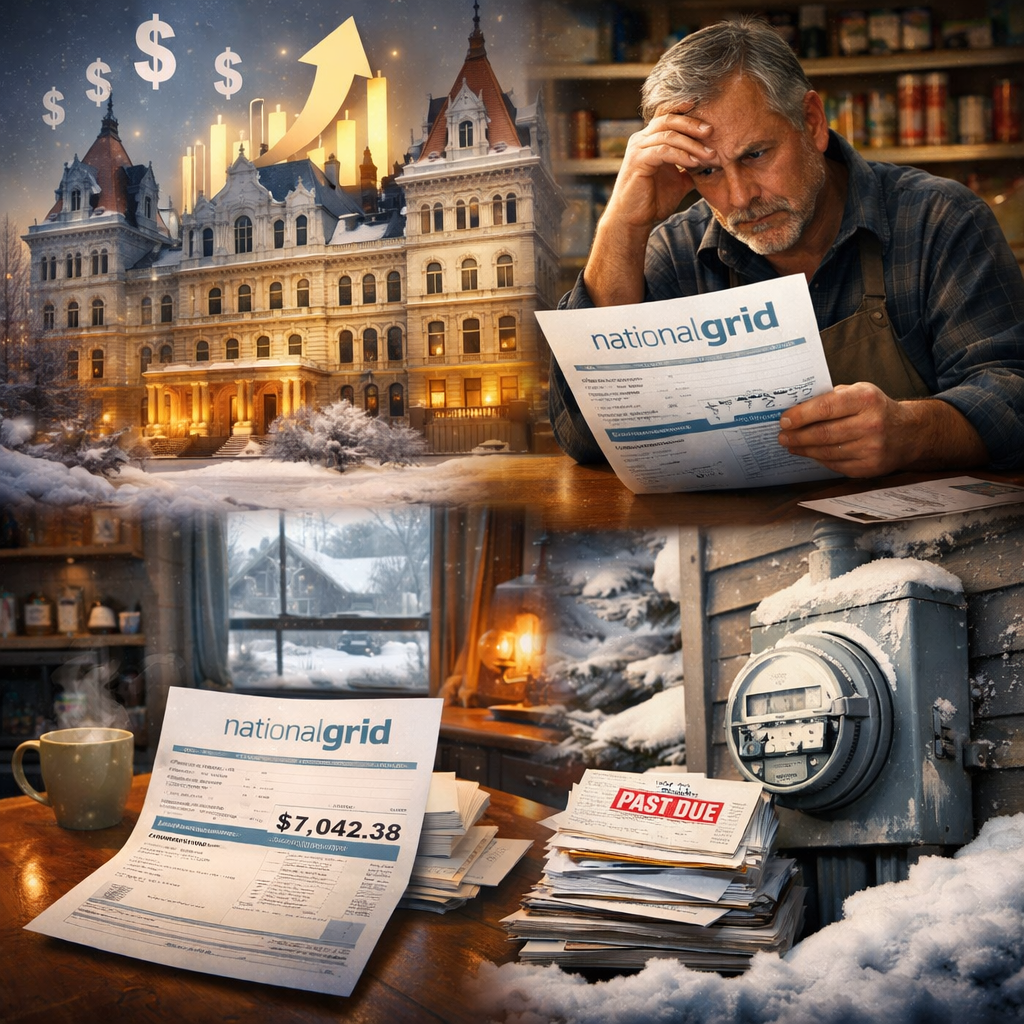
While lawmakers debate increasing their own compensation, households and businesses are confronting another round of rising energy bills from National Grid, the region’s primary electric and gas provider.
One local business owner described how dramatically utility costs have shifted over the past decade.
“When I bought the business in 2012, the electric averaged about $3,200 a month,” he said. “Now it’s north of $7,000. That’s just the power bill.”
Energy is only one piece of the equation. Across New York, business owners say they are also absorbing higher taxes, insurance costs and supplier price increases.
Just this week, one North Country beverage distributor received a new price notice from Coors, adding another layer of pressure to margins that are already tight.
The Cost of Staying
In political debates about New York’s cost of living, a common refrain often surfaces: if costs are too high, people can simply leave.
But for many residents and small business owners, relocation is far easier said than done.
Businesses are rooted in buildings, equipment and communities built over decades. Families have schools, mortgages and extended relatives nearby. Uprooting all of that carries its own heavy cost.
For those who remain, the monthly bills keep arriving.
Utility Frustrations
Compounding the financial strain are frustrations over billing accuracy.
In one recent case, a property owner reported that National Grid had been estimating gas usage for months. A technician was eventually sent to correct the meter and perform a fresh reading.
Yet the next bill arrived marked once again as “estimated.”
The issue will likely require another call to customer service.
Albany’s Debate
Supporters of the proposed legislative pay increase argue that higher salaries help attract qualified candidates and reduce reliance on outside income. Critics counter that lawmakers should address affordability issues facing residents before voting themselves a raise.
For many in communities like Watertown, the broader question is simple: whether the state’s leaders fully understand the financial pressures facing ordinary households and businesses.
As one resident summed it up after opening the latest utility bill:
“You look at everything going up—power, taxes, suppliers—and you just sigh. Then you pay the bill and move on.”
For now, that remains the reality for many New Yorkers trying to keep the lights on while Albany debates its next raise.
About the Author