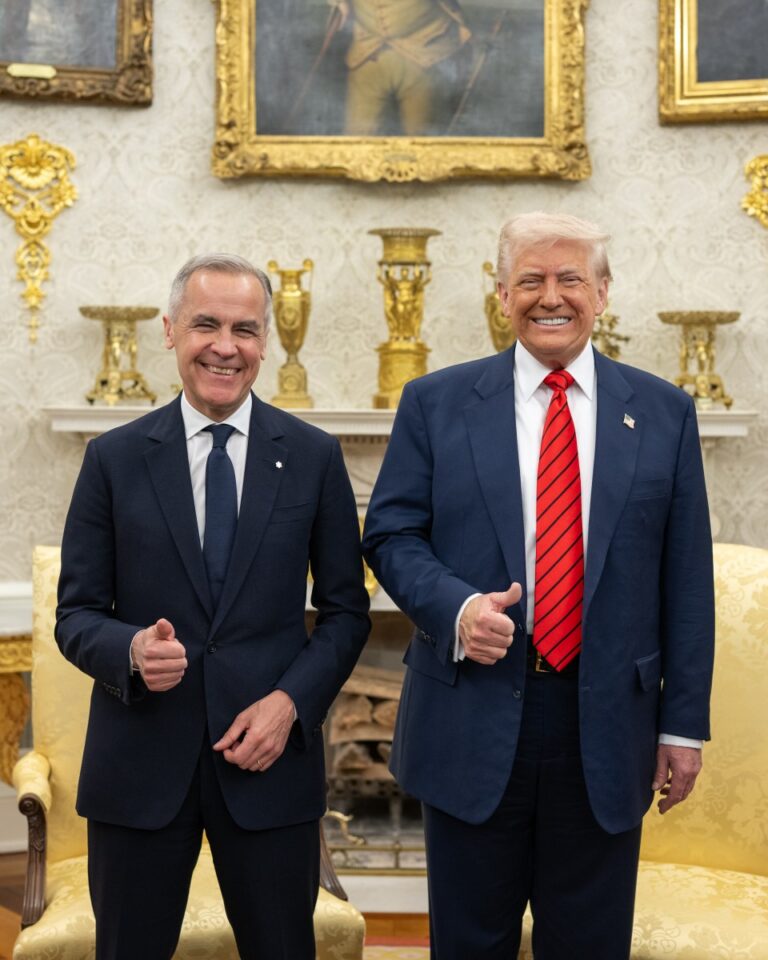
Trump Just Called Canada's Bluff
By Hans Wilder
Watertown Post
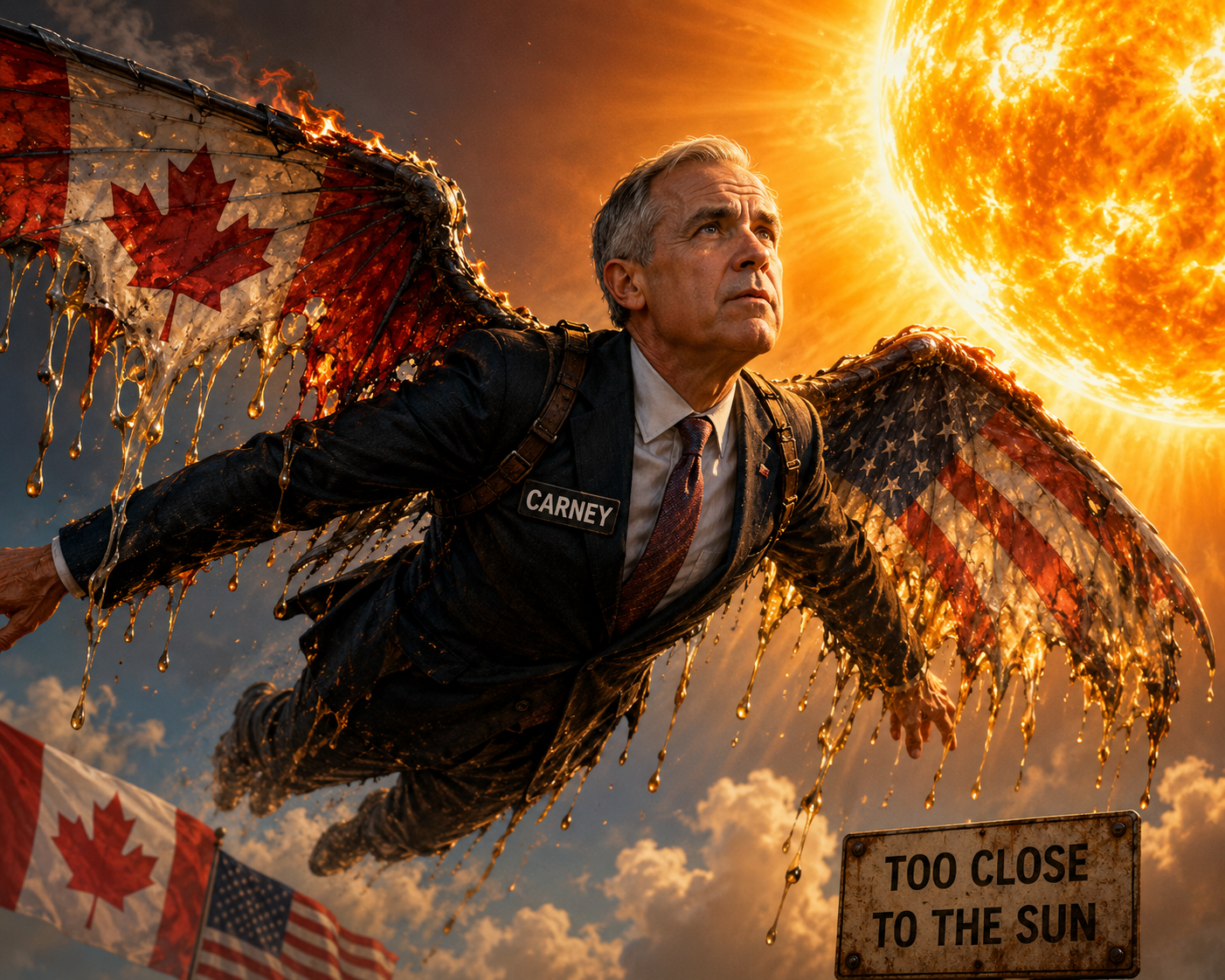
Prime Minister Mark Carney is attempting something that no Canadian leader has successfully accomplished in modern history: convincing Canadians that they can build a prosperous future by creating greater distance between themselves and the United States.
The problem is that Canada’s economy was built on access to the American market.
Take away that access, restrict it, or make it uncertain, and suddenly Canadians are forced to confront a reality that many politicians in Ottawa would rather not discuss.
Canada is not an island.
It is part of a North American economic ecosystem dominated by the United States.
That is why President Donald Trump holds so much leverage in the current CUSMA debate.
Many Canadians see Trump’s pressure tactics as bullying.
Others see something different.
They see a tough-love intervention.
For decades Canada has enjoyed the benefits of American defense, American consumers, American investment, and American energy markets while often acting as though those relationships were optional. Now Washington appears to be reminding Ottawa that they are not.
Trump’s critics say he is putting his foot on Canada’s throat.
His supporters would argue he is forcing Canada to face reality.
Reality is that the overwhelming majority of Canada’s population lives within a short drive of the U.S. border.
Reality is that Canada’s largest trading partner is the United States by a massive margin.
Reality is that the economies of Ontario and New York are more connected than many American states are with one another.
Here in the Thousand Islands region, that reality is impossible to ignore.
People cross the border every day for work, shopping, tourism, family, and business. The river separates governments, but it does not separate communities.
The long-term answer is not less integration.
The answer is more.
More transportation links.
More energy cooperation.
More trade.
More investment.
More recognition that the future of the Great Lakes and St. Lawrence region depends on treating it as a shared economic zone rather than two separate worlds pretending they do not need one another.
Carney appears determined to prove Canada’s independence.
Trump appears determined to prove Canada’s dependence.
The uncomfortable truth may be that both are right.
Canada is an independent nation.
But its prosperity remains tied to the United States.
The sooner political leaders acknowledge that reality, the sooner both countries can stop arguing about separation and start building a future based on integration.
Because from where many of us sit along the St. Lawrence River, the border increasingly looks like a line on a map rather than a wall between two different futures.
About the Author