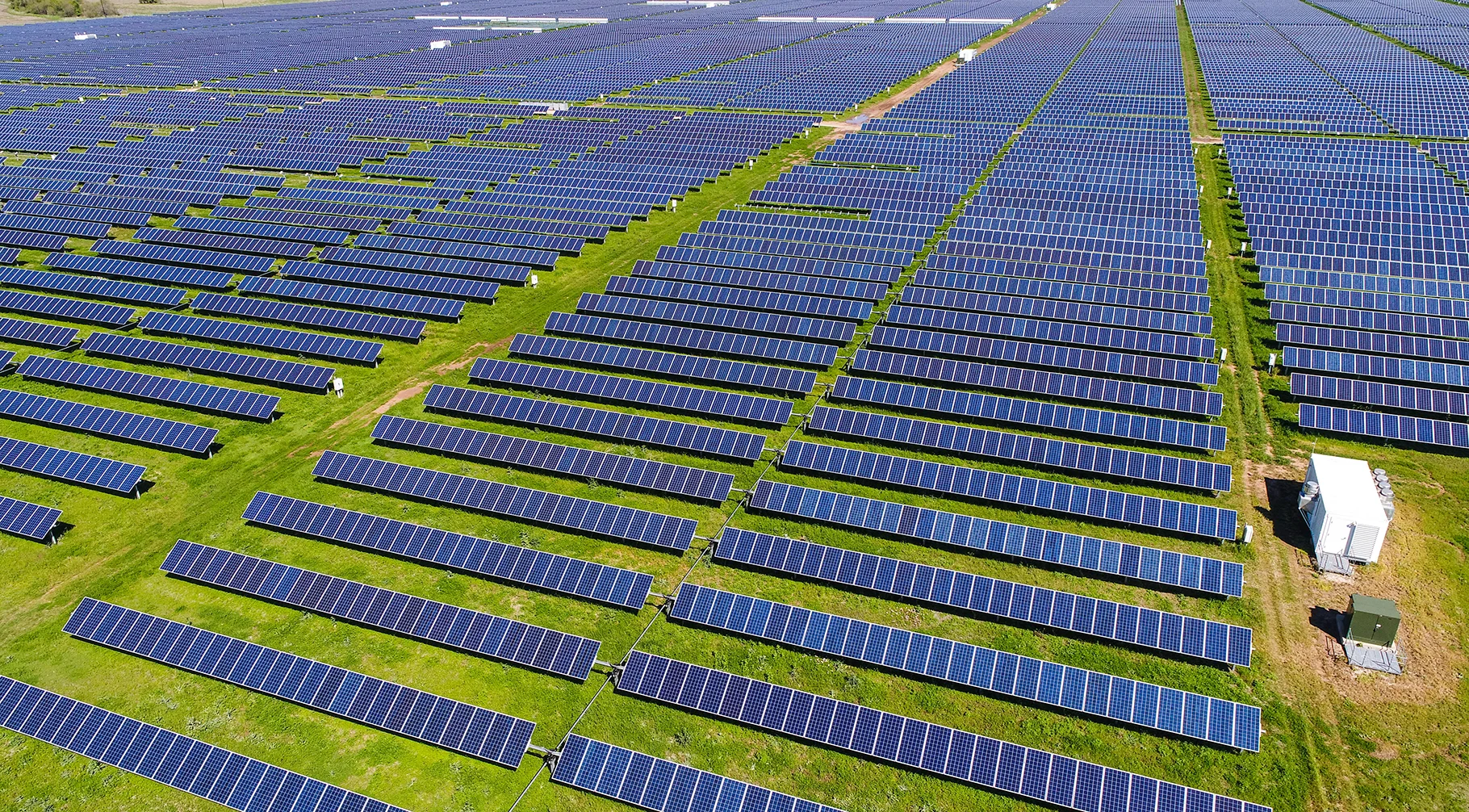
Rows of solar panels stretch across what was once active farmland in Jefferson County, as large-scale energy projects continue to reshape the rural landscape of Northern New York.
JEFFERSON COUNTY, N.Y. —
A wave of large-scale solar developments proposed across Jefferson County is raising serious concerns among local officials and residents, as thousands of acres of productive land could soon be converted into industrial energy sites.
According to county leadership, 16 solar projects are currently under consideration, with at least five classified as utility-scale developments, each potentially covering close to 1,000 acres. If fully built out, these projects would represent one of the largest land-use transformations in the county’s history.
County Administrator Ryan Piche did not mince words when describing the scope of the proposals, calling it “one of the biggest developments” Jefferson County has ever seen.
Not Farms—Industrial Sites
Despite the common terminology, many local leaders argue these projects should not be referred to as “solar farms.”
Unlike traditional agriculture, these developments do not produce food, sustain livestock, or contribute to the region’s long-standing farming economy. Instead, they consist of vast fields of industrial equipment—steel racking, glass panels, inverter stations, and access roads—often installed on land that was previously used for crops or grazing.
For many in Northern New York, that distinction matters.
Prime Farmland in the Crosshairs
Jefferson County has long been defined by its agricultural identity, particularly its dairy industry. The proposed solar sites are frequently located on flat, well-drained land—the same qualities that make for ideal farmland.
Once converted, that land is effectively removed from agricultural use for decades.
Local officials worry about the long-term consequences, not just for farmers, but for the broader regional economy that depends on agriculture—from feed suppliers to processing facilities.
Local Control Under Pressure
Adding to the concern is the state’s increasing authority over renewable energy siting.
Under current New York policies, large-scale solar projects can receive approval at the state level—even if local municipalities oppose them. That process has raised alarms among town boards and county officials who feel their ability to shape their own communities is being diminished.
To respond, Jefferson County’s Planning and Community Development Department has spent the past two years compiling data to help municipalities craft legally defensible regulations.
Without that groundwork, local laws risk being overturned as “arbitrary,” leaving communities with little recourse.
Environmental Questions Remain
While solar energy is often promoted as environmentally friendly, large-scale installations come with trade-offs.
Clearing land, altering drainage patterns, and fragmenting habitats can have lasting ecological impacts. In some parts of the county, proposed developments have raised concerns about sensitive ecosystems and wildlife displacement.
Critics argue that replacing open farmland and natural habitats with industrial infrastructure is not a simple environmental win.
Wind and Solar: A Growing Footprint
The expansion of solar projects comes alongside an already growing presence of wind energy across Northern New York.
Together, these developments are reshaping the region’s landscape—introducing large-scale energy infrastructure into areas historically defined by open land, small towns, and working farms.
What Comes Next
Not all proposed projects are expected to move forward, but county officials believe several will ultimately be approved.
The focus now is on ensuring that local communities have a voice in the process—and that decisions are made with a full understanding of the economic, environmental, and cultural impacts.
For Jefferson County, the outcome of these proposals will help determine not just how energy is produced—but what the region itself will look like for generations to come.
Bottom Line
This isn’t just about solar panels.
It’s about land, identity, and who gets to decide the future of Northern New York.
🗺️ MAP: Where Solar Projects Are Proposed in Jefferson County
(Watertown Post Visual Guide — Not All Projects Finalized)
🔴 Greens Corners Solar (Watertown / Hounsfield)
- 📍 Near Watertown, stretching into the Town of Hounsfield
- 📐 Study area: ~3,000 acres
- ⚙️ Panel footprint: ~700 acres
- 🧭 Located near Interstate 81 and surrounding agricultural fields
- 📌 Coordinates: ~43.9359, -75.9727
👉 One of the largest proposed projects in the county, centered just outside the city core on active farmland.
🔴 Riverside Solar (Lyme / Brownville)
- 📍 Along Route 12E corridor, near Lake Ontario
- 🛣️ Key roads: Weaver Rd, Case Rd, Morris Tract Rd
- 📐 Approx. 1,000 acres
- ⚡ ~100 MW capacity
- 📌 Located between the towns of Lyme and Brownville
👉 A major shoreline-region project with state approval already granted.
🔴 Limestone / Bay Breeze Solar (Lyme Area)
- 📍 Town of Lyme, near Chaumont River region
- 📐 Up to ~2,500+ acres under lease
- 🔌 Transmission planned under Chaumont River
- 🛣️ Spread across multiple rural roads (Rt 12E, County Routes 5 & 8)
👉 One of the largest land-lease footprints—still in earlier development stages.
🔴 Tracy Solar (Clayton / Orleans Area)
- 📍 Western Jefferson County, inland from the St. Lawrence River
- ⚡ ~100+ MW class project
- 🌾 Located in agricultural zones near Clayton and Orleans
👉 Expands the footprint toward the Thousand Islands region.
🧭 Regional Pattern (What the Map Shows Overall)
- West & Northwest (Lyme / Brownville / Clayton):
Large clusters near Lake Ontario and river corridors - Central Corridor (Watertown / Hounsfield):
Major utility-scale projects near transmission lines and I-81 - Rural Interior Farmland:
Preferred due to flat terrain and grid access
⚠️ What’s Not on the Map (Yet)
- Up to 16 total proposed projects countywide
- Several smaller or early-stage sites not publicly mapped in detail
- Final layouts may shift as developers move through approvals
🧾 Sidebar Note for Readers
These locations are based on currently known proposals and planning documents.
Not all projects are approved or finalized, and boundaries may change.
🧠 Bottom Line for the Map
If built out, these projects would form a belt of industrial solar development running:
- From the Lake Ontario shoreline
- Through Lyme and Brownville
- Into the Watertown corridor
- And outward toward Clayton and Orleans
About the Author