s Retail Fades, Salmon Run Mall Eyes Reinvention as Convention Center
WATERTOWN, N.Y. — After four decades as the region’s primary indoor shopping destination, Salmon Run Mall is confronting the same reality facing enclosed malls across the country: declining foot traffic, vacant storefronts and a retail model reshaped by e-commerce and shifting consumer habits.
Local discussion has turned toward what comes next.
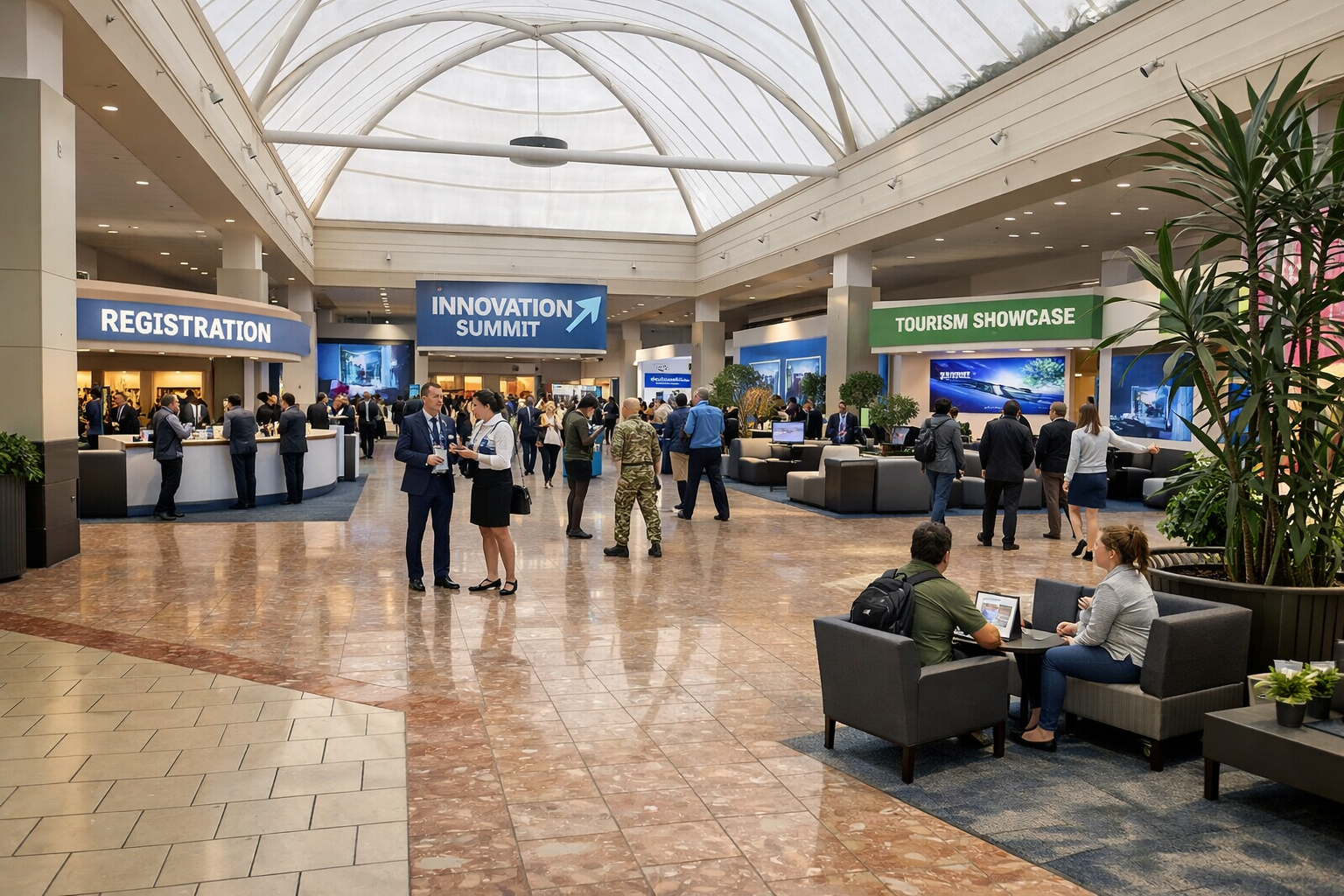
One proposal gaining quiet attention among business leaders is a conversion of the property into a regional convention and exhibition center — a use that would capitalize on its size, infrastructure and geographic position near the U.S.-Canada border.
A Changing Retail Landscape
Like many malls built in the 1980s, Salmon Run was designed around department store anchors and steady in-person shopping. Over time, national chains closed or downsized. Remaining tenants include successful big-box retailers such as Best Buy and Hobby Lobby, but large interior sections have experienced turnover and vacancy.
The broader trend is well documented: enclosed malls have struggled nationwide as consumers move online and retailers consolidate into fewer, higher-performing locations.
For Watertown, the question is whether to invest public resources to stabilize a shrinking retail concept — or to reposition the property for a different economic role.
Geographic Leverage
Watertown occupies a strategic corridor in Northern New York:
- Roughly two hours from Toronto
- Approximately three hours from Montreal
- Five hours from New York City
- Direct access to Interstate 81
- Minutes from the Thousand Islands border crossing
Regional planners have long noted that the city sits between major Canadian metropolitan areas and the Northeastern United States. While Watertown itself is modest in size, its location places it within driving distance of millions of potential attendees for trade shows, industry gatherings and cross-border business events.
A convention facility in this corridor could target industries that already operate across the border, including agriculture, manufacturing, defense and logistics.
Built-In Infrastructure
Unlike greenfield development, the mall property already contains features common to convention centers:
- Large climate-controlled square footage
- High ceilings in anchor spaces
- Extensive parking
- Immediate highway access
- Nearby hotels and restaurants
Repurposing anchor stores into exhibition halls and converting interior corridors into flexible meeting spaces would require capital investment, but significantly less than building a comparable facility from the ground up.
Adaptive reuse has become an increasingly common strategy in mid-sized cities seeking to revitalize aging retail properties.
Economic Implications
Convention centers generate economic activity differently than retail malls. Rather than relying on daily walk-in customers, they schedule concentrated events that bring visitors for defined periods.
Those visitors typically spend on lodging, dining, transportation and local services. Even a handful of recurring annual conventions can stabilize hotel occupancy and create predictable seasonal revenue.
For Jefferson County and surrounding communities, a regional convention center could also serve Fort Drum-related conferences, agricultural expos, outdoor recreation events and cross-border trade summits.
Public Investment Questions
Any conversion would likely require a mix of private capital and public support. That raises questions about risk, long-term demand and opportunity cost.
Local officials would need to assess whether projected event volume could sustain operations without ongoing subsidies. Feasibility studies, market analysis and regional partnerships would be necessary before committing public funds.
Similar mid-sized markets have pursued convention centers with mixed results, underscoring the importance of realistic projections.
A Broader Strategy
The debate over Salmon Run Mall reflects a larger challenge facing smaller American cities: how to transition infrastructure built for one era into assets suited for another.
Watertown’s proximity to Canada, its highway connectivity and its existing commercial footprint provide structural advantages. Whether those advantages translate into a viable convention market depends on coordinated regional planning and credible demand forecasting.
For now, Salmon Run Mall stands as a physical reminder of a retail model in transition. The decision ahead is not simply whether to preserve a shopping center, but whether to redefine its role in the regional economy for the next forty years.
About the Author