
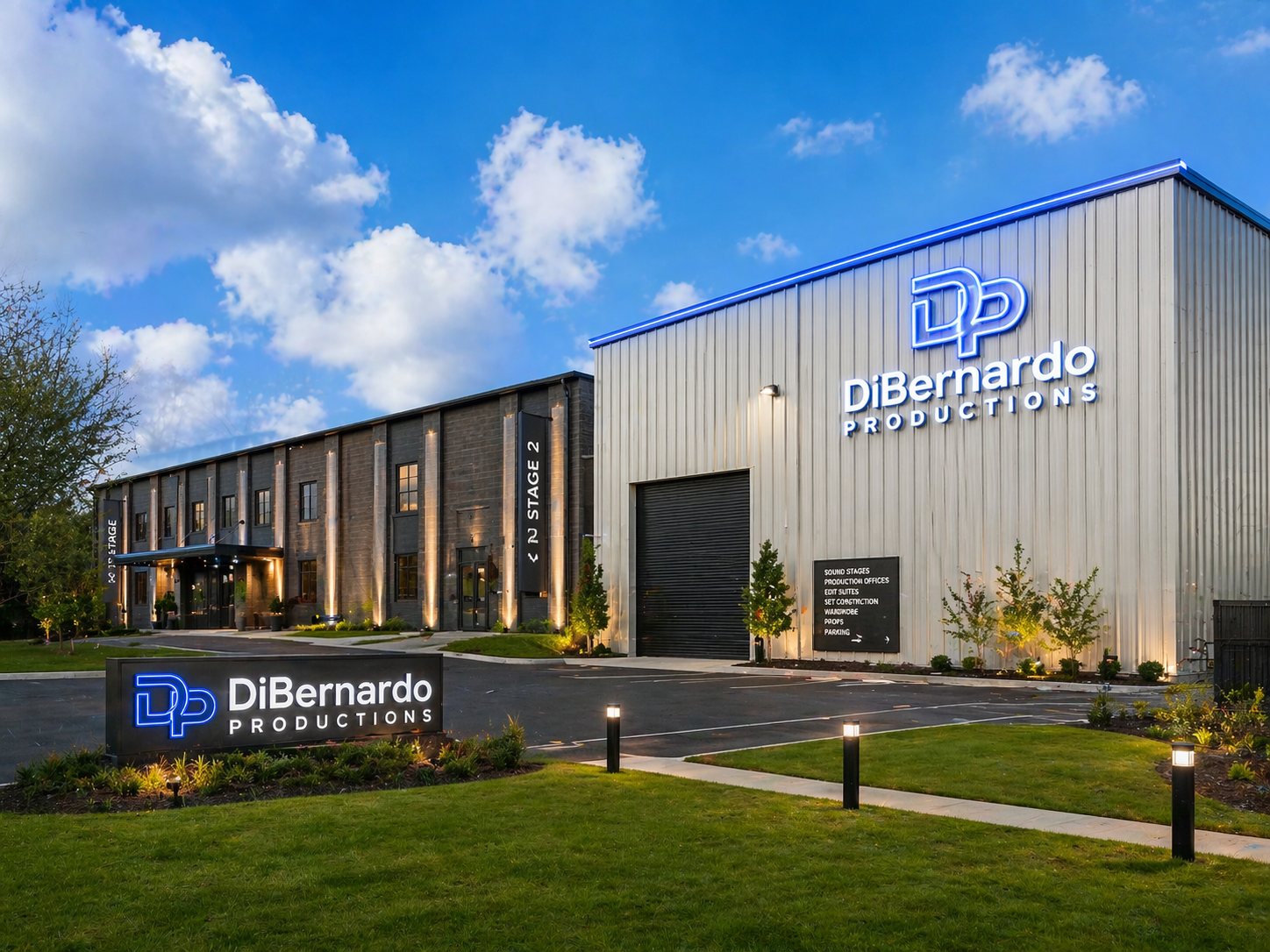
DiBernardo Productions and owner Michelle DiBernardo look at the potential of transforming a large industrial building along the Black River into a working production and soundstage facility.
A major production opportunity may be quietly taking shape on Watertown’s north side, as Syracuse-based DiBernardo Productions and owner Michelle DiBernardo look at the potential of transforming a large industrial building along the Black River into a working production and soundstage facility.
And frankly, it makes too much sense—which of course means someone will probably form a committee to study it for seven years.
The building’s location alone makes it a serious contender. Positioned in Watertown, New York, directly between two major production powerhouses—Toronto and New York City—the site offers strategic access to both Canadian and American film, television, commercial, and digital media markets.
For productions already working in either city, Watertown becomes the logical middle ground: lower costs, less congestion, easier logistics, and far fewer people trying to charge you $38 for parking.
Unlike the crowded and expensive studio environments of Manhattan or Toronto’s packed production districts, Watertown offers room to build, room to park, room to breathe, and perhaps most importantly, room in the budget.
The Black River location provides strong visual appeal and practical industrial infrastructure. Large warehouse-style buildings are ideal for conversion into sound stages, set construction shops, prop storage, editing suites, lighting prep areas, and production offices. Riverfront industrial properties often come with the kind of heavy utility access that production facilities need—power capacity, loading access, and transportation flexibility.
The surrounding region also brings an overlooked advantage: talent.
Northern New York already has a surprising number of professionals connected to the production world—actors, voice talent, extras, carpenters, electricians, lighting crews, stagehands, videographers, photographers, and technical operators. Many have worked in Syracuse, Albany, Toronto, or New York City and would welcome a closer home-base operation.
Add in proximity to Fort Drum, the Thousand Islands region, the Adirondacks, Lake Ontario, and historic downtown architecture, and producers gain access to an enormous range of filming locations without moving an entire operation hundreds of miles.
Need urban grit? Got it.
Need forests and wilderness? Got it.
Need waterfront luxury? Got it.
Need a snowy military thriller in February? Congratulations, Watertown invented that genre.
The transportation network also works in the project’s favor. Interstate 81, regional airport access, cross-border routes to Canada, and direct north-south logistics make equipment movement and crew travel far easier than many people realize.
For DiBernardo Productions, the opportunity is bigger than simply renovating a building. It could mean establishing Watertown as a serious satellite production hub for Upstate New York and cross-border film work.
This would not just create jobs inside one building—it would ripple outward into hotels, restaurants, construction trades, transportation services, tourism, local media, and long-term regional investment.
Watertown has spent years talking about economic development. A real production studio would be economic development people could actually see, hear, and probably complain about on Facebook.
Michelle DiBernardo’s experience in Syracuse production gives the project credibility. The vision is not fantasy—it is practical, scalable, and rooted in an industry that continues to expand across New York State and Southern Ontario.
Sometimes cities wait for opportunity.
Sometimes opportunity is sitting right on the Black River, waiting for someone to turn the lights on.
About the Author