
Rumors in Washington: Is the U.S. Preparing a Special Status for Canadians—and What It Would Mean for the St. Lawrence Valley
Rumors in Washington: Is the U.S. Preparing a Special Status for Canadians—and What It Would Mean for the St. Lawrence Valley
By Watertown Post Opinion Desk
WASHINGTON — Multiple sources in diplomatic, policy, and trade circles tell the Watertown Post that a serious conversation is underway in Washington about creating a fast-track legal pathway for Canadians who want to relocate to the United States, amid a rapidly deteriorating U.S.–Canada relationship.
The sources—who requested anonymity because they are not authorized to speak publicly—say the idea being discussed is not traditional asylum, but a bespoke legal status or humanitarian-parole-style program that could allow large numbers of Canadians to live and work in the United States if political and economic conditions in Canada worsen further.
This rumor comes as relations between Ottawa and Washington have reached their tensest point in decades.
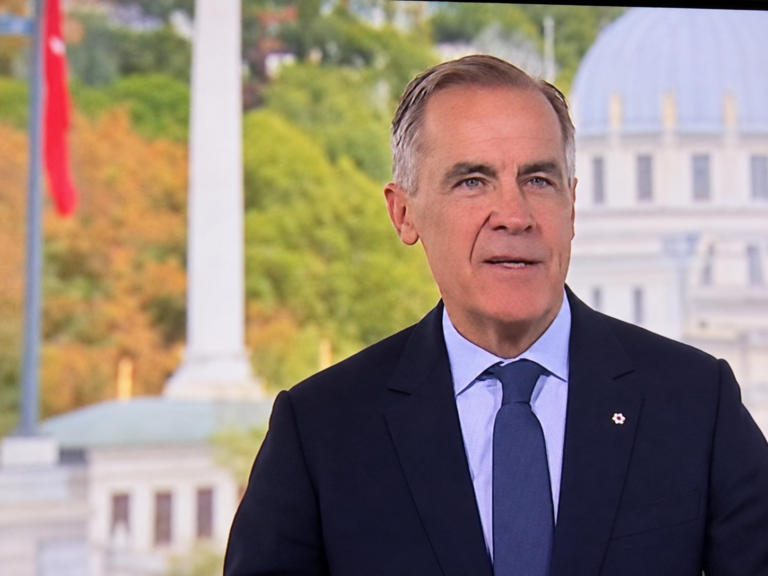
In recent days, Prime Minister Mark Carney has openly challenged U.S. leadership on the world stage, declaring that the post-war “rules-based order” is effectively over and warning that powerful nations are using trade and economic leverage as coercion. His speech at the World Economic Forum in Davos drew international attention and a standing ovation—but also triggered a sharp public rebuke from President Donald Trump.
Trump responded by revoking Canada’s invitation to join his newly announced “Board of Peace,” escalating a public and symbolic rupture between the two governments.
At the same time, Carney’s deepening economic outreach to China—particularly a controversial electric-vehicle trade deal—has fractured Canada’s internal unity, with Ontario Premier Doug Ford openly criticizing the prime minister and warning of economic harm to Canadian workers.
Behind closed doors, the signal coming from Ottawa is blunt: Canada intends to reduce dependence on the United States and pursue a more independent global economic path, even if it means long-term decoupling.
Washington, meanwhile, is gaming out the fallout.
A Quiet Policy Contingency
According to U.S. policy sources familiar with interagency planning, contingency discussions include the possibility that millions of Canadians—especially younger professionals, tradespeople, and dual-citizenship families—could seek relocation if Canada’s economic or political climate sharply deteriorates.
The proposal being whispered about would not be framed as “asylum” in the classic sense, but rather a special North American mobility status, potentially modeled on:
- humanitarian parole authorities,
- a special congressional immigration category,
- or an executive-branch pilot program tied to labor and security needs.
If such a policy were enacted, Northern New York—and especially the St. Lawrence Valley—would likely become one of the first and largest landing zones.
What Happens If That Door Opens?
For Watertown, LeRay, Fort Drum, and the broader St. Lawrence corridor, the effects would be transformative.
Housing would tighten immediately. Demand for rentals and starter homes would surge, likely pushing prices upward and accelerating development pressure in Jefferson, Lewis, and St. Lawrence counties.
The labor market would expand fast. Healthcare, skilled trades, logistics, hospitality, and childcare could see staffing relief—but only if legal work authorization keeps pace with arrivals.
Fort Drum’s gravitational pull would intensify. A population boom near the base would raise competition for housing, expand contracting opportunities, and deepen the region’s role as a defense-adjacent economic hub.
Healthcare and schools would feel strain first. Primary care access, pediatric capacity, and classroom space would become front-line issues long before state funding formulas catch up.
Cross-border identity could shift permanently. The St. Lawrence Valley could evolve from a quiet border region into a binational economic gateway, reshaping culture, commerce, and long-term demographics.
Rumor, But a Serious One
There is no public confirmation that such a program exists—yet. But the policy chatter aligns with the broader geopolitical reality:
U.S.–Canada relations are colder than at any point in modern history, trade and security assumptions are being rewritten, and both governments are preparing for scenarios once considered unthinkable.
If Washington does decide to open a legal door to Canadians at scale, the St. Lawrence Valley will not be watching history—it will be living inside it.
And Watertown may find itself not on the edge of North America, but at the front line of a continental realignment.
About the Author