Watertown does not suffer from a lack of land. It suffers from a lack of productive use.
Watertown does not suffer from a lack of land. It suffers from a lack of productive use.
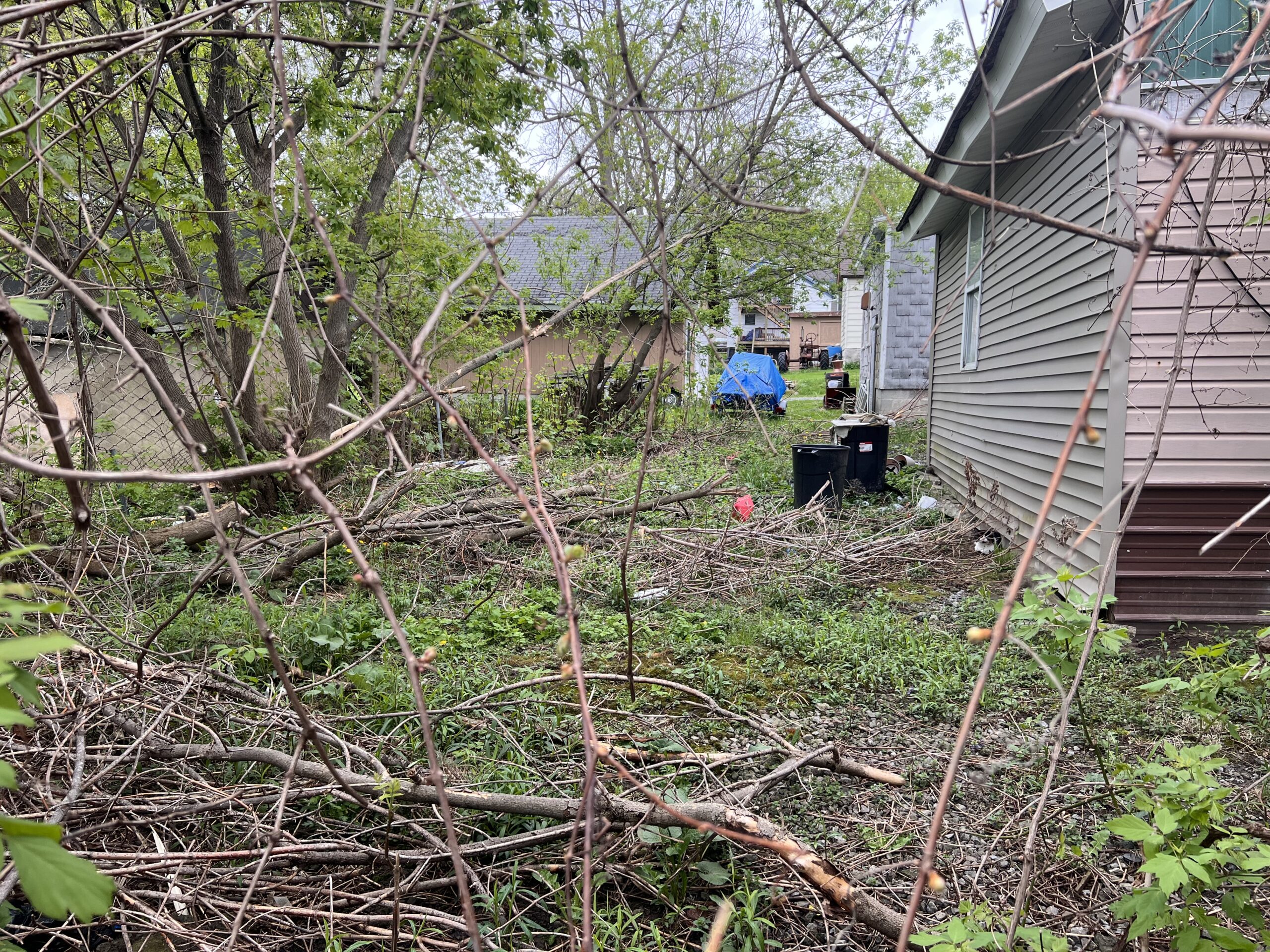
That is the real story hiding in plain sight across the city: empty houses, idle parcels, and too many pieces of urban ground that have slipped out of the tax base, out of the housing supply, and out of daily life. In January 2025, Watertown code enforcement said the city had identified 232 vacant homes. Meanwhile, Census data for Watertown shows 13,426 housing units and 11,867 households, implying roughly 1,559 housing units not occupied at the time of the survey. Those are different measurements, but together they point to the same thing: too much housing and land in the city is sitting unused.
Watertown is hardly alone. New York State has built an entire policy architecture around this very issue, because vacant and abandoned property is not some random one-off annoyance. It is a recurring urban problem from Buffalo to Syracuse to smaller upstate cities. The state’s Land Bank Program specifically targets tax-delinquent, vacant and abandoned property, and there are now 32 land banks operating across New York. The state also created a Vacant Rental Program to help return empty units to the market. You do not create programs like that unless the problem is widespread, persistent, and expensive.
Watertown recognized the issue years ago. The city’s Vacant Building Registry law was adopted to identify vacant buildings, hold owners responsible, prevent deterioration, and speed rehabilitation. That is important, because once a house or structure sits empty long enough, it stops being merely unused and starts becoming contagious. Blight spreads. Neighboring values weaken. Maintenance complaints rise. Public confidence drops. And the city winds up spending time and money babysitting land and buildings that should be contributing to the community instead of dragging it down.
The broader upstate comparison is Buffalo. Buffalo has about 15,300 vacant lots, including roughly 7,400 owned by the city and related public agencies. That is not just a planning statistic. That is a giant, visible inventory of unrealized housing, unrealized taxes, unrealized neighborhood stabilization, and unrealized population growth.
And that is where the argument gets interesting.
There is a growing case that Governor Kathy Hochul and the Legislature should stop treating vacant land as background scenery and start treating it as development inventory. The proposal floated around Buffalo — using state support to build tens of thousands of affordable units on long-empty lots — may sound ambitious, but it gets at a very real truth: New York already has land in many of its struggling cities. It does not always need to search for new land. In many cases, it needs to reclaim the land it already has.
Watertown may not be Buffalo in scale, but the principle is the same. Empty lots and vacant houses in Watertown represent a local version of the same structural problem facing upstate New York: cities that need housing, need taxpayers, need neighborhood stability, and yet are still carrying dead space block after block. The difference is one of magnitude, not kind.
There is also an irony here too rich to ignore. New York talks constantly about a housing shortage, and yet city after city is dotted with parcels and properties that are producing nothing. That is classic Empire State choreography: declare a crisis, form a task force, print glossy PDFs, then leave half the stage set empty. The smarter move would be a targeted, city-by-city strategy that matches vacant land and vacant structures with housing production, homeownership incentives, infill construction, and rehab financing.
Watertown should be part of that conversation.
Not every lot should become an apartment building. Not every vacant house is worth saving. Some properties should become side lots, green space, parking, or stormwater buffers. But many should be returned to use, especially in neighborhoods where vacancy has become normalized. That requires better parcel-level transparency, aggressive code enforcement, faster tax-foreclosure turnaround, state-backed rehab financing, and a stronger pipeline for small developers willing to take on difficult properties.
At minimum, the state should help cities like Watertown do three things: count vacant lots accurately, publish that inventory clearly, and fund realistic reuse plans. Right now, even getting a clean public total for Watertown’s citywide vacant lots is harder than it should be because Jefferson County parcels are not part of the state’s public parcel layer. That is absurd in 2026. You cannot fix what government still struggles to count in plain view.
Watertown’s vacancy problem is not just about blight. It is about missed opportunity. Every vacant house is a household not living there. Every empty lot is tax base not being built. Every block with too many dead spaces becomes harder to stabilize.
Buffalo shows the scale of the problem. Watertown shows the everyday version of it.
Either New York starts treating vacant urban land and vacant housing as strategic redevelopment assets, or it keeps paying the price for decline one empty parcel at a time.
About the Author