
A sea of younger Americans waves U.S. flags during a patriotic rally, symbolizing growing political engagement and the possibility of a new generation helping reshape the future of the Republican Party in New York.
By Hans Wilder | Watertown Post
For years, political analysts have repeated the same story about New York Republicans: the party is aging, struggling to attract younger voters, and fighting an uphill battle in a state where Democrats have enjoyed organizational advantages for decades. But what if the old assumptions are beginning to crack?
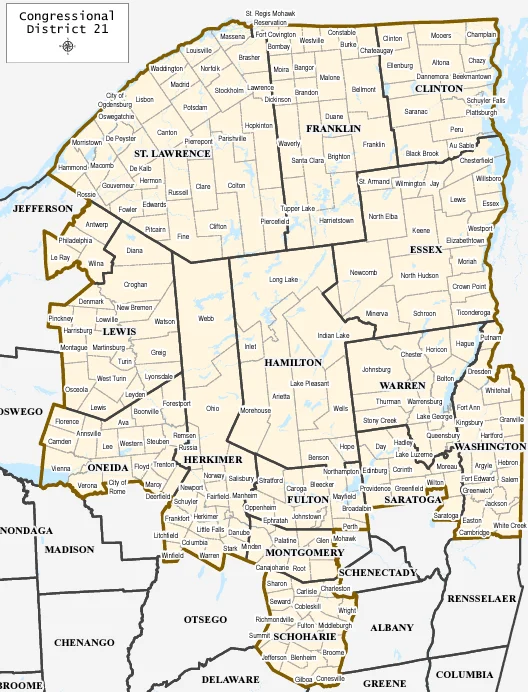
The recent Republican primary in New York’s 21st Congressional District may end up being remembered as more than just another campaign. It could mark the beginning of a different way of thinking about Republican politics in New York State.
Anthony Constantino recently pointed to a statistic that deserves attention regardless of where someone falls politically: roughly one out of every five registered Republicans in NY-21 cast a ballot in the primary. That level of participation produced what he says is the highest Republican congressional primary vote total in district history, reclaiming a record that had been held by Democrats for two decades.
Those numbers suggest something important. Enthusiasm matters.
Constantino has repeatedly described himself as a marketing expert, and his campaign reflected that philosophy. Traditional political consultants often emphasize caution, predictable messaging, and conventional campaigning. Constantino chose a different path. His approach generated headlines, sparked conversations, and, perhaps most importantly, motivated Republicans who may otherwise have stayed home.
Not everyone appreciated every tactic. That’s politics. Every disruptive campaign draws criticism. But elections ultimately measure results, and turnout is one of the clearest measurements available.
The larger question isn’t simply how many votes Anthony Constantino received.
The real question is whether he has discovered a formula that could help reshape the Republican Party across New York.
For decades, Republicans have often focused on persuading independents or peeling away moderate Democrats. Those efforts remain important. But growing a political party also requires adding new members—especially younger voters who will carry the movement for the next generation.
That may be where Constantino’s greatest contribution could ultimately lie.
Younger Americans don’t consume politics the way previous generations did. They don’t wait for the evening news. They scroll. They share. They react. They expect candidates to communicate directly rather than through carefully scripted press releases.
Whether people loved or hated his campaign, they paid attention to it.
Attention is the first step toward participation.
If Republicans in New York can consistently make politics exciting again for younger voters—people who are just entering adulthood, starting businesses, buying homes, and raising families—the long-term math begins to change.
That’s exactly how political realignments begin.
Nationally, Republicans already experienced their own internal transformation. The Trump movement reshaped the party by expanding its coalition and bringing in millions of voters who previously felt disconnected from traditional Republican politics. That movement helped redefine what the modern Republican Party looks like.
Could New York now experience its own version of that evolution?
It’s too early to know for certain. One election doesn’t rewrite decades of political history. But it can point toward a new direction.
The Golden Age vision championed by President Donald Trump has always been about optimism, economic growth, rebuilding American industry, and creating opportunity. If Republicans in New York can combine those ideas with energetic campaigning that appeals to younger generations, the party may discover that its future looks very different from its past.
Winning elections isn’t only about convincing opponents.
Sometimes it’s about inspiring people who never imagined becoming Republicans in the first place.
If Anthony Constantino continues building excitement among younger voters and first-time participants, his biggest legacy may not simply be a congressional campaign.
It could be helping build the next generation of New York Republicans.
About the Author