
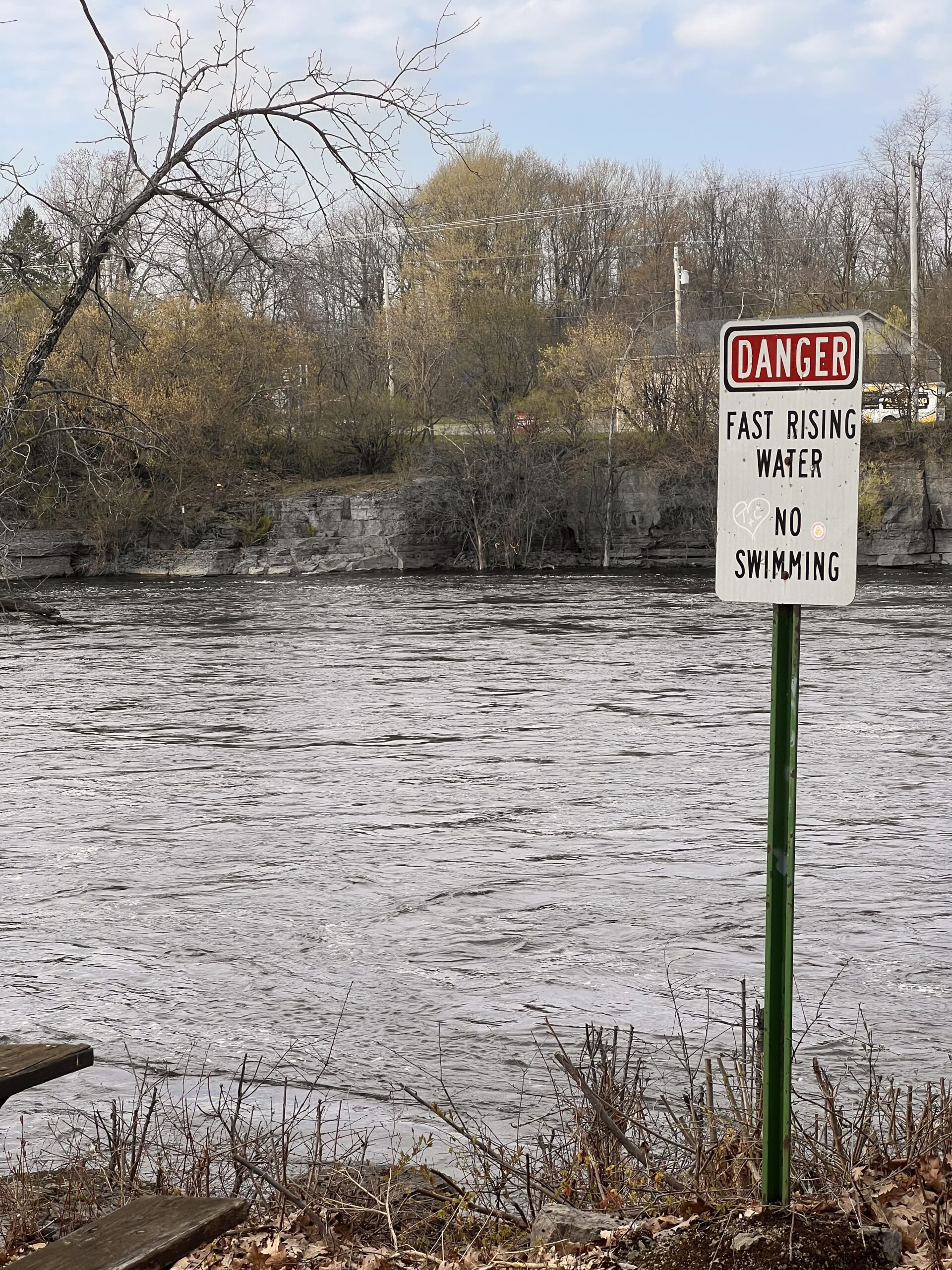
Every few years in Watertown, the same conversation bubbles back to the surface like something floating downstream after a storm: Is the Black River actually safe?
By Hans Wilder for the Watertown Post
Every few years in Watertown, the same conversation bubbles back to the surface like something floating downstream after a storm: Is the Black River actually safe?
This week, social media lit up again after claims circulated that people who swam in the river during the 1990s became seriously ill, including allegations involving meningitis and long-term coverups tied to pollution, sewage dumping, and EPA violations.
So the Watertown Post decided to do something radical in 2026: actually look into it.
Here’s what we found.
First, there is no publicly documented evidence showing anyone contracted meningitis specifically from swimming in the Black River. Multiple public health sources, including state and federal environmental records, do not connect the river to confirmed meningitis outbreaks. That part matters because social media has a habit of turning “my cousin got sick once” into “the river created zombies.” There is a difference.
However — and this is the important part — that does not mean the Black River has a spotless environmental history. Far from it.
The river absolutely has documented contamination concerns, including a long-running federal PCB contamination issue tied to industrial sediment downstream from Carthage and West Carthage. The U.S. Environmental Protection Agency formally designated portions of the Black River as a Superfund site after elevated PCB levels were found in river sediments.
According to the EPA, the contamination stems from decades of industrial activity along the river, including paper mills and wastewater discharge. Fish consumption advisories remain in place in parts of the affected stretch.
That is real.
The City of Watertown’s drinking water system has also had recent federal compliance issues. A 2024 EPA enforcement action involving the city’s public water system cited Safe Drinking Water Act violations connected to contaminant standards and compliance requirements. Public records associated with the case list approximately $58.3 million in compliance-related infrastructure costs, though no direct financial penalty was assessed.
That is also real.
But here’s where things get murkier.
The claim that the city is “dumping raw sewage into the river nonstop” requires context. Combined sewer overflows — where heavy rain can overwhelm aging sewer systems and release untreated wastewater into waterways — are unfortunately common across older Northeastern cities, including communities throughout New York State. Environmental advocates have criticized these events for years, and infrastructure upgrades remain expensive and slow.
Still, a combined sewer overflow during major rain events is not the same thing as officials opening a valve every afternoon and emptying a cartoonishly glowing toxic sludge pipe into the river while laughing like Batman villains.
The Black River is heavily monitored by state and federal agencies. Watertown’s drinking water itself undergoes filtration, chlorination, and continuous testing under EPA and New York State Department of Health regulations. The city’s own annual water quality report acknowledges past exceedances while also detailing ongoing treatment and monitoring efforts.
That said, residents are not crazy for asking questions.
Northern New Yorkers have watched factories close, industrial waste stories pile up, and environmental promises come and go for decades. When people hear “everything is fine,” right after discovering another EPA document online, skepticism naturally follows.
And frankly, government agencies have not exactly earned unlimited public trust over the past few decades. Whether it’s Love Canal, Flint, East Palestine, or countless smaller contamination stories that barely made national headlines, Americans have learned that sometimes the “conspiracy theory” eventually becomes a press conference.
So where does that leave the Black River?
Somewhere between Facebook hysteria and blind denial.
The facts show there are legitimate environmental concerns involving PCB contamination and aging infrastructure. The facts also show there is no confirmed evidence tying meningitis outbreaks to swimming in the river.
Both things can be true at the same time.
The bigger issue may not be whether somebody got sick in 1993. The bigger issue is whether Northern New York finally gets serious long-term investment in water infrastructure before another generation grows up arguing online about whether the river is safe enough to swim in or better suited for auditioning as a low-budget nuclear testing site.
The Black River remains one of the defining natural features of the North Country. Residents fish in it, boat in it, kayak in it, and in some places still swim in it.
People simply want honest answers.
And after years of mixed messaging from agencies, environmental studies nobody reads, and infrastructure reports buried deeper than Jimmy Hoffa, you can understand why many no longer take “everything is under control” at face value.
About the Author