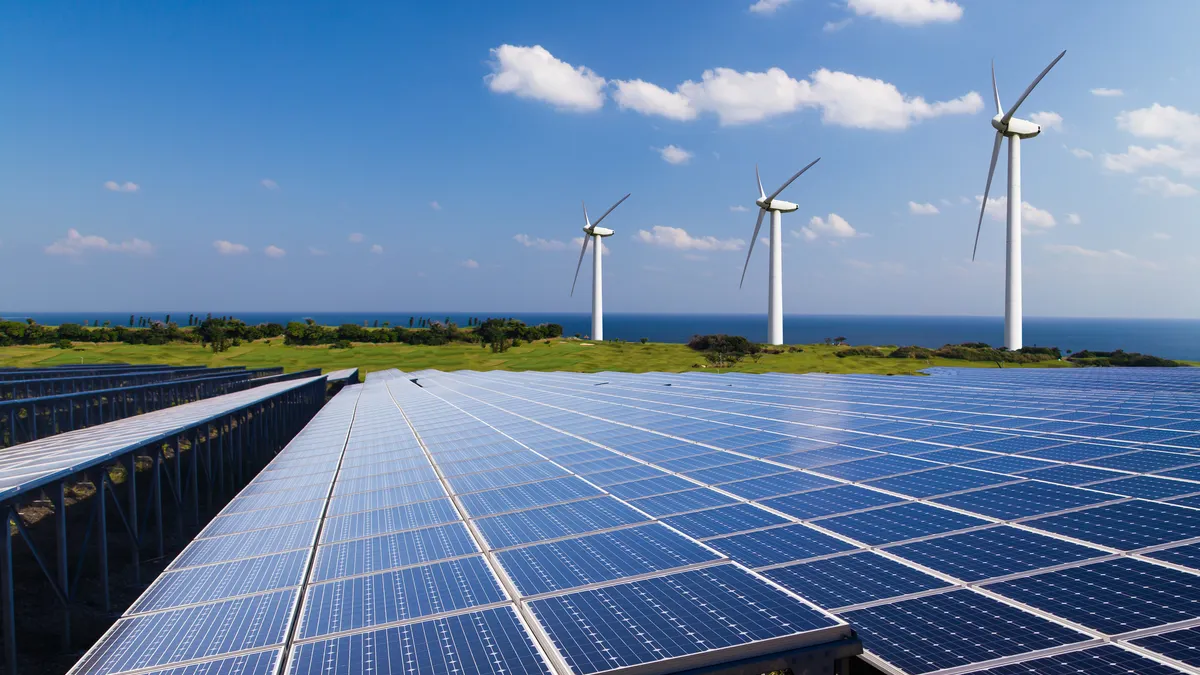
Wind turbines and large-scale solar arrays overlook the Lake Ontario shoreline in a scene reflecting the growing debate over renewable energy development and local control in Upstate New York.
WATERTOWN, NY — The long-running battle over who controls rural New York may be heading for another major showdown in Albany.
A new bill introduced in the New York State Senate would repeal the controversial Office of Renewable Energy Siting, better known as ORES — the state agency created in 2020 to accelerate approval of large-scale wind and solar projects across New York.
Critics of ORES say the agency effectively stripped local communities of their ability to decide what happens to their own farmland, forests, and rural landscapes, replacing local boards with state-level bureaucrats who could override municipal objections in the name of Albany’s aggressive renewable energy agenda.
Supporters of the repeal effort argue that if developers want to build massive industrial wind or solar facilities in a town, they should have to work with the people who actually live there — not simply bypass them through a fast-track state approval process.
The proposed legislation would restore authority to local governments and force renewable energy companies to comply with local zoning laws and community standards instead of running directly to the state for approval.
That message is expected to resonate in Northern New York, where debates over large-scale solar arrays and sprawling wind projects have become increasingly heated in recent years.
Across Jefferson, Lewis, and St. Lawrence counties, residents have packed town meetings arguing over everything from loss of farmland and changing rural viewsheds to concerns about drainage, environmental impacts, industrial noise, and declining property values. Supporters of the projects often point to lease payments for landowners and state climate goals, while opponents say rural communities are being turned into industrial energy corridors to satisfy downstate political priorities.
To many residents, the issue goes beyond renewable energy itself. It has become a broader fight over local control.
Critics of ORES have repeatedly argued that Albany politicians who would never allow industrial wind turbines towering over suburban neighborhoods in Westchester or Long Island seem perfectly comfortable covering open farmland in Upstate New York with solar panels and transmission infrastructure.
The repeal bill is likely to intensify an already emotional debate statewide as New York continues pursuing aggressive climate and electrification mandates under the Climate Leadership and Community Protection Act.
For opponents of industrial-scale renewable development, the legislation represents a possible turning point — a chance for towns and counties to reclaim authority over their own landscapes after years of what many describe as state overreach.
Whether the bill gains traction in Albany remains to be seen. But in rural New York, where “local control” carries enormous political weight, lawmakers can expect people to be paying close attention.
About the Author