
Thompson Park Isn’t Sacred Ground — And Watertown Can’t Afford to Pretend It Is
By Hans Wilder | Watertown Post
WATERTOWN, NY — An image circulating online this week paints the preservation of Thompson Park golf course land as some kind of heroic last stand against greedy developers. The message is simple: development bad, preservation good.
But reality is a lot more complicated than that.
The image argues the city “saved” 63 acres from becoming upscale housing and protected it forever for public use. Fine. Parks matter. Green space matters. Recreation matters. Nobody reasonable is arguing Watertown should bulldoze every inch of open land and turn the city into Queens.
But let’s stop pretending development itself is automatically evil.
Watertown’s tax base is eroding. That’s simply a fact. Large portions of property are government-owned, tax exempt, or generate very little economic activity compared to the infrastructure and services required to maintain the city. Meanwhile, roads, water systems, police, fire services, snow removal, parks, and public maintenance continue getting more expensive every single year.
At some point, somebody has to pay for all of it.
That’s where strategic development comes in.
There’s a massive difference between reckless overdevelopment and carefully planned upscale housing integrated into the natural landscape. And frankly, Watertown is not exactly in danger of becoming a concrete jungle anytime soon. The city has trees everywhere — in some neighborhoods, arguably too many. Certain areas could actually benefit from thinning, cleanup, modern landscaping, and smarter land management instead of treating every overgrown parcel like untouched Adirondack wilderness.
Imagine if part of that Thompson Park acreage had become a high-end residential development overlooking the park itself. Executive homes. Modern architecture. Fort Drum officers and contractors. Medical professionals. Engineers. Families relocating from downstate or elsewhere in New York seeking a quieter lifestyle with outdoor amenities.
That’s not dystopian capitalism. That’s called building a stronger tax base.
The image claims the land was undervalued because nearby upscale development land might command $35,000 or more per acre. Ironically, that argument actually reinforces the opposite point: valuable land near one of the city’s crown jewels could potentially have generated millions in long-term taxable value for future generations.
Instead, the debate in Watertown often feels trapped in a mindset where any proposal involving development is treated like an invasion force landing on the beaches of Normandy.
Meanwhile, younger residents leave. Housing stock ages. Infrastructure declines. Property taxes climb. Businesses struggle to find professionals willing to relocate here long-term.
And then everyone asks why growth never happens.
The truth is, cities either evolve or slowly decay. There really isn’t much middle ground.
Nobody is suggesting paving over Thompson Park entirely. Nobody is arguing against preserving portions of it for recreation and public enjoyment. But freezing large sections of highly valuable land in permanent stasis while simultaneously complaining about taxes and economic stagnation may not be the long-term victory some people think it is.
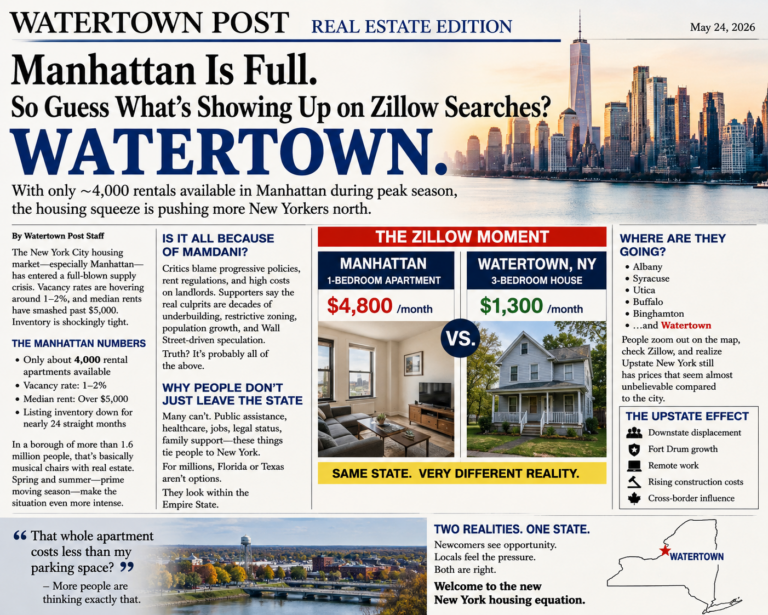
Progress sometimes means change. Sometimes it means balancing preservation with modernization. Sometimes it means understanding that attracting wealthier residents and new investment is not some sinister conspiracy — it’s how cities survive. Just ask Zohran Kwame Mamdani how its going down in the “Large Apple” these days or maybe even ask our lovely governess that question?
Watertown has incredible potential. Thompson Park itself is part of that potential.
But potential alone does not fund a city.

About the Author