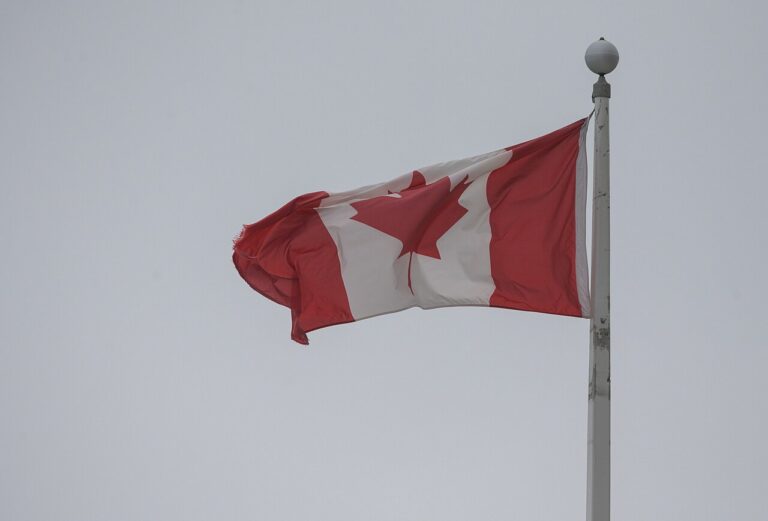
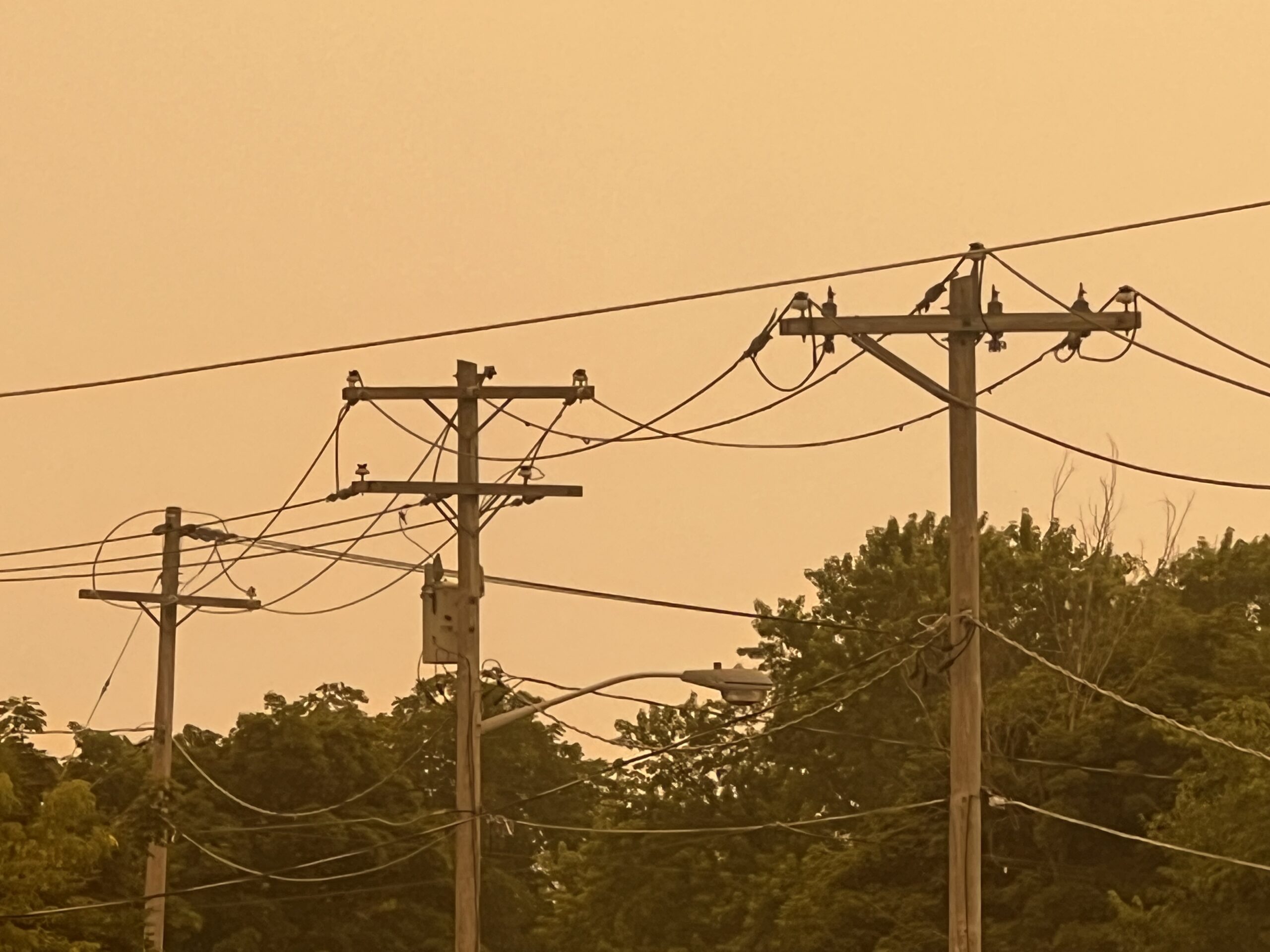
Canadian wildfire smoke blankets northern New York, turning the sky an eerie shade of orange. Photo taken July 15, 2026.
Toronto briefly recorded the worst air quality among the world’s major cities Wednesday as thick smoke crossed Lake Ontario and settled over the North Country.
WATERTOWN, N.Y. — Northern New York awoke Wednesday beneath a strange orange glow, as thick smoke from hundreds of Canadian wildfires poured across the international border and transformed an ordinarily blue July sky into something resembling a scene from another planet.
The haze is not coming from a nearby brush fire. It is traveling hundreds of miles from major wildfires burning across Canada, including several large and uncontrolled fires in northern and western Ontario. More than 830 active wildfires were burning across Canada Wednesday morning, with winds carrying an enormous plume of smoke toward the Great Lakes, New York and New England.
Toronto, sitting directly across Lake Ontario from northern New York, briefly ranked as having the worst air quality among the world’s major cities Wednesday, according to the international air-monitoring company IQAir. Environment Canada reported an Air Quality Health Index reading of 10-plus in Toronto, its highest category and one considered a “very high risk” to public health. Because global air-quality rankings change by the hour, Toronto may move up or down the list as winds shift, but the distinction illustrates just how much smoke has settled over the Great Lakes region.
And Toronto is not exactly on the other side of the planet. From northern New York, it is separated mainly by one broad expanse of freshwater: Lake Ontario. Smoke does not recognize the international border running through the lake, nor does it stop at a customs booth to explain where it has been. When the winds line up, what hangs over Ontario can reach Jefferson County in a matter of hours.
The New York State Department of Environmental Conservation issued an Air Quality Health Advisory for Wednesday covering the Eastern Lake Ontario region, including Jefferson, northern Cayuga, Monroe, Oswego and Wayne counties. The pollutant of concern is fine particulate matter, commonly known as PM2.5, the microscopic material contained in wildfire smoke that can travel deep into the lungs.
The National Weather Service in Buffalo said air-quality readings across western and north-central New York could reach an Air Quality Index of 151 to 200, a level officially classified as unhealthy. At that level, everyone may begin experiencing health effects, while children, older adults and people with asthma, heart disease or other respiratory conditions face a greater risk.
The smoke is expected to remain noticeable through Wednesday night and Thursday. Local forecasts call for areas of smoke across Lake Ontario and the North Country throughout Thursday, with some improvement possible Thursday night. Rain approaching the Northeast by Saturday may finally help wash particles from the atmosphere and disperse part of the plume, although changing winds could bring additional waves of smoke afterward.
That means the orange glow over Watertown and the surrounding region should begin easing toward the end of the week, but there is no guarantee the smoke is finished for the summer. Many of the fires producing it remain active, and some Canadian fires could continue burning for weeks or even months. Northern New York may receive temporary relief whenever winds change or rain arrives, only to see another plume return later.
Residents should limit strenuous outdoor activity while the smoke remains thick, especially when visibility drops or the smell of burning wood becomes noticeable at ground level. Windows should be kept closed when practical, air conditioners should be placed on recirculation, and a properly fitted N95 mask can provide more protection outdoors than an ordinary cloth or surgical mask. Anyone experiencing chest pain, severe shortness of breath, dizziness or worsening asthma symptoms should seek medical attention.
The sky may look dramatic — orange sunlight, dimmed streets and a strangely beautiful haze over the North Country — but that color is being created by smoke particles scattering the sunlight before it reaches the ground. It is beautiful in the same way a warning flare is beautiful.
Toronto may have received the international headline Wednesday, but northern New York is breathing from the same smoky atmosphere. Lake Ontario makes us neighbors. On days like this, it also reminds us that the air above the United States and Canada is one shared sky.
About the Author