
www.WatertownPost.com
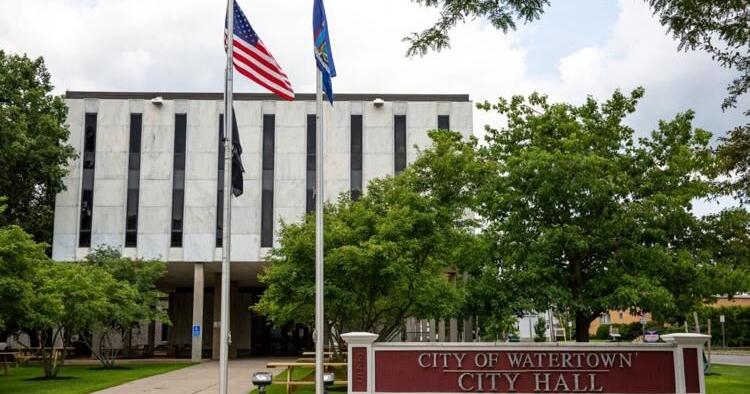
WATERTOWN, NY — The warning signs are no longer subtle.
Property taxes are climbing. Assessments are rising. And quietly — sometimes not so quietly — prospective homeowners are choosing to buy outside the city limits. Realtors confirm what many residents already sense: when buyers compare tax bills, the city line can become a deal breaker.
If that trend accelerates, Watertown faces a dangerous cycle. Higher taxes push people out. A shrinking tax base forces even higher taxes on those who remain. Eventually, the math stops working.
The answer is not to punish the workforce — the men and women filling potholes on Arsenal Street, collecting garbage in February wind, plowing snow at 3 a.m., patrolling neighborhoods, or driving city buses. Those are essential services. They are the backbone of municipal government.
If scaling back must happen — and many argue it must — it needs to happen at the top.
The Hard Truth: Overhead Is the Real Pressure Point
When municipal budgets strain, the instinct is often to trim visible services. Fewer crews. Slower response times. Deferred maintenance.
That’s backwards.
The city’s greatest opportunity for savings isn’t in boots-on-the-ground labor. It’s in administrative layers, redundant processes, consulting contracts, manual data entry systems, and outdated workflows that technology solved years ago.
Mention artificial intelligence in a government meeting and some officials recoil. The assumption is that “AI” means job loss, chaos, or sci-fi experiments.
It doesn’t.
In practice, AI in municipal government means automation, efficiency, predictive analytics, and digital systems that reduce overhead — especially at the managerial and administrative level.
And yes, if done properly, it protects frontline workers.
Where AI Could Immediately Help Watertown
1. Intelligent Traffic Management
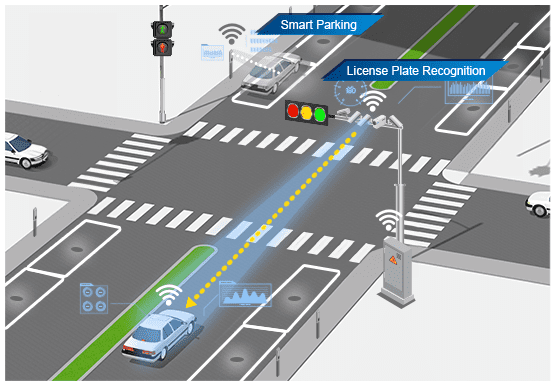
Watertown’s traffic lights operate largely on static timing.
AI-powered adaptive traffic systems adjust in real time based on vehicle flow, time of day, weather, and congestion. That means:
- Reduced idle time at lights
- Less fuel waste
- Fewer backups near schools and downtown
- Lower emissions
The result? Fewer complaints, smoother flow, and less manual oversight required.
2. Predictive Infrastructure Maintenance
Instead of waiting for potholes to explode in spring thaw, AI models can analyze temperature swings, traffic volume, and historical wear patterns to predict failure points.
The same applies to:
- Water main break forecasting
- Sewer system monitoring
- Snowplow route optimization
- Equipment maintenance scheduling
This saves money before damage becomes catastrophic.
3. Automated Scheduling & Workforce Allocation
Public works, police patrols, bus routes — all can benefit from AI-driven scheduling that:
- Minimizes overtime
- Reduces redundant coverage
- Accounts for historical demand patterns
- Adjusts dynamically for events or storms
The people still do the work. The system simply makes smarter decisions about where and when.
4. City Website & Public Communication
Many municipal websites across America remain clunky, outdated, and difficult to navigate.
AI tools can:
- Build and maintain modern websites
- Provide 24/7 chatbot assistance
- Automate permit applications
- Translate city notices into multiple languages
- Generate clear summaries of council meetings
- Manage FAQ responses
This reduces administrative staff hours spent answering repetitive questions.
5. Budget Forecasting & Financial Modeling
AI excels at pattern recognition.
It can:
- Model long-term tax revenue projections
- Predict expense growth trends
- Simulate pension liabilities
- Identify departments with cost drift
- Flag inefficiencies
Instead of reacting to budget shortfalls, the city could see them coming years in advance.
6. Procurement & Contract Oversight
Municipal governments often lose money through inefficient purchasing or loosely monitored contracts.
AI systems can:
- Compare vendor pricing in real time
- Flag contract anomalies
- Detect overbilling patterns
- Analyze whether outsourcing is actually saving money
That’s direct taxpayer protection.
7. Public Safety Augmentation
This is not about replacing officers.
AI can:
- Analyze crime data for hotspot prediction
- Optimize patrol routing
- Improve emergency dispatch allocation
- Reduce paperwork time through automated reporting
Officers stay in the field longer. Administrative load shrinks.
8. Energy & Utility Efficiency
Smart AI systems can regulate:
- Streetlight energy usage
- Municipal building heating schedules
- Water pumping cycles
- Waste management routes
Energy optimization alone can produce measurable savings.
The Political Resistance
The real resistance isn’t technological.
It’s structural.
AI eliminates redundant administrative tasks. When tasks disappear, layers of management shrink. That’s uncomfortable — especially at the higher salary levels.
But if Watertown refuses to modernize, the alternative isn’t stability.
It’s decline.
Higher taxes push families outward — to the towns. Businesses hesitate to invest. Property values stall. The tax base erodes.
No city wants to say the word “bankruptcy,” but ignoring fiscal gravity doesn’t change its pull.
A Smarter Way Forward
Watertown does not need fewer workers filling potholes.
It needs fewer inefficiencies in offices.
It does not need fewer police on patrol.
It needs fewer redundant reports, duplicated systems, and legacy processes.
Artificial intelligence is not a threat to the city’s workforce. It is a shield for it.
Used responsibly, it preserves essential services by trimming excess overhead at the top.
The real question is not whether AI can help.
It’s whether city leadership is willing to modernize before taxpayers vote with their moving trucks.
Watertown has always adapted — from its industrial past to its present alongside Fort Drum and the St. Lawrence corridor.
The next adaptation is digital.
Scale intelligently — or risk scaling involuntarily.
About the Author