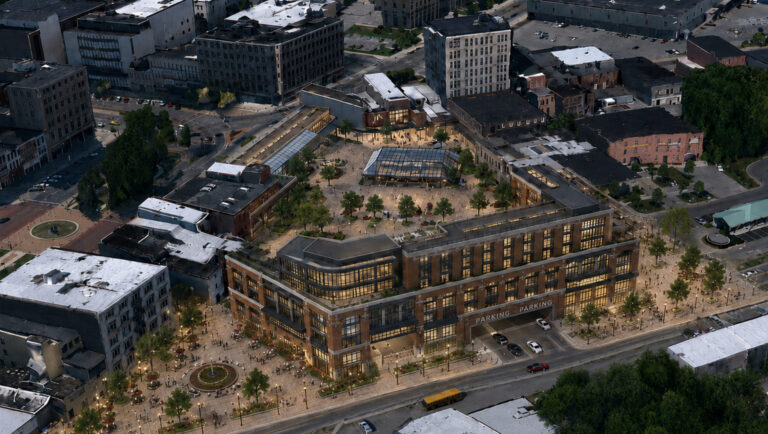
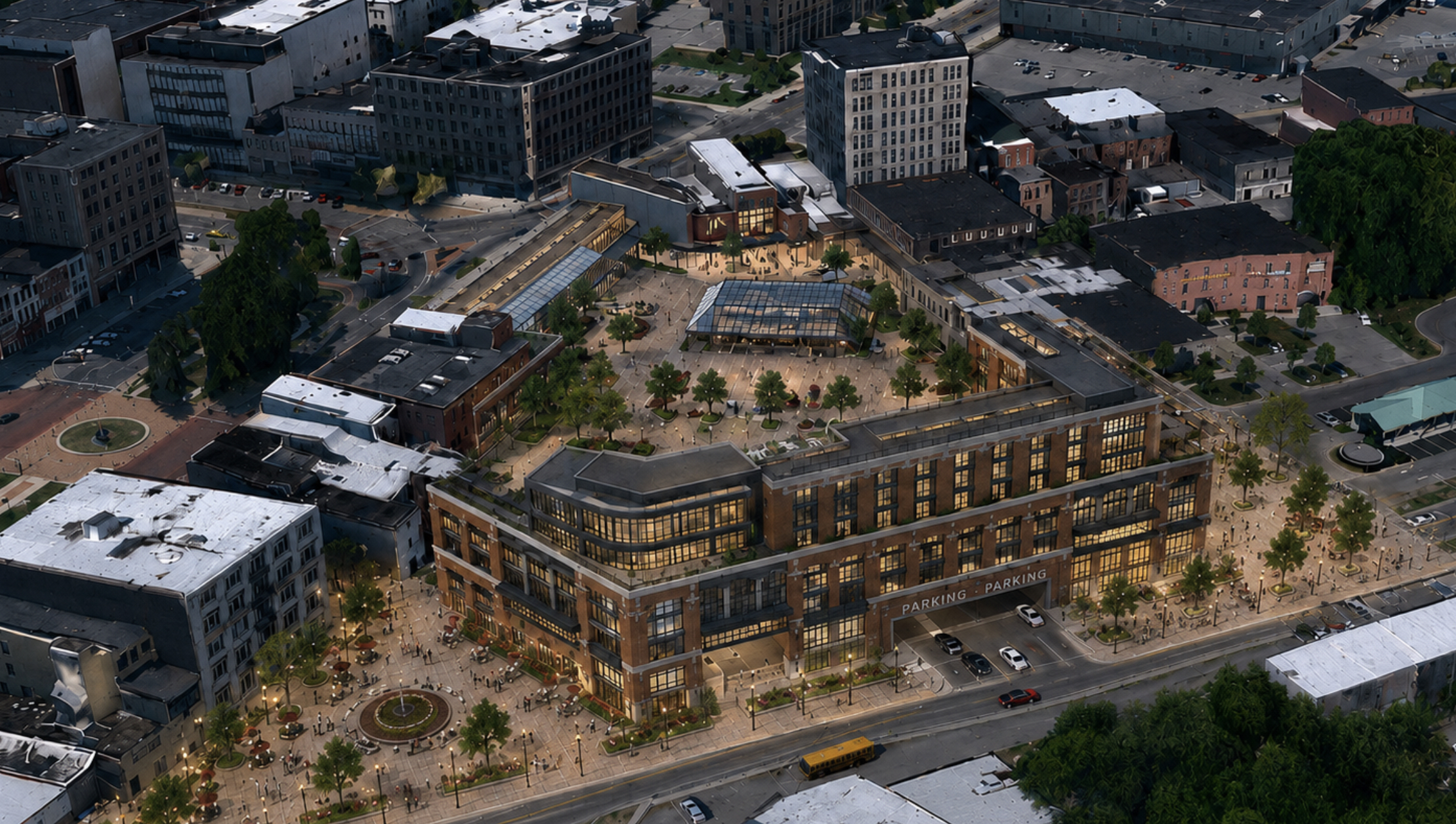
A conceptual rendering of a reimagined downtown Watertown featuring an expanded pedestrian plaza wrapping around the mixed-use development, new landscaping, public gathering spaces, and a street-level entrance leading directly into an integrated parking garage. The design emphasizes walkability, year-round activity, and seamless connections between Public Square, shopping, dining, and entertainment.
LAKE PLACID, N.Y. — By Hans Wilder
One of the things we’ve always believed at the Watertown Post is that no idea should be dismissed simply because it’s unconventional. Communities grow when people are willing to throw ideas on the table and debate them. Brainstorming is healthy. Innovation begins with someone asking, “What if?”
That said, every now and then an idea comes along that deserves a polite, but firm, “Let’s keep thinking.”
The suggestion to turn the former JB Wise Place site into a permanent outdoor stage is one of those ideas.
This isn’t because outdoor concerts are bad. They aren’t. Watertown has hosted some terrific community events over the years, and there’s certainly a place for live music downtown. The problem is that the former JB Wise property is simply too valuable to dedicate to something that can only be used a few months out of the year. In Northern New York, winter isn’t an inconvenience—it’s practically a season-long business plan. Any redevelopment of one of downtown’s most strategic pieces of real estate should generate activity twelve months a year, not just during the handful of weekends when the weather cooperates.
There is also the practical issue of location. A permanent concert venue tucked behind Public Square means amplified music echoing off the surrounding buildings and vibrating through the large windows of nearby offices, apartments, and businesses. That may sound charming during the planning stage, but it could become considerably less charming for the people trying to work, live, or conduct business nearby.
More importantly, this site represents one of the greatest redevelopment opportunities Watertown has seen in decades. Instead of asking what temporary attraction can fit there, the city should be asking what permanent investment could transform downtown for the next fifty years.
Modern engineering has made projects possible today that would have seemed impossible a generation ago. There is no reason the city couldn’t encourage private developers to envision a multi-level structure that takes advantage of the site’s elevation differences. Imagine indoor parking on the lower levels with retail, restaurants, offices, housing, or entertainment space above, seamlessly connecting to Public Square. Done properly, such a project could knit together parts of downtown that have long felt disconnected while creating year-round economic activity.
Watertown also has another reality to confront. The community no longer has the kind of enclosed shopping destination it once enjoyed. Salmon Run Mall still exists, but much of its former retail identity has faded. If downtown is ever going to reclaim its position as the region’s commercial and social center, it will require more than seasonal attractions. It will require permanent investment, permanent businesses, and permanent reasons for people to visit every day of the year.
This is where the Golden Age philosophy comes into play. Great downtowns are not revived by thinking small. They are revived by encouraging private investment, reducing barriers to redevelopment, and allowing entrepreneurs, developers, and local business leaders to do what capitalism does best—create opportunity. Government doesn’t have to build every solution. Sometimes its greatest role is creating the conditions that allow ambitious people to build something remarkable.
The former JB Wise site is simply too important to become an outdoor stage with empty seats for half the year. It should become something that future generations point to as the moment downtown Watertown decided to think bigger.
An amphitheater might provide a few good concerts.
A transformative redevelopment could provide decades of economic growth.
That seems like the better investment.
About the Author