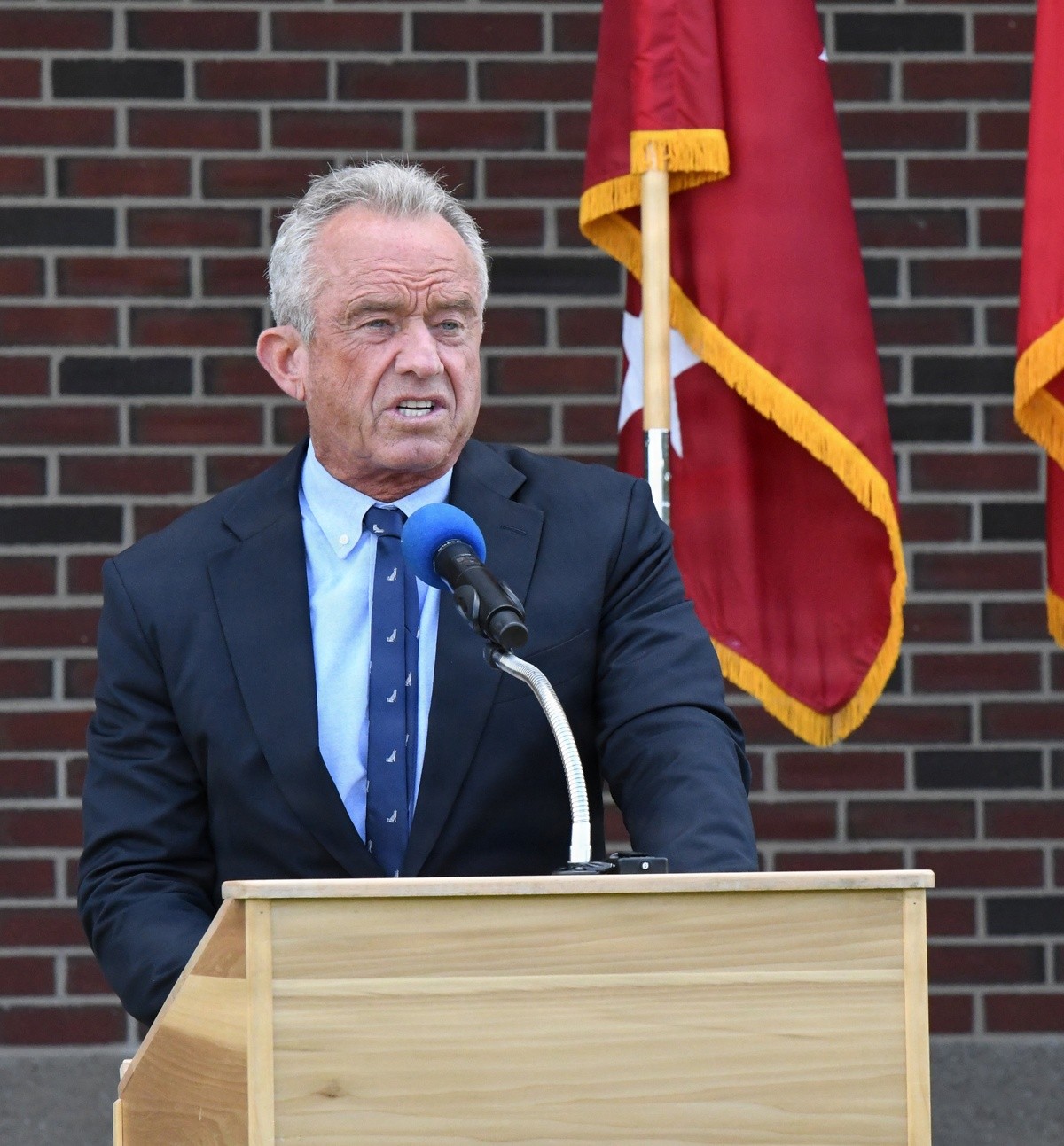
U.S. Health and Human Services Secretary Robert F. Kennedy Jr. speaks during the Belvedere Bistro grand-opening ceremony at Fort Drum, New York, July 30, 2026. U.S. Army photo by Mike Strasser, Fort Drum Garrison Public Affairs.
RFK Jr. was at Fort Drum on Thursday, July 30, for the grand opening of the Belvedere Bistro, the Army’s third new campus-style dining facility. The idea is to replace the old “gray meat, steamed vegetables and rice that surrendered three hours ago” model with something closer to a modern university food court. Soldiers can order customizable meals from several stations, use digital kiosks, grab food to go and get healthier choices during longer operating hours. The facility also has an executive chef and a registered dietitian.
Meal-card holders receive about $39 in “Freedom Dollars” each day—$9.57 for breakfast, $15.86 for lunch and $13.57 for dinner. Unused breakfast money can roll into later meals. Family members, civilian employees and retirees may eat there by paying à la carte. The bistro is in Building 10305 on North Riva Ridge Loop and is open seven days a week, with grab-and-go service available between normal meals.
Kennedy’s message was pure MAHA: healthier food produces healthier, more combat-ready soldiers. He called food a national-security issue and said military readiness begins with nutrition. But to keep the story accurate, RFK did not create this particular program by himself. The Army began developing the campus-dining model before his Fort Drum visit, with Army Materiel Command overseeing it, Compass Group operating the facilities and celebrity chef Robert Irvine serving as a major adviser and longtime advocate for better military food. Kennedy has given the effort powerful national visibility and tied it directly to his wider “eat real food” campaign.
Fort Drum follows earlier campus-style dining launches at Fort Hood and Fort Carson, and Army officials say they intend to spread the concept to additional installations. The new contract model also gives the operator an incentive to serve food soldiers actually want: Kennedy said the contractor is not paid for food that goes uneaten. In plain English, the Army is finally discovering that soldiers perform better when dinner does not resemble a punishment detail.
The real headline: RFK brought the healthy-food message to Fort Drum, but the change is a larger Army modernization effort—with Robert Irvine and Army leadership doing much of the groundwork. Fort Drum is now one of the first posts where soldiers can see and taste the new system firsthand.
About the Author