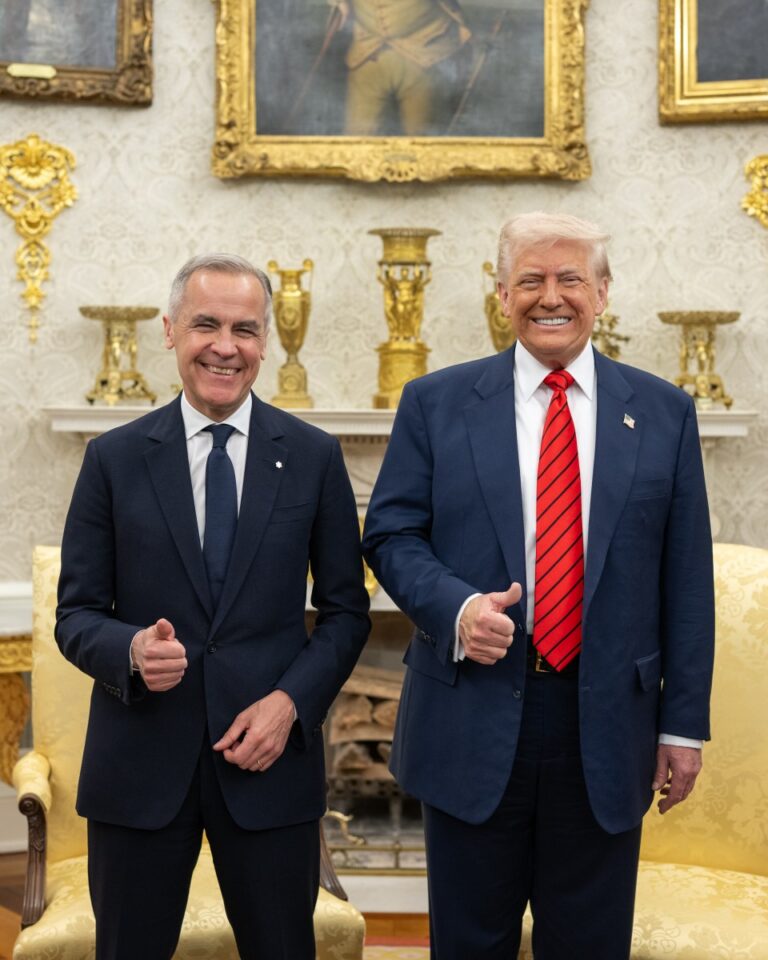

High-level White House meetings are happening right now with Denmark and Greenland — and the Arctic chessboard just got real. Could the world wake up to an American-secured Greenland by this afternoon? The map of global power might be shifting faster than a New York minute.
Watertown Post – Washington Desk
WASHINGTON — A flurry of high-level meetings is underway inside the White House today involving senior U.S. officials, representatives from Denmark, and leaders connected to Greenland, as Washington presses its case for a dramatic new Arctic security arrangement centered on the world’s largest island.
While social media is buzzing with jokes about “Greenland by 4 p.m.,” the reality inside the Situation Room is far more serious: this is about military positioning, rare-earth minerals, shipping lanes opening through melting Arctic ice, and who controls the top of the map in a new era of great-power competition.
U.S. officials have been blunt behind closed doors. Greenland sits directly between North America, Europe, and Russia — making it one of the most strategic pieces of land on Earth. With Russian submarines, Chinese shipping, and Arctic air routes all expanding, the Pentagon sees Greenland not as a distant ice sheet, but as the front door to the Western Hemisphere.
Denmark technically administers Greenland, but the island operates with its own parliament and government. That creates a unique three-way chessboard: Washington, Copenhagen, and Nuuk all have seats at the table — and none of them can move alone.
What the United States is pushing for today is not officially described as an “annexation,” but sources familiar with the talks say Washington wants permanent control over military, space, and resource infrastructure, something far beyond the current U.S. base agreements. In practical terms, that would put Greenland under American security and economic orbit in a way that would be very hard to reverse.
Why now?
Because the Arctic is no longer a frozen backwater. It is becoming a global highway.
New shipping routes are opening that bypass the Panama Canal. The seabed holds enormous deposits of rare earth minerals needed for EVs, weapons systems, and advanced electronics. And Russia has been aggressively militarizing its Arctic coastline — something NATO quietly worries about far more than it publicly admits.
From Washington’s perspective, Greenland is simply too important to leave in limbo.
That is why these talks are happening at the very top — not in a treaty subcommittee, not in a diplomatic working group, but in the White House itself.
Could Greenland “be ours by 4 p.m.”?
No one in government is actually saying that.
But the fact that these talks are happening at all — at this level, on this day, in this geopolitical climate — signals that the United States is done asking politely about Arctic security. The message is clear: the Western Hemisphere will not be left exposed through the top of the world.
And whether Europe likes it or not, the future of Greenland is now being discussed where real power lives — in Washington, not Brussels.
About the Author