By Watertown Post Staff
SACKETS HARBOR, NEW YORK. Before search engines could put a world of information on a screen, a man born in Jefferson County helped libraries make sense of their shelves. Now that local connection has inspired a new creation from The Watertown Post: Melville, a visual book-discovery website designed to turn a simple search into a trail worth following.
Melvil Dewey, the creator of the Dewey Decimal Classification, was born in Adams Center on December 10, 1851. Originally named Melville Louis Kossuth Dewey, he became known by the shortened spelling Melvil. For generations of North Country students who learned their way around a library using numbered shelves, the familiar system has a hometown connection that may come as a surprise.
First published in 1876, Dewey’s classification organized library materials by subject using numbers. The idea was practical and powerful: knowledge becomes more useful when people can find it, and related subjects become easier to explore when there is a clear structure connecting them. His Northern New York ties also extended into the Adirondacks, where he and his wife, Annie Godfrey Dewey, founded the Lake Placid Club in 1895.
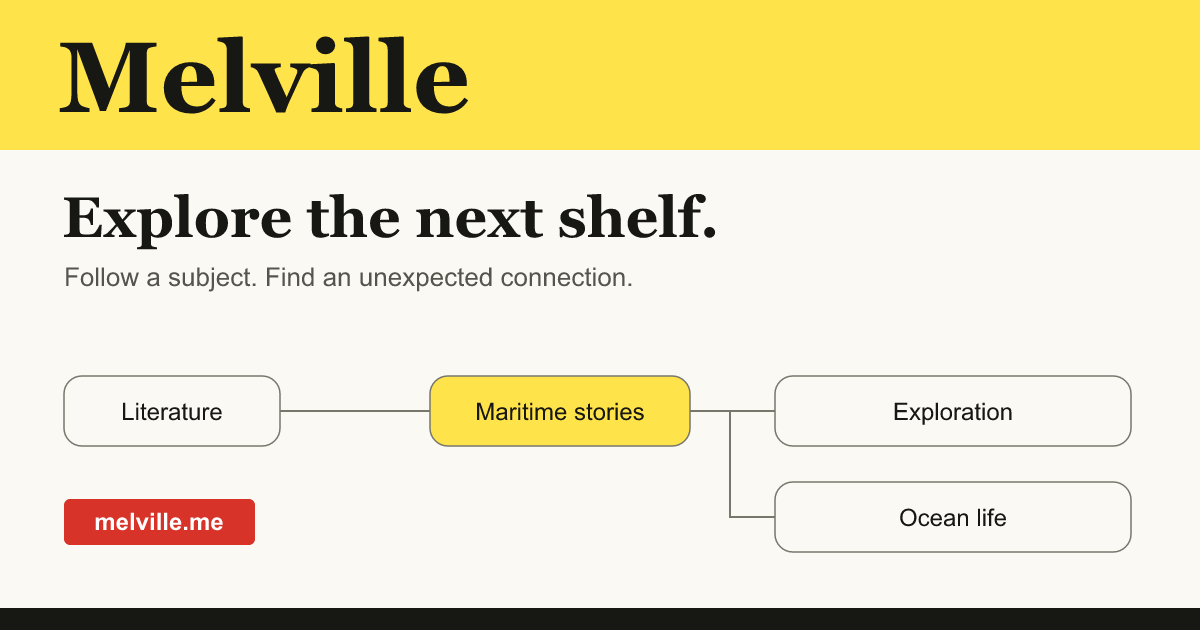
Our new website takes inspiration from his contribution to organizing books and making knowledge easier to navigate. Melville is an independent Watertown Post creation, not an official Dewey Decimal Classification service. Rather than recreating a library’s numbered shelves, it offers a visual way to explore the connections that make one book lead to another.
At Melville.me, visitors can begin with a book, an author or a subject and follow branching discovery trails toward related titles and ideas. A search becomes a starting point instead of a dead end. For a devoted reader, that might mean another author to explore. For a collector, it might mean a title worth investigating. For someone who does not consider themselves a book person, it might simply mean finding a subject interesting enough to change that.
The website brings together book-discovery resources including Open Library, the Library of Congress and Norway’s library catalogs, along with routes to library and retailer searches. Information and availability vary by source. The goal is to help people discover and investigate books, not to promise that every title is available to read or borrow.
Visitors can also save books and trails in their browser for another visit. These collections currently stay with that browser rather than syncing through an account across devices. The yellow, black and red design and branching layout make the experience feel less like a list of search results and more like following an idea wherever it leads.
Melville is another step in The Watertown Post’s effort to bring Northern New York useful new things to explore alongside its reporting. The inspiration has local roots, but the invitation is open to everyone: start with a little curiosity, follow a trail, and see which book finds you next.
Explore Melville at https://melville.me.
About the Author