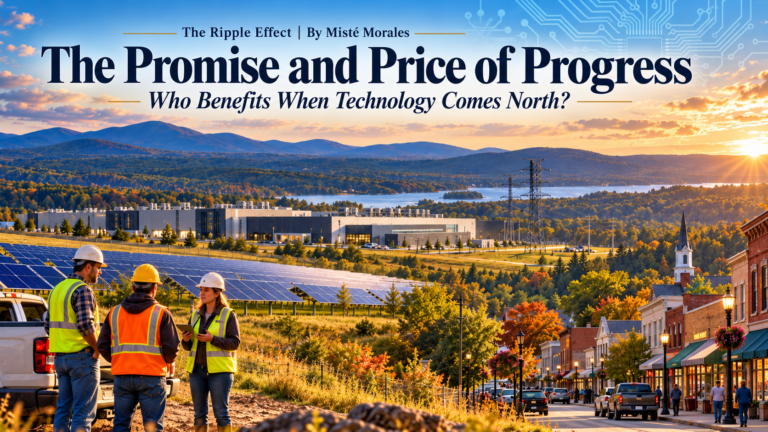

WATERTOWN, NY — A growing number of farmers, landowners, and rural residents across Northern New York say the state’s aggressive renewable energy timeline is colliding head-on with farmland preservation, wildlife protection, and local decision-making.
WATERTOWN, NY — A growing number of farmers, landowners, and rural residents across Northern New York say the state’s aggressive renewable energy timeline is colliding head-on with farmland preservation, wildlife protection, and local decision-making.
At the center of the debate is New York’s mandate that 70% of electricity generation come from renewable sources by 2030, a cornerstone of policies advanced by Governor Kathy Hochul. Supporters argue the target is essential to reducing carbon emissions. Critics counter that the pace and scale of development are triggering unintended — and potentially irreversible — consequences for rural communities.
Farmland Under Pressure
Residents say large-scale solar and wind installations are rapidly consuming valuable agricultural land. While often described as temporary, many of these projects are designed for 25 to 30 years of operation, after which the land may be compacted, altered, and difficult to return to full agricultural use.
Concerns extend beyond land loss. Farmers point to soil compaction, disruption of drainage and water tables, and impacts on private wells, alongside habitat loss affecting insects, birds, and mammals — species already under stress in upstate ecosystems.
Local Control at Risk
Adding fuel to the fire is new legislation introduced January 6 by State Senator Rachel May, which would shift authority over Battery Energy Storage System (BESS) siting away from towns and counties and place it under the state’s Office of Renewable Energy Siting (ORES).
Opponents say the proposal weakens home-rule protections, preventing local governments from having final say on projects that could dramatically reshape their landscapes. Many fear that large battery facilities — often described as spanning areas comparable to multiple big-box stores — would be placed adjacent to renewable installations, creating a second wave of land use and safety concerns.
Infrastructure, Traffic, and Taxes
Residents also cite the practical impacts of construction: heavy truck traffic on residential roads, long-term maintenance access, and industrial activity in areas historically zoned for farming and housing.
Economically, critics argue that foreign-owned energy developers often benefit most at the front end through Renewable Energy Credits and local tax abatements granted by Industrial Development Agencies (IDAs). Those abatements, they say, can shift the tax burden onto local homeowners and farmers once project incentives expire.
A Call for a Broader Accounting
While many rural residents support reducing carbon emissions, they are urging state leaders to take a “cradle-to-grave” view of renewable infrastructure — accounting for the environmental cost of manufacturing solar panels, wind turbines, and massive battery systems, not just their operational emissions.
For communities across Jefferson County and beyond, the issue isn’t framed as anti-renewable — but as pro-farmland, pro-local control, and pro-transparency.
As New York races toward its 2030 targets, rural voices are asking a pointed question: Who decides what gets sacrificed, and who gets to say no?
About the Author